


Peptides for muscle growth, sorted by mechanism, evidence tier, and delivery format. Honest research framing on what human data actually shows.
Why this guide exists
Most search results for peptides for muscle growth read like vendor brochures. A list of compounds, a few mechanism bullets, an order button, and almost no honest accounting of what human studies actually show. We made this guide for research purposes only, and we built it as a category map you can use to figure out what is worth investigating further.
Most "muscle growth peptides" are not direct anabolics. They are growth hormone secretagogues with thinner human evidence than the category marketing implies.
The brief is simple. There are five or six recognisable peptide categories that show up in muscle-growth research, the human evidence sits on a wide spectrum, and the delivery format you choose changes the access calculus more than most "best peptides for muscle growth" lists are willing to admit. Recovery is the lever most natural lifters underweight, and it is also where the cleanest research signals currently live.
Throughout this article you will see compliance language like research suggests and users report. We use that language deliberately. None of this is medical advice, none of these compounds are presented for use as prescription drugs, and the evidence base for muscle hypertrophy in humans is thinner than the category marketing implies.
How do peptides influence muscle growth?
Skeletal muscle grows when the protein-building rate inside your fibres outpaces the protein-breakdown rate over time. Peptides influence that balance in three different ways, and the category lists you see online tend to blur those mechanisms together. Sorting them out is the first step to reading the research honestly.
The three levers in plain language:

Three different peptide pathways all converge on the same muscle-building switch inside the cell.
- The growth hormone axis. Some peptides nudge your pituitary to release more of your own growth hormone, which then raises IGF-1, a signalling protein that tells muscle cells to build.
- Direct anabolic signalling. A second group skips the pituitary and acts as IGF-1 analogues, plugging straight into the cell-level pathway that triggers protein synthesis.
- Myostatin inhibition. A third group blocks myostatin, a protein your body uses as a brake on muscle growth. Take the brake off, and the theory says muscle mass climbs.
There is a fourth lever the category almost never frames as a muscle-growth mechanism: tissue repair. Faster recovery between hard sessions lets you train harder and more frequently across a season. For a natural lifter that compounding effect can outpace anything you would get from a milder GH-axis nudge.
Where do these peptides act inside the cell?
The two intracellular pathways that come up most in this literature are the GH receptor signalling cascade and the Akt or mTOR cascade. mTOR is the master switch your muscle cells use to ramp up protein synthesis. Anything that ends with a stronger Akt or mTOR signal tends to be discussed as anabolic in the research literature. For a deeper plain-English read on how peptide molecules actually cross cell membranes to reach those switches, our explainer on how peptide molecules cross cell membranes is the right next stop.
Which peptide categories show up in muscle-growth research?
Here is the comparison table the rest of the category should already have published and mostly has not. Each row classifies a peptide by class, mechanism, evidence tier in humans (RCT, pilot trial, preclinical or anecdotal), and current regulatory status. Evidence tier refers to the muscle-relevant outcome, not the broadest outcome studied.
| Peptide | Class | Primary mechanism | Human evidence tier for muscle outcomes | Common delivery | Regulatory status (2026) |
|---|---|---|---|---|---|
| Ipamorelin | GH secretagogue (GHRP) | Selective GH release via ghrelin receptor | Preclinical and pilot | Subcutaneous injection | Not FDA-approved; on grey market |
| CJC-1295 (with or without DAC) | GHRH analogue | Stimulates GH release at the pituitary | Pilot (PK in healthy adults) | Subcutaneous injection | Not FDA-approved |
| Sermorelin | GHRH analogue (short) | Stimulates endogenous GH | Pilot trials, paediatric history | Subcutaneous injection | Historically FDA-approved, withdrawn from commercial market |
| Tesamorelin | GHRH analogue (stabilised) | Stimulates GH, lowers visceral fat | RCT (HIV lipodystrophy) | Subcutaneous injection | FDA-approved for HIV-associated lipodystrophy |
| GHRP-6 / Hexarelin | GH secretagogue (GHRP) | GH release via ghrelin receptor | Preclinical, older PK studies | Subcutaneous injection | Not FDA-approved |
| IGF-1 LR3 | IGF-1 analogue | Long half-life systemic IGF-1 signalling | Anecdotal; very limited human data | Subcutaneous injection | Research chemical |
| IGF-1 DES | IGF-1 analogue | Short-acting localised IGF-1 signalling | Anecdotal | Subcutaneous injection | Research chemical |
| Follistatin 344 | Myostatin inhibitor | Binds myostatin, lifts the growth brake | Preclinical only in muscle context | Injection | Research chemical |
| MK-677 (ibutamoren) | Oral GH secretagogue (non-peptide) | Ghrelin receptor agonist, oral | Pilot and small RCTs in older adults | Oral capsule | Not FDA-approved; not a peptide strictly |
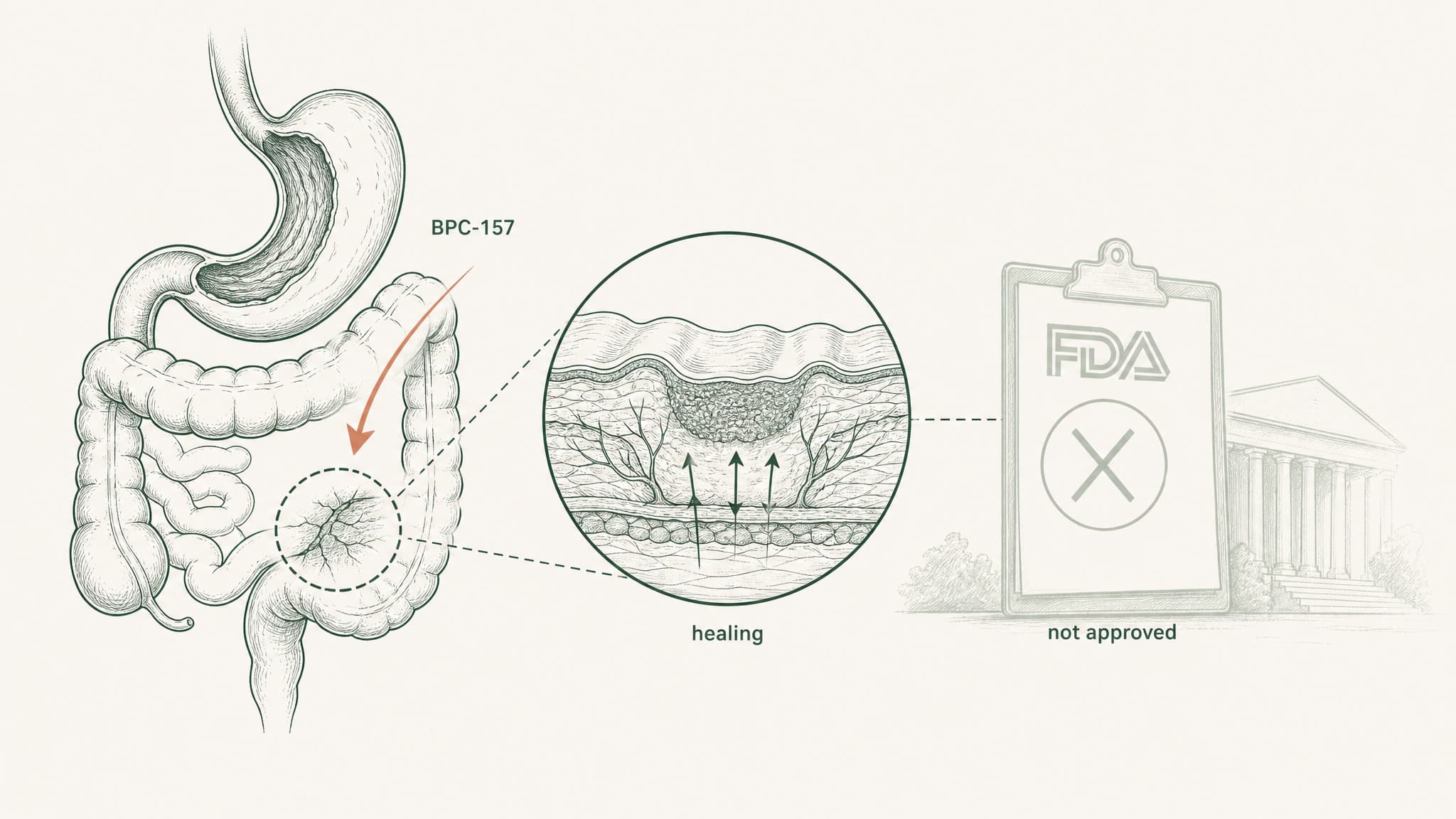
| BPC-157 | Pentadecapeptide | Angiogenesis, growth factor signalling, repair | Preclinical strong, human pilot emerging | Subcutaneous, oral, sublingual | Removed from FDA 503A bulks list 2023 |
| TB-500 (Thymosin Beta-4 fragment) | Actin-binding repair peptide | Repair cell migration, angiogenesis | Preclinical strong, very limited human muscle data | Subcutaneous injection | Research chemical; WADA-banned |
| Mechano-Growth Factor (MGF) | IGF-1 splice variant | Activates satellite cells in damaged muscle | Preclinical | Injection | Research chemical |
A note on how to read the table. The evidence tier column is scoped to muscle outcomes specifically. Tesamorelin has the strongest regulatory backing of any peptide on this list, but its RCTs measured visceral fat reduction and metabolic outcomes in patients with HIV-related lipodystrophy, not muscle hypertrophy in trained adults. That distinction is missing from almost every competing list, and it matters.
Growth hormone peptides: what does the evidence actually show?
Most "muscle growth peptides" you see online are not direct anabolics. They are growth hormone secretagogues, meaning they prompt your own pituitary to release more growth hormone, which then raises circulating IGF-1, which is the protein that does most of the downstream signalling to muscle. Think of it as nudging the engine instead of redlining it.
A 2018 review in Sexual Medicine Reviews by Sigalos and Pastuszak compiled the published safety and efficacy data on GH secretagogues across the GHRP and GHRH families. Their headline finding was that the class produces measurable but modest GH and IGF-1 elevations, with the biggest uncertainty sitting in long-term cardiovascular and metabolic safety. Their review did not find a published RCT that established hypertrophy as a primary endpoint in trained, healthy adults.

How growth hormone secretagogues trigger a cascade from pituitary to muscle via IGF-1.
That gap matters because it is the gap the category marketing fills with confidence the data does not yet support.
Ipamorelin
Ipamorelin was first characterised in a 1998 paper by Raun and colleagues in the European Journal of Endocrinology as a selective GH-releasing peptide that did not raise prolactin or cortisol at therapeutic doses, which is what made it interesting compared to earlier GHRPs. In preclinical models the GH response was clean and reproducible. The published human studies that exist focus on pharmacokinetics and short-term GH response, not body composition in trained adults.
CJC-1295 with and without DAC
A 2006 paper by Teichman and colleagues in the Journal of Clinical Endocrinology and Metabolism showed that the DAC-modified form of CJC-1295 produced sustained elevation of GH and IGF-1 in healthy adults for up to a week after a single dose. That long half-life is the whole appeal of the DAC version. There is no published RCT measuring hypertrophy as a primary outcome in trained adults at the time of writing.
Sermorelin
Sermorelin is the GHRH(1-29) fragment. It carries the most regulatory history of any GH secretagogue in this list because it was FDA-approved for paediatric GH deficiency before being withdrawn from the US commercial market on business grounds, not safety. In adult research it produces a GH pulse that broadly mirrors a physiological one. Muscle-relevant human RCTs are sparse.
Tesamorelin
Tesamorelin is the only compound on this list with an FDA approval that is current as of 2026. It is approved for visceral fat reduction in HIV-associated lipodystrophy and was studied in that population by Falutz and colleagues in a 2007 New England Journal of Medicine trial. The relevance to muscle growth is indirect. In published trials, tesamorelin has been observed to raise IGF-1, and IGF-1 is the protein that downstream lifts protein synthesis. Whether that translates to meaningful hypertrophy in trained adults has not been tested in published RCTs.
GHRP-6 and Hexarelin
GHRP-6 and Hexarelin are older GHRPs. They produce a stronger GH release than ipamorelin but also raise prolactin and cortisol more, and Hexarelin in particular shows a desensitisation curve with continued use. They sit at the lower end of the modern evidence tier and the higher end of the side-effect profile, which is why most current research-leaning protocols prefer ipamorelin.
Direct anabolic peptides: are IGF-1 variants worth the risk?
IGF-1 itself is a 70-amino-acid protein your liver and muscle tissue produce in response to growth hormone. IGF-1 LR3 and IGF-1 DES are two engineered analogues that change how long it sticks around and where it acts. LR3 has a long half-life and signals systemically. DES has a short half-life and is marketed as more localised.
In our protocol design work at Peak Human Labs, the IGF-1 analogues are the class we look at most cautiously. The published trials that actually matter for muscle outcomes in humans are vanishingly small. The animal work is real but the species-to-human translation in this category has historically been generous in marketing copy and conservative in the actual trial record.

Native IGF-1 clears quickly, while engineered IGF-1 LR3 persists much longer in your bloodstream.
IGF-1 LR3
IGF-1 LR3 has a half-life roughly twenty to thirty times longer than native IGF-1 because of two structural modifications that protect it from binding proteins. That sustained signalling is what users report as the appeal. The corresponding risk is sustained activation of cellular growth and metabolism pathways, including the Akt and mTOR cascade, in tissues you did not intend to signal. Published human muscle-outcome trials are absent.
IGF-1 DES
IGF-1 DES is the (1-3) truncated form. It is shorter-acting and harder to detect in blood, which is part of its appeal in athletic circles. The localised-action claim attached to site-injection protocols is not supported by published RCTs that we are aware of.
What about Mechano-Growth Factor?
Mechano-Growth Factor is an IGF-1 splice variant your muscle tissue produces in response to mechanical loading. Hill and Goldspink, in a 2003 Journal of Physiology paper, characterised the splicing response and showed that mechanical signals activate satellite cells through this pathway. The intriguing observation is biological. The clinical translation is preclinical.
Hypoglycaemia is the side effect that consistently flags in IGF-1 analogue case reports, because IGF-1 lowers blood glucose by the same insulin-like mechanism the molecule is named after.
Myostatin inhibition: does follistatin live up to the animal data?
The animal data on myostatin inhibition is genuinely striking. Lee and colleagues, in a 2007 PLoS ONE paper, showed that quadrupled muscle mass was achievable in mice through combined genetic suppression of myostatin and overexpression of follistatin. The headline made follistatin 344 a permanent fixture on every "best peptides for muscle growth" list.
The human data is a different story. There are no published RCTs that establish hypertrophy in trained healthy adults from follistatin 344 administration.

Follistatin blocks myostatin from telling muscle cells to stop growing.
Mechanistically the story is clean. Myostatin binds the ActRIIB receptor on muscle cells and tells them to stop growing. Follistatin binds myostatin and removes it from circulation. The brake comes off, and in preclinical models the muscle mass response is dramatic. Two things worth knowing about the human translation:
- Pharmaceutical-grade myostatin inhibitors have been studied in muscle-wasting populations and the clinical effect sizes have been smaller than the animal data predicted.
- Tendon stiffness and joint pain signals appear in some animal data and are part of why this class has not moved quickly through human trials.
Follistatin shows up in the muscle-growth peptide conversation because the animal data is dramatic and the human data is too sparse to disprove the hope. Honest reading: the story is mechanistically plausible, the human evidence is not there yet, and that gap should weight the decision more than the headline does.
Why is recovery the underrated lever for natural lifters?
Most articles in this category file BPC-157 and TB-500 in a footnote called "other peptides", as if recovery is a side concern next to direct anabolic action. We think that order has it backwards.
If you are a natural lifter, the hard ceiling on your hypertrophy is the rate at which your body restores tissue between sessions. Train harder than recovery allows and progress flattens, then reverses. The peptide that lets you train harder more often and accumulate more high-quality sessions across a year may matter more than a mild GH bump, because adaptation compounds across sessions in a way single-session signalling does not.

BPC-157 triggers new blood vessel growth and growth hormone signaling in damaged muscle tissue.
That framing matters because it tells you what to weight when you read research. Faster recovery across a training block is a multiplier on every other variable in the model.
BPC-157 and the recovery angle
BPC-157 is a 15-amino-acid sequence that researchers isolated from a protective fraction of human gastric juice. The Sikiric group in Croatia has published the bulk of the preclinical literature on it for more than two decades, including a 2011 review in Current Pharmaceutical Design that summarised the multi-organ repair findings. In preclinical models BPC-157 has been observed to support angiogenesis (new blood vessel formation in damaged tissue), modulate inflammation, and increase growth hormone receptor expression in injured tissue, which is the indirect link to muscle outcomes.
The regulatory picture changed in 2023 when the FDA removed BPC-157 from the Section 503A bulk drug substances list. That decision did not change what BPC-157 is or how it works, but it changed the legal infrastructure for compounding pharmacies. For the full timeline, our explainer on BPC-157 regulatory and FDA status is the load-bearing read.
Human pilot data is emerging but limited. The honest summary: the preclinical recovery signal is strong and reproducible, the human pilot work is too small to claim hypertrophy outcomes, and the regulatory framework has tightened. Members experience BPC-157 as a research tool for tissue repair questions, not a hypertrophy compound.
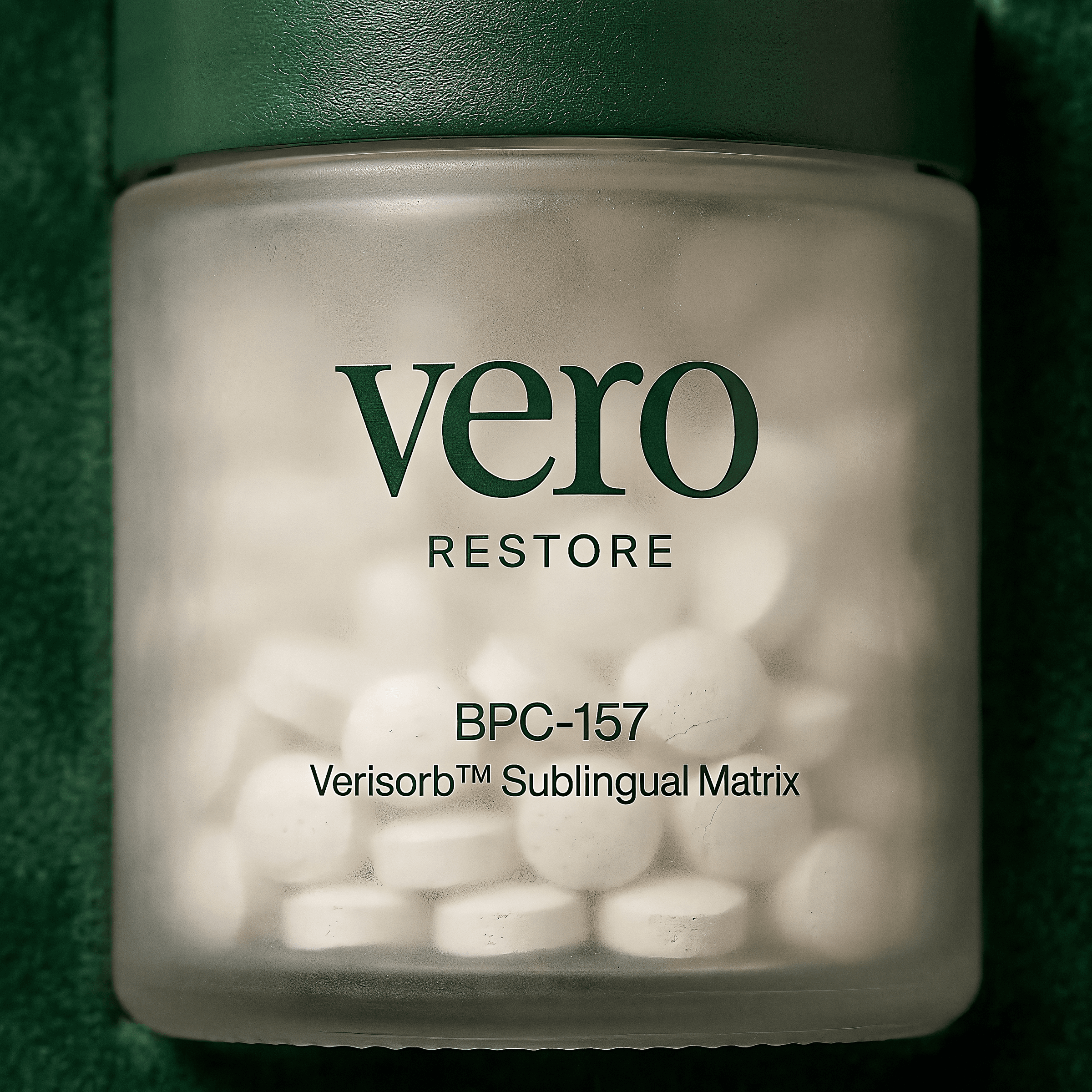
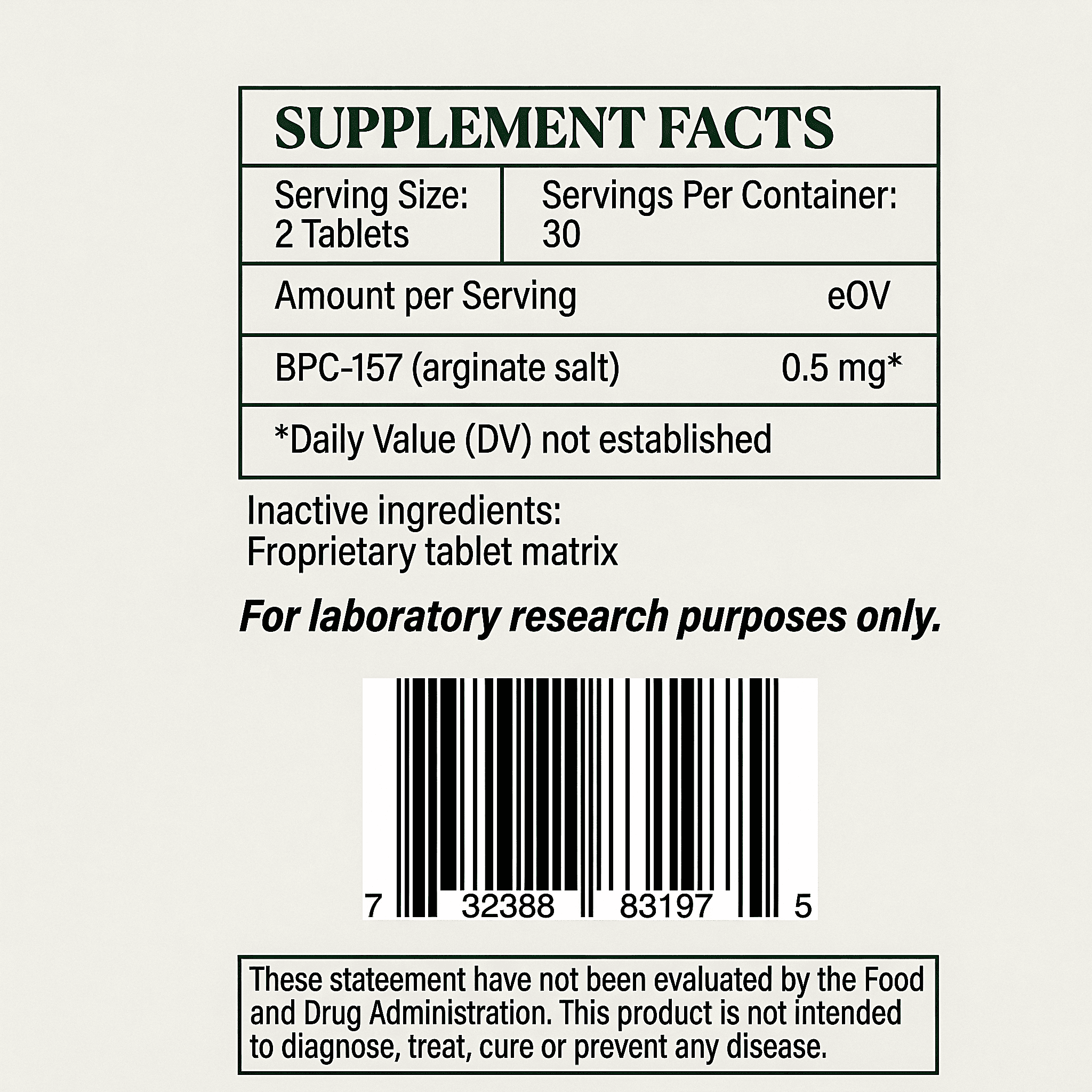
VERO's own work in this category sits in the recovery half of the muscle equation. Our RESTORE protocol is the sublingual BPC-157 format we research-frame for tissue repair questions. We do not currently offer GH secretagogues or IGF-1 analogues, and we have no plans to.
TB-500 and the actin pathway
TB-500 is the seven-amino-acid active fragment of Thymosin Beta-4. It binds the loose, unassembled form of actin inside cells and influences how freely repair cells can migrate toward damaged tissue. In a 1999 Journal of Investigative Dermatology paper, Thymosin Beta-4 was observed to accelerate wound closure in rodent skin models. The actin-binding mechanism has been confirmed in multiple animal repair models since.
Skeletal muscle data in humans is preclinical. TB-500 sits on the WADA prohibited list and is classified as a doping agent in sport, which is why detection studies exist where outcome studies do not.
Sublingual vs injectable: what changed in 2026?
The entire peptides for muscle growth conversation assumes subcutaneous injection. That assumption is a holdover from a decade when the only delivery format that worked for most peptides was a needle, and it is starting to date badly.
Three things to know before you weight injection-only sources:

Sublingual delivery sends peptides straight into the bloodstream, while oral peptides are destroyed by stomach acid and liver processing.
- Oral peptides are not all the same. Most peptide molecules get destroyed in your stomach acid and gut. That is the historical reason injection became the default.
- Sublingual delivery bypasses the gut. The tissue under your tongue absorbs molecules straight into your bloodstream, skipping the stomach and the liver's first-pass metabolism.
- Bioavailability still varies by molecule. Sublingual is not magic. The smaller and more chemically stable the peptide, the more of it actually makes it through. The bigger and more fragile, the less.
VERO's 2026 oral-vs-injectable bioavailability study is the read for the methodology and per-peptide numbers. The short version: well-formulated sublingual peptides reach systemic circulation in low single-digit to mid double-digit percentages depending on molecular weight and chemistry, which is roughly an order of magnitude better than naked oral peptides.
In our protocol design work, the question we ask first is whether the molecule's structure makes sublingual delivery plausible at all. BPC-157 is small, chemically stable, and a strong candidate. Large GH-axis peptides are weaker candidates by molecular weight alone. That is the honest filter, and it is the one the rest of the category does not apply. For the chemistry behind the format, see our explainer on how sublingual peptide delivery works.
The practical consequence is that the access calculus changes. A research-framed sublingual format sits at a different intersection of legality, compliance, and reproducibility than a grey-market injectable does, and that difference is worth weighing.
Which peptide stacks come up in muscle-growth research?
Stacking is a category convention more than a research convention. Almost none of the stacks you see promoted online have been studied head to head. The three that come up most often, with honest evidence framing:
Stack 1: CJC-1295 with Ipamorelin. A GHRH analogue paired with a selective GHRP. The theoretical logic is that they hit complementary pathways in pituitary GH release. Pharmacokinetic studies on each compound exist. There is no published RCT of the combination measuring hypertrophy in trained adults.
Stack 2: BPC-157 with TB-500. The recovery stack. Both have preclinical repair signals through different mechanisms, BPC-157 through angiogenesis and growth factor signalling and TB-500 through actin sequestration. Preclinical synergy has been described in animal models. No human RCT measuring outcomes in trained adults exists.
Stack 3: A GH peptide with IGF-1 LR3. The highest-risk and lowest-evidence stack on this list. The theoretical logic is to raise the GH and IGF-1 floor at the same time while also adding direct IGF-1 signal. The risk side of the ledger compounds the same way. We would weight this one extremely cautiously.
What unifies all three is that they live almost entirely in the practitioner and anecdotal literature, not the RCT literature. That should weight the confidence you assign to anything you read about them.
What are the side effects by peptide class?
The category convention is to publish one pooled side-effect section. That hides genuinely different risk profiles. Sorted by class:
- GH secretagogues (GHRH and GHRP). Water retention, numb hands or tingling fingers from carpal tunnel-style fluid effects, insulin resistance signals over longer use, and prolactin or cortisol elevations with older GHRPs like Hexarelin. The Sigalos and Pastuszak review summarised the published signals.
- IGF-1 analogues. Hypoglycaemia is the consistent flag. Long-term cellular growth and metabolism activation in unintended tissues is the theoretical concern that has not been adequately studied in humans.
- Myostatin inhibitors. Tendon stiffness signals in animal data, and theoretical concerns about cardiac muscle response since cardiac tissue also expresses ActRIIB receptors.
- Recovery peptides (BPC-157, TB-500). The most favourable published safety profile of the categories on this page. The honest caveat is that the human dataset is small and the assertion holds only at currently described research dosing.
That spread is why pooling these into one bullet list of "peptide side effects" loses information.
What's the regulatory status in 2026?
Three regulatory frameworks matter, and the category lists almost never separate them.
FDA bulk drug substance status. Section 503A governs which substances compounding pharmacies in the US can lawfully prepare. BPC-157 was removed from that list in 2023. Most of the GH secretagogues on this page have never appeared on it. Tesamorelin is the outlier because it carries a current FDA approval as a finished drug.
WADA prohibited list. The World Anti-Doping Agency's annual list governs sport. GH secretagogues, IGF-1 analogues, myostatin inhibitors and TB-500 all sit on the prohibited list as performance-enhancing substances. If you compete in any tested sport this is the binding framework regardless of how the FDA classifies the compound.
Prescription versus research-framed access. Telehealth clinics that operate under physician prescribing for off-label peptides exist, with significant variation across jurisdictions and significant change across calendar quarters as state and federal regulators update positions. Research-framed access through compliant DTC channels is the framework VERO operates under, and it specifically excludes medical claims, dosing recommendations for human use, and any framing that positions a peptide as a finished drug.
This is decision context, not buying advice.
How long until results, and what does training still need to do?
The honest expectation curve, drawn from what published pharmacokinetics and the available human pilot work suggest:
- Days to weeks for measurable changes in recovery markers from BPC-157 or TB-500 use in research settings.
- Weeks to a few months for body-composition shifts under GH secretagogues that work primarily through IGF-1 elevation.
- Months before any meaningful hypertrophy signal would even be detectable in the kind of trial that has not been run on most of these compounds.

Peptides increase the rate of muscle growth, but only if training and recovery are already in place.
A framing we use internally: peptides modulate the slope, not the y-intercept. Training stimulus, recovery, sleep and protein intake determine where your curve starts and how steep it climbs. Peptides at best add a few degrees to a slope that already has a direction.
If you are skipping sessions or eating in a 300-calorie deficit, no peptide on this page will rescue the result. If you are training with intent and recovering well, the same peptides start to look like research questions worth thinking about.
Frequently asked questions
Do peptides for muscle growth actually work?
Some categories show measurable biological effects in research, and the effect sizes that translate to muscle outcomes in trained adults are smaller than category marketing implies. GH secretagogues reliably raise GH and IGF-1 in short-term studies. Whether that translates to meaningful hypertrophy is not well established in published RCTs. Recovery peptides have strong preclinical signals and emerging human pilot data. The honest answer is "research suggests measurable biology, with weaker direct hypertrophy evidence than the category claims."
Which peptide has the most human evidence for muscle growth?
None of the peptides on this page have a published RCT establishing hypertrophy in trained healthy adults as a primary outcome. Tesamorelin has the strongest regulatory backing and the largest published trial dataset overall, but its trials measured visceral fat and metabolic outcomes in HIV-associated lipodystrophy, not hypertrophy in athletes. That distinction is the most important sentence in the category and the one almost no list publishes.
Are sublingual peptides as effective as injectable peptides for muscle growth?
It depends on the peptide. Sublingual delivery bypasses gut destruction and liver first-pass metabolism, and well-formulated sublingual peptides reach systemic circulation at meaningfully higher rates than naked oral peptides. The effective comparison versus injectable depends on the molecule's size and chemistry. Smaller, stable peptides like BPC-157 are stronger sublingual candidates than larger GH-axis peptides. VERO's 2026 bioavailability study is the methodology read.
How long does it take to see results from muscle-growth peptides?
Recovery-oriented peptides show changes in research markers across days to weeks. GH secretagogues working through IGF-1 elevation produce body-composition shifts on the order of weeks to a few months in studies that measured those endpoints. Hypertrophy-specific outcomes have not been the primary endpoint of most published research on this category.
Is BPC-157 a muscle-growth peptide?
Not in the direct anabolic sense. BPC-157 is a tissue repair peptide whose preclinical signals include angiogenesis, growth factor signalling, and growth hormone receptor upregulation in injured tissue. The way it influences muscle outcomes is indirect, via faster recovery between training sessions. That indirect lever is meaningful for natural lifters because adaptation compounds across sessions.
Are peptides legal for bodybuilding?
The answer splits by framework. Most peptides in this category are not FDA-approved as finished drugs. WADA classifies the major classes as prohibited substances for tested sport. Research-framed access exists under specific compliance constraints. There is no jurisdiction we are aware of where the compounds in this article are sold over the counter for muscle-growth purposes.
Can you stack peptides safely for muscle growth?
The honest answer: stacking is a category convention without a published RCT literature behind it. Risk profiles compound when peptide classes are combined and most adverse-event signals come from anecdotal and case-report literature rather than controlled trials. The recovery stack of BPC-157 with TB-500 has the most favourable published safety profile of the common stacks. The GH peptide with IGF-1 LR3 stack carries the most theoretical risk.
What are the side effects of growth hormone peptides?
Water retention, transient fluid-related symptoms like tingling fingers, insulin resistance signals over longer use, and prolactin or cortisol elevation with older GHRPs are the published signals. Long-term cardiovascular and metabolic safety in healthy adults remains the largest data gap, which the Sigalos and Pastuszak review made explicit.
How VERO approaches muscle-growth peptides
We do not currently offer growth hormone secretagogues, IGF-1 analogues, or myostatin inhibitors, and we have no plans to. Those classes carry evidence gaps, side-effect profiles and regulatory complexity that we do not see a clean research-framed path through.
What we do and do not currently work on:
- Recovery peptides (in catalogue). The RESTORE protocol is our sublingual BPC-157 format, research-framed for tissue repair questions and absorption-tested under our 2026 bioavailability methodology.
- GH secretagogues (not in catalogue). Evidence gaps and safety data, not vendor pressure, are the reason.
- IGF-1 analogues (not in catalogue). Smallest published human dataset of any class on this page.
- Myostatin inhibitors (not in catalogue). Animal data is dramatic, human data is sparse.
Our editorial posture is the rest of the answer. No vendor affiliate links, transparent advisory-board attribution, and honest declarations of what is in the catalogue and what is not. If you want our broader category map of where we think research-framed peptides are worth investigating, the protocols overview is the entry point.
Key Takeaways
- Most peptides marketed for muscle growth are growth hormone secretagogues that raise GH and IGF-1, not direct anabolics. The downstream effect on hypertrophy in trained adults is weaker in published RCTs than the category implies.
- Tesamorelin carries the strongest regulatory backing on this page, but its trials measured visceral fat in HIV-associated lipodystrophy, not muscle hypertrophy in athletes. That distinction matters.
- Direct IGF-1 analogues (LR3, DES) have the smallest published human muscle-outcome dataset and the most cellular-growth risk over time.
- Follistatin 344 has dramatic animal data and very thin human muscle-relevant data. The brake-off mechanism is real and the human translation is unproven.
- Recovery is the underrated lever for natural lifters. BPC-157 and TB-500 carry the strongest preclinical signals for tissue repair, with BPC-157 the more developed of the two and the only one with a research-framed sublingual format currently available.
- Delivery format changes the access calculus. Well-formulated sublingual peptides reach systemic circulation at meaningfully higher rates than naked oral peptides, and the molecule's size and chemistry determine whether sublingual is viable at all.
- Peptides modulate the slope, not the y-intercept. Training, sleep, recovery and nutrition determine the starting point.
References
- Sigalos JT, Pastuszak AW. The Safety and Efficacy of Growth Hormone Secretagogues. Sexual Medicine Reviews. https://pubmed.ncbi.nlm.nih.gov/28526632/. Retrieved 2026-05-28.
- Teichman SL, Neale A, Lawrence B, Gagnon C, Castaigne JP, Frohman LA. Prolonged Stimulation of Growth Hormone and Insulin-Like Growth Factor I Secretion by CJC-1295, a Long-Acting Analog of GH-Releasing Hormone, in Healthy Adults. Journal of Clinical Endocrinology and Metabolism, 2006. https://pubmed.ncbi.nlm.nih.gov/16352683/. Retrieved 2026-05-28.
- Raun K, Hansen BS, Johansen NL, et al. Ipamorelin, the First Selective Growth Hormone Secretagogue. European Journal of Endocrinology, 1998. https://pubmed.ncbi.nlm.nih.gov/9849822/. Retrieved 2026-05-28.
- Falutz J, Allas S, Blot K, et al. Metabolic Effects of a Growth Hormone-Releasing Factor in Patients With HIV. New England Journal of Medicine, 2007. https://pubmed.ncbi.nlm.nih.gov/18057338/. Retrieved 2026-05-28.
- Sikiric P, Seiwerth S, Brcic L, et al. Stable Gastric Pentadecapeptide BPC 157: Novel Therapy in Gastrointestinal Tract. Current Pharmaceutical Design, 2011. https://pubmed.ncbi.nlm.nih.gov/21443482/. Retrieved 2026-05-28.
- Hill M, Goldspink G. Expression and Splicing of the Insulin-Like Growth Factor Gene in Rodent Muscle is Associated With Muscle Satellite (Stem) Cell Activation. Journal of Physiology, 2003. https://pubmed.ncbi.nlm.nih.gov/12679374/. Retrieved 2026-05-28.
- Lee SJ. Quadrupling Muscle Mass in Mice by Targeting TGF-Beta Signaling Pathways. PLoS ONE, 2007. https://pubmed.ncbi.nlm.nih.gov/17726537/. Retrieved 2026-05-28.
- Rodgers BD, Garikipati DK. Clinical, Agricultural, and Evolutionary Biology of Myostatin: A Comparative Review. Endocrine Reviews, 2008. https://pubmed.ncbi.nlm.nih.gov/18483434/. Retrieved 2026-05-28.
- Nass R, Pezzoli SS, Oliveri MC, et al. Effects of an Oral Ghrelin Mimetic on Body Composition and Clinical Outcomes in Healthy Older Adults: A Randomized Trial. Annals of Internal Medicine, 2008. https://pubmed.ncbi.nlm.nih.gov/19018019/. Retrieved 2026-05-28.
- Malinda KM, Goldstein AL, Kleinman HK. Thymosin Beta-4 Stimulates Directional Migration of Human Umbilical Vein Endothelial Cells. FASEB Journal, 1997 / and follow-up wound healing studies in Journal of Investigative Dermatology, 1999. https://pubmed.ncbi.nlm.nih.gov/10469335/. Retrieved 2026-05-28.
- US Food and Drug Administration. Bulk Drug Substances Nominated for Use in Compounding Under Section 503A of the Federal Food, Drug, and Cosmetic Act. https://www.fda.gov/drugs/human-drug-compounding/bulk-drug-substances-nominated-use-compounding-under-section-503a-federal-food-drug-and-cosmetic-act. Retrieved 2026-05-28.
- World Anti-Doping Agency. The Prohibited List. https://www.wada-ama.org/en/prohibited-list. Retrieved 2026-05-28.
The recovery lever is where we focus. Explore the RESTORE protocol →
RESTORE™
BPC-157Engineered around 500mcg BPC-157. Accelerates deep tissue and joint recovery
Clinical Context
Important Notice: VERO protocols are nutritional and systemic optimisation formats. They are not intended to diagnose, treat, cure, or prevent any medical condition. These statements have not been evaluated by the Food and Drug Administration.