
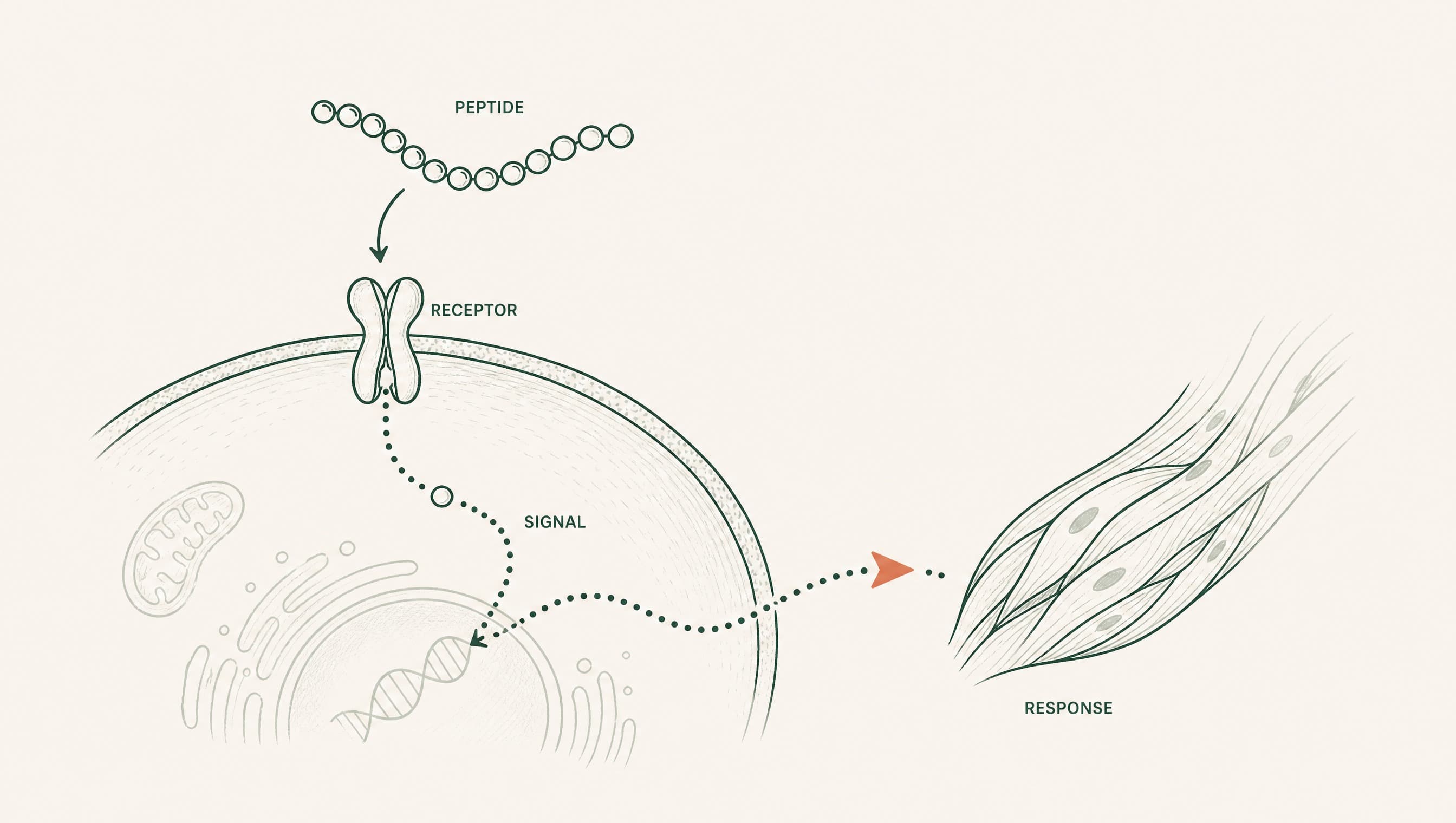
Choosing a peptide protocol starts with your research goal, not the compound. This guide maps six domains — recovery, skin, metabolism, cognition, sexual wellness, and longevity — to the compounds with real, verified published research behind them.
Most people pick a peptide protocol backwards. They get curious about one compound first, then try to make it fit their goal after the fact. Flip that order instead: name what you're actually trying to research, then find the compound with the deepest evidence in that specific domain.
If recovery is the goal, VERO's RESTORE protocol is built around BPC-157, the compound with the deepest animal-model track record for tendon and soft-tissue research. This article is written for research purposes only. It walks through six biological domains, the compound each one maps to, and how delivery format decides whether any of that research even applies to what you swallow.
Key Takeaways
- Pick your research domain first — recovery, skin, metabolism, cognition, sexual wellness, or cellular longevity — then match it to the compound with the deepest evidence in that domain.
- Recovery research points to BPC-157 and thymosin beta-4; skin research points to GHK-Cu; metabolic research points to MOTS-c; cognitive research points to Semax; sexual wellness research points to bremelanotide; cellular longevity research points to Epithalon.
- Delivery format decides whether a compound reaches your bloodstream intact. Standard oral capsules lose more than 98% of their dose to digestion before absorption.
- Compounds with non-overlapping mechanisms can be introduced one at a time in a stack. Introducing two at once makes it hard to tell what's actually doing anything.
- Define your tracking metric before you start. Members experience clearer signal when the metric is locked in ahead of time instead of reconstructed from memory afterward.
Goal-First Selection: Matching Your Research Domain to a Compound
Think of it like planning a road trip. You don't pick the car first and then decide where to go. You pick the destination, then figure out the fastest way to get there. Peptide research works the same way.
Six domains show up again and again in the published literature, and each one maps to a different compound:
- Musculoskeletal recovery → BPC-157, thymosin beta-4
- Skin and connective tissue → GHK-Cu
- Metabolic function and body composition → MOTS-c
- Cognitive performance → Semax
- Sexual wellness → bremelanotide (PT-141)
- Cellular longevity and telomere biology → Epithalon
These domains barely overlap, and neither do the compounds behind them.
BPC-157 and Epithalon both come up in longevity conversations, but one targets soft-tissue repair signaling and the other targets how many times a single cell can divide. Treating them as interchangeable misses the point of both.
BPC-157 and Thymosin Beta-4 for Musculoskeletal Recovery Research
If you've ever torn a tendon or strained a ligament, you already know the frustrating part: those tissues recover more slowly than muscle because they get far less blood flow. That gap is exactly what recovery-focused peptide research is trying to close.
BPC-157 is a short chain of 15 amino acids first found in human gastric juice, where your stomach naturally makes related protective proteins. A 2025 review pulled together 36 studies on BPC-157. Only one was in people; the other 35 were animal studies (Vasireddi et al., 2025). Here's what it found:
BPC-157 grows new blood vessels at injury sites; Thymosin beta-4 draws — cells toward damaged tissue.
- In animal models, BPC-157 was linked to higher growth-hormone-receptor activity and several cell-growth and blood-vessel-formation pathways, alongside lower inflammatory signaling.
- Across those animal studies, it improved outcomes in muscle, tendon, ligament, and bone injury models.
- The one human data point was a small, uncontrolled case series: 7 of 12 people with chronic knee pain reported relief lasting more than six months.
That last point matters: one small, uncontrolled case series isn't proof of anything in people — it's a signal worth watching, not a result to lean on.
Thymosin beta-4, the peptide studied in TB-500 preparations, sits in the same broad domain through a different route. A 2010 review of animal studies found it calmed inflammatory signaling and helped cells migrate, form new blood vessels, and survive, across skin, eye, and heart tissue (Philp and Kleinman, 2010).
Where BPC-157 research emphasizes blood-vessel growth and growth-factor regulation at the injury site, thymosin beta-4 research emphasizes how cells physically move toward damaged tissue. Different mechanisms, same broad domain. That's why the two show up together so often in research community discussion. For more detail, see BPC-157's regulatory status and what the published BPC-157 research shows.
GHK-Cu for Skin and Connective Tissue Research
By the time you're in your 40s, your skin is producing measurably less of a small copper-binding peptide called GHK-Cu than it did in your 20s. That decline roughly tracks with when skin starts looking thinner and wounds start taking longer to close.
GHK-Cu is a tripeptide — three amino acids linked to a copper ion — that your liver and skin keep making for ongoing tissue upkeep. A 2018 review found that GHK-Cu shifts activity by half or more in roughly 31 out of every 100 human genes tested. Some genes went up, some went down, but nearly a third of the genome moved (Pickart and Margolina, 2018).
How GHK-Cu decline from your twenties to forties thins skin's collagen structure and reduces hydration.
That's a wide reach for a three-amino-acid molecule.
In that same preclinical review, GHK-Cu was linked to:
- Higher synthesis of collagen (skin's structural scaffolding) and glycosaminoglycans (the molecules that keep that scaffolding hydrated), in lab-based cell studies
- Complete blocking of copper-driven oxidation of LDL cholesterol in lab testing, where a standard antioxidant enzyme (SOD1) only managed about 20% protection
- Strong activation of the cell's protein-cleanup system, the pathway that clears out damaged proteins, in the same preclinical data
Research suggests GHK-Cu touches collagen production and hydration-support together, which is part of why its literature is so broad. Members experience gradual shifts in skin texture and connective tissue firmness across multi-week research protocols, though individual variation is wide and outcomes are context-dependent. VERO's RADIANCE protocol is built around GHK-Cu for exactly this research domain.
For more on how peptides fit into skin research generally, see peptides and skin care.
MOTS-c for Metabolic and Body Composition Research
Your mitochondria — the structures inside your cells that convert food into usable energy — carry their own small stash of DNA, separate from the DNA in your cell's nucleus. MOTS-c is a 16-amino-acid peptide encoded in that mitochondrial DNA, which makes it mechanically unlike anything else in this guide.
A 2015 study gave MOTS-c to mice and found it blocked both age-related and diet-driven insulin resistance and excess body fat (Lee et al., 2015). The route ran through AMPK, a cellular energy switch, turned on by dialing down a background process called the folate cycle.
What that activation touched in the study:
- Insulin sensitivity
- Fat storage regulation
- Overall cellular energy balance
AMPK functions like a master dimmer switch for how a cell handles fuel. Research suggests MOTS-c works as a messenger from the mitochondria back to the cell's genetic control room, adjusting how the whole system manages energy. That mechanism is distinct from peptides that influence metabolic outcomes through growth-hormone secretagogue pathways, and the two categories aren't redundant.
Semax for Cognitive Performance Research
If you've ever pulled an all-nighter and felt your memory go foggy the next day, you've felt what happens when the signaling molecules that keep brain cells connected run low. Semax research centers on one of those molecules: BDNF, brain-derived neurotrophic factor.
Semax is a seven-amino-acid peptide built from a fragment of ACTH, a hormone your pituitary gland makes naturally. A 2006 study gave rats a single dose of Semax. BDNF levels in the hippocampus rose 1.4-fold, receptor activity for BDNF's docking site (trkB) went up too, and the same rats did better on a learning task (Dolotov et al., 2006).
BDNF molecules binding to trkB receptors on hippocampal neurons to strengthen memory pathways.
This is rat-model data. There's no human trial behind that 1.4-fold figure, and Semax's literature is built almost entirely around intranasal delivery.
The hippocampus is the brain region most tied to learning and memory formation. trkB is the receptor BDNF binds to activate that pathway. Semax is typically studied via intranasal delivery, since the tissue behind your nose gives compounds a fairly direct route toward brain tissue.
Users report Semax feels faster-acting than other cognitive-research peptides, though that's a community observation rather than something the cited study measured directly.
Bremelanotide (PT-141) for Sexual Wellness Research
Every other compound in this guide lives entirely in preclinical research. Bremelanotide, commonly studied under the name PT-141, is the exception. It's the one compound here with a completed FDA approval pathway.
- Only compound in this guide with a completed FDA approval pathway
- Acts centrally, through brain pathways, not through the vascular system
- Approved for one specific condition, not general use
The FDA approved bremelanotide, sold as Vyleesi, in June 2019. The approved use covers a condition called HSDD: persistently low sexual desire that causes real distress, in women who haven't yet reached menopause (Dhillon and Keam, 2019). Bremelanotide is a lab-made copy of a natural hormone called alpha-MSH, and it works through brain receptors, not through blood flow. That's a different route than blood-flow-based approaches, so the timing and feel of it are different too.
Epithalon for Cellular Longevity and Telomere Research
Every time one of your cells divides, the protective caps on the ends of its chromosomes get a little shorter, similar to the plastic tips on shoelaces wearing down with use. Once those caps, called telomeres, get too short, the cell stops dividing entirely. Epithalon research is aimed directly at that limit.
Epithalon is a lab-made four-amino-acid peptide, first developed in Russia. In a 2004 lab study, human fibroblasts — the connective-tissue cells that hold your body's scaffolding together, taken from fetal lung tissue for this study — normally stopped dividing after 34 rounds. Once Epithalon was added, the enzyme that rebuilds telomeres switched on, the caps grew back to a younger length, and the cells kept dividing for 10 more rounds before stopping (Khavinson et al., 2004).
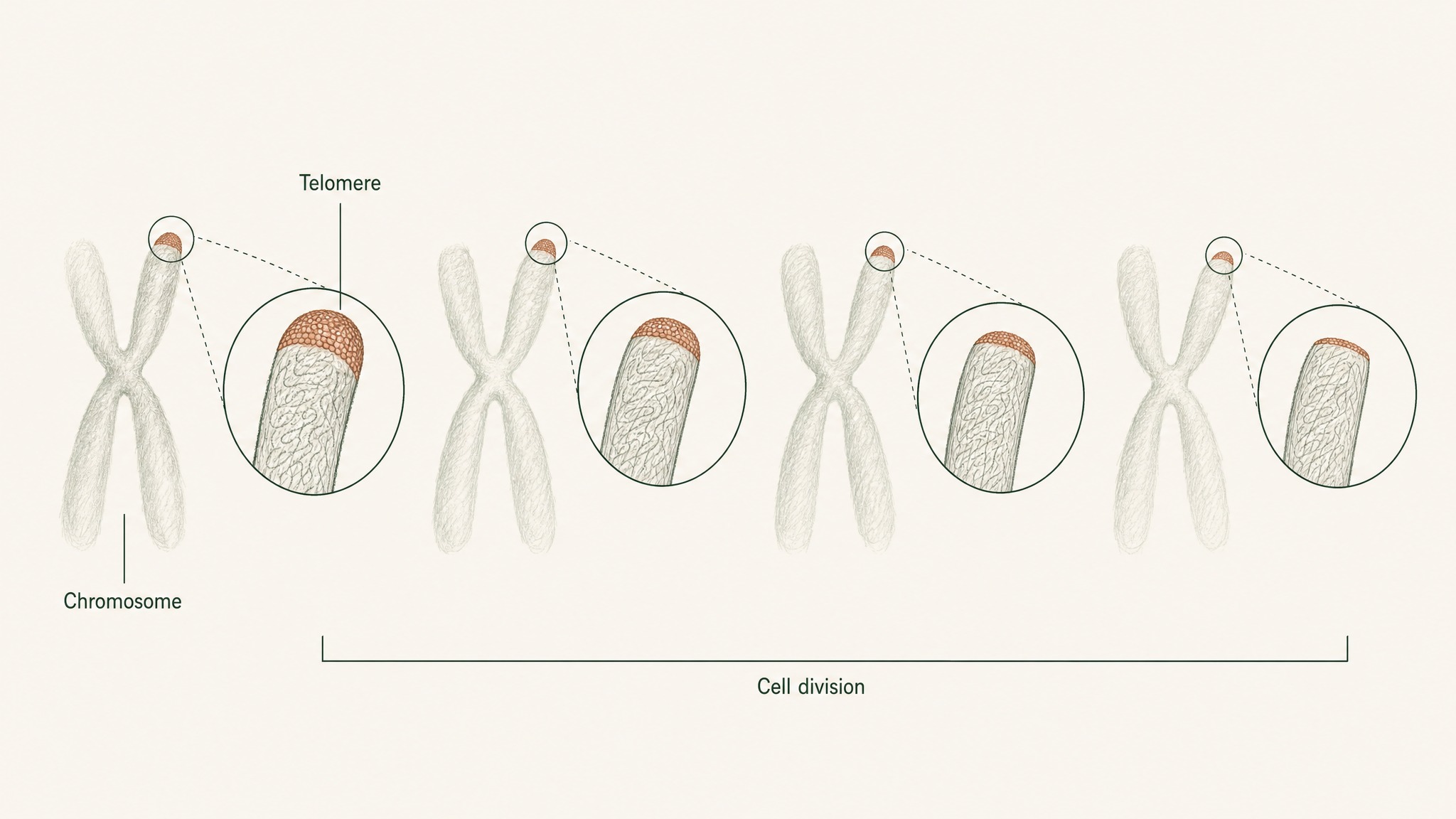
Telomeres shorten with each cell division until the cell can no longer replicate.
This is cell-culture data, not a human clinical trial — and a meaningful share of Epithalon's literature sits in Russian-language sources.
That point, where a cell can no longer replicate, is called the Hayflick limit. Epithalon's literature is smaller than BPC-157's or GHK-Cu's, and its mechanism doesn't overlap with any other compound in this guide, which is exactly what makes it non-redundant in a longevity-focused stack.
Sublingual vs Oral Delivery: Why Format Determines Bioavailability
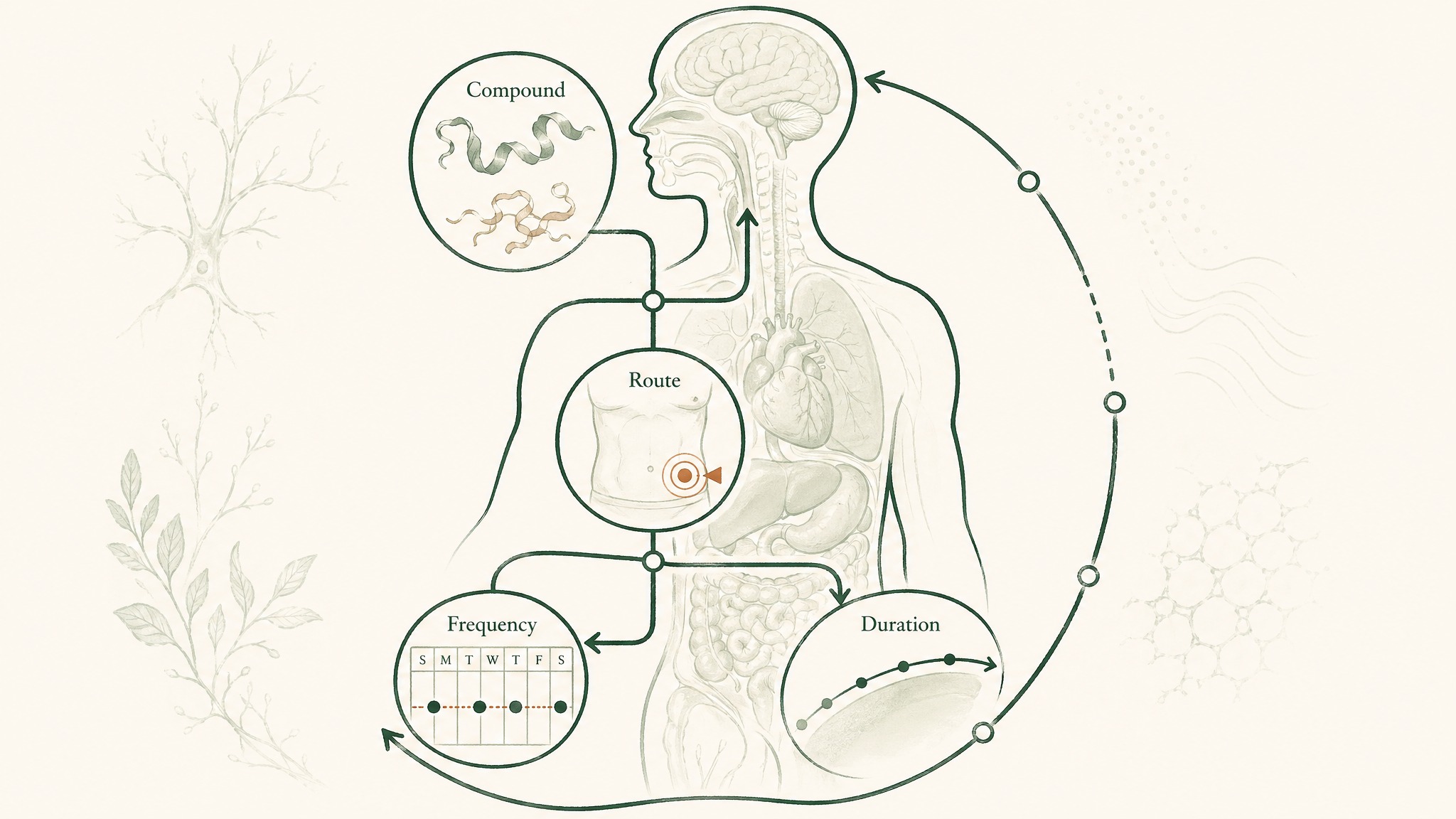
Here's the part most protocol discussions skip entirely: picking the right compound is only half the decision. How that compound gets into your bloodstream determines whether any of the research above even applies to what you swallow.
Your gut handles a peptide exactly like it handles food: something to break down for parts, not something to let through whole. A 2013 review found oral bioavailability for peptides typically sits below 1–2% (Renukuntla et al., 2013). Out of every 100 milligrams in a capsule, 98 milligrams or more never make it to your blood.
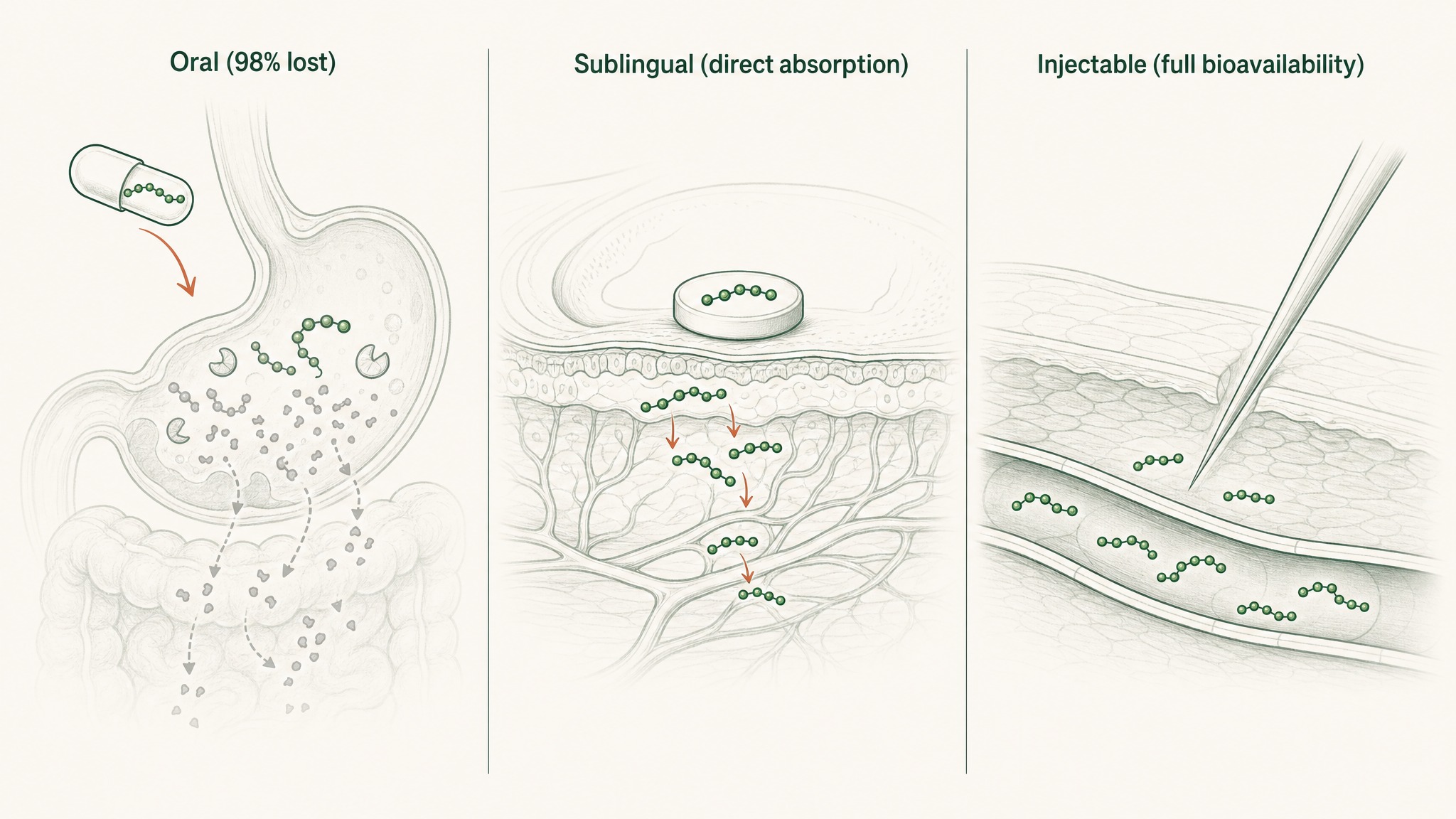
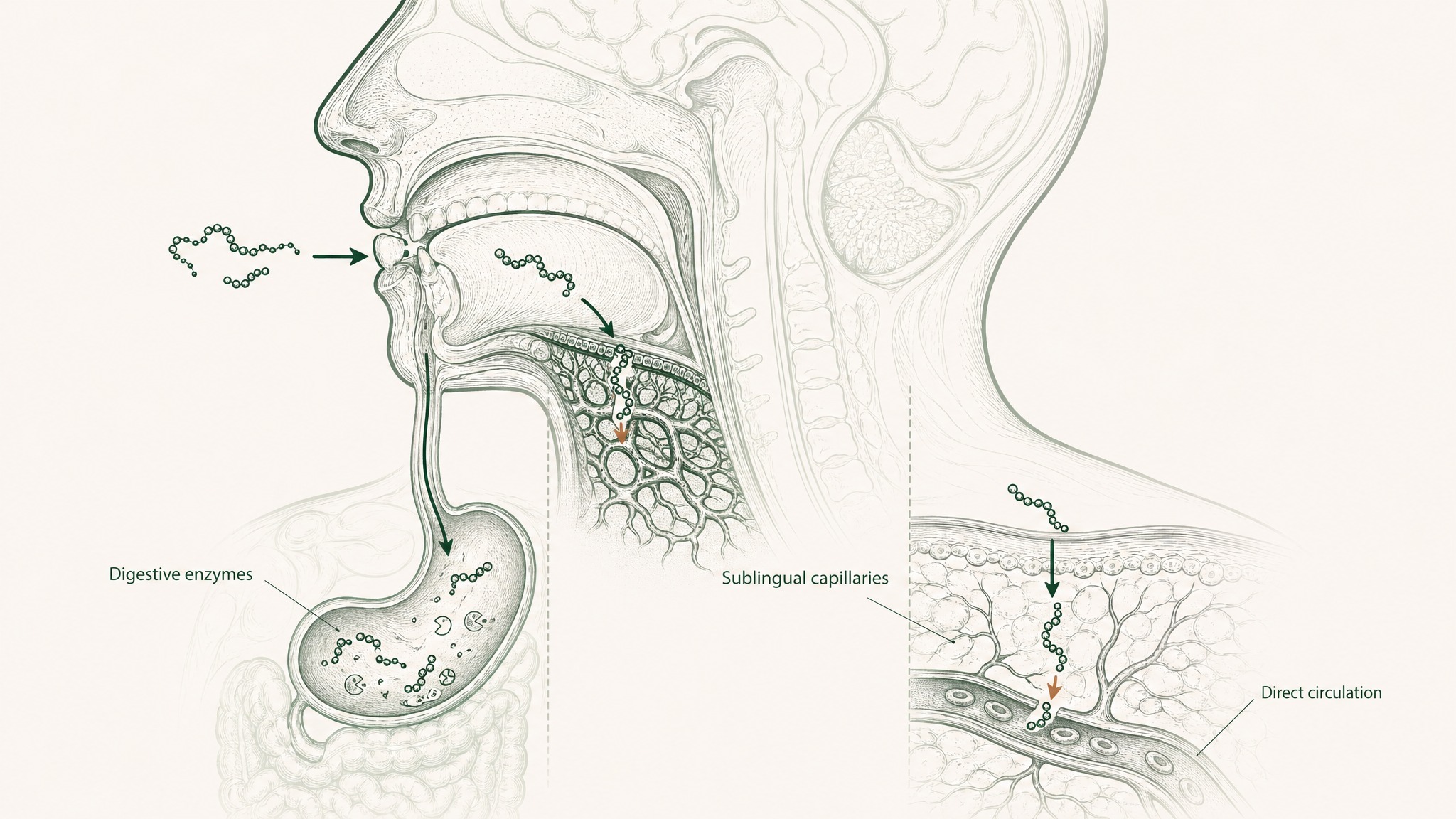
How peptides are absorbed differently depending on whether they're swallowed, placed under the tongue, or injected.
- Oral capsules break down via digestive enzymes and poor gut-wall permeability before meaningful absorption happens
- Sublingual tissue is blood-vessel rich, so it absorbs directly and skips first-pass liver metabolism
- Injectable delivery bypasses digestive and mucosal barriers entirely, giving the most predictable pharmacokinetics (how a compound moves through and exits your body over time)
A 2021 review looked at why oral peptides struggle: weak gut-wall crossing, enzyme breakdown, and liver filtering all stack against each other (Verma et al., 2021). A 2016 study shows what a well-engineered sublingual route can do instead. Researchers built sublingual insulin capsules and, in diabetic rats, measured 24.1% of the dose reaching the blood — compared to a shot under the skin (Patil and Devarajan, 2016). That's one compound in one animal study, not a blanket number for every peptide, but it shows the ceiling sublingual formulation work is chasing. VERO's VERISORB sublingual system was engineered to address that same degradation barrier at the point of absorption.
Not every compound is flexible on format. Semax's literature is built around intranasal delivery specifically, since access to brain tissue through the nasal pathway is part of the mechanism, and that route can't simply be swapped for sublingual or oral without changing what's actually being measured.
Stacking Compounds Without Overlapping Mechanisms
Combining compounds only makes sense when they're doing genuinely different jobs. If two compounds hit the same mechanism, that's not really stacking. It's just doubling one input and calling it two.
The most-examined pairing in published animal research is BPC-157 with thymosin beta-4:
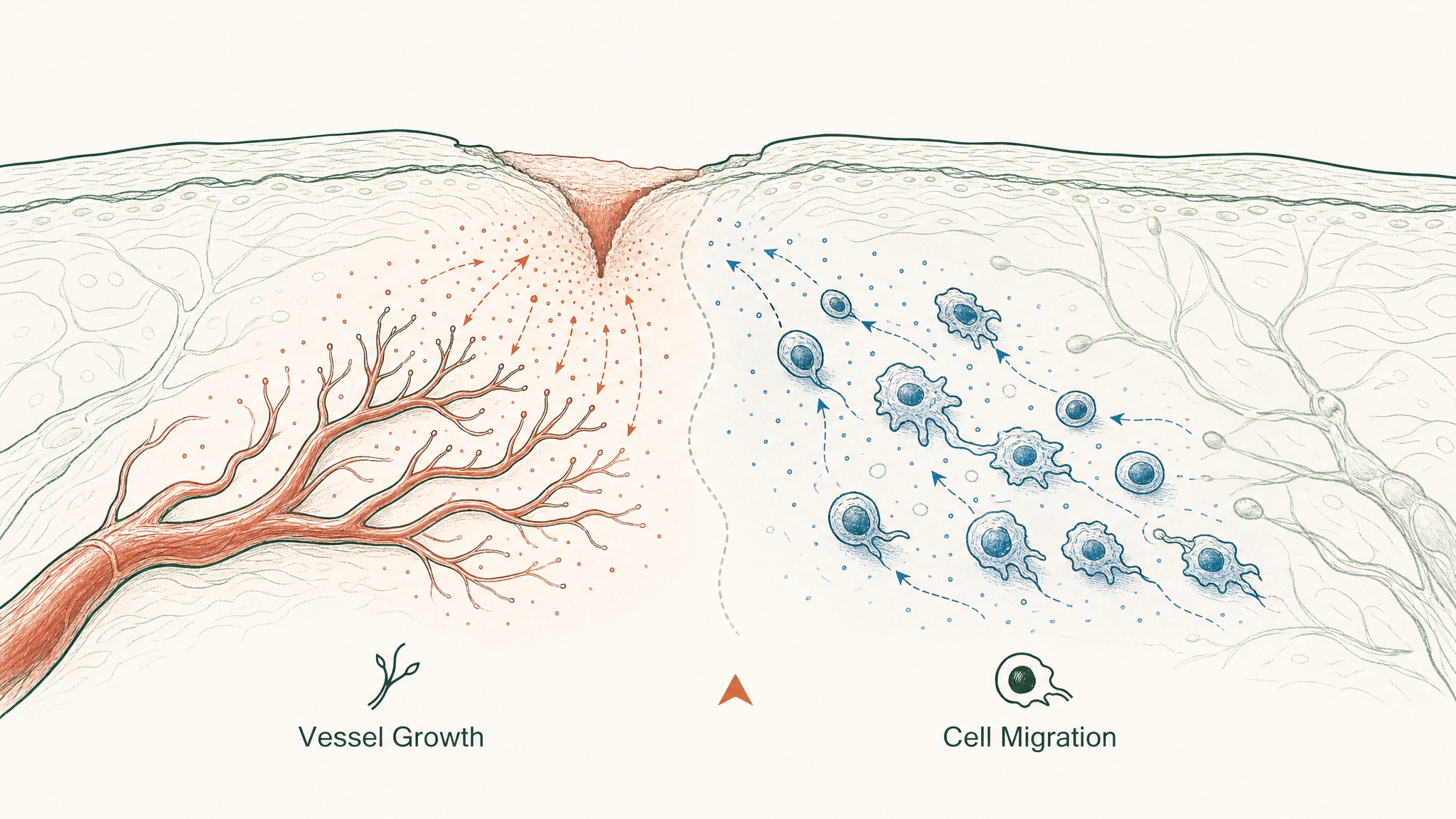
BPC-157 builds new blood vessels while thymosin beta-4 moves immune cells—two separate jobs in the same injury.
- BPC-157 targets blood-vessel growth and growth-factor regulation at the injury site
- Thymosin beta-4 targets cell movement and inflammatory pathway modulation
- GHK-Cu and Epithalon pair well for longevity research with no mechanism overlap at all — one acts on the extracellular matrix and gene expression, the other on telomerase activity
They're complementary because they don't compete for the same biological ground. The practical discipline is introducing one compound at a time, not all at once. Add one, establish a clear baseline response, then add the second.
Members experience noticeably clearer signal from sequential introduction, even when it takes longer to get there.
When both compounds go in on day one, there's no real way to tell which one is producing whatever you're observing. Stacking doesn't multiply outcomes. It addresses non-overlapping mechanisms, and biology still sets the ceiling.
Setting Protocol Duration, Cycling, and a Tracking Metric
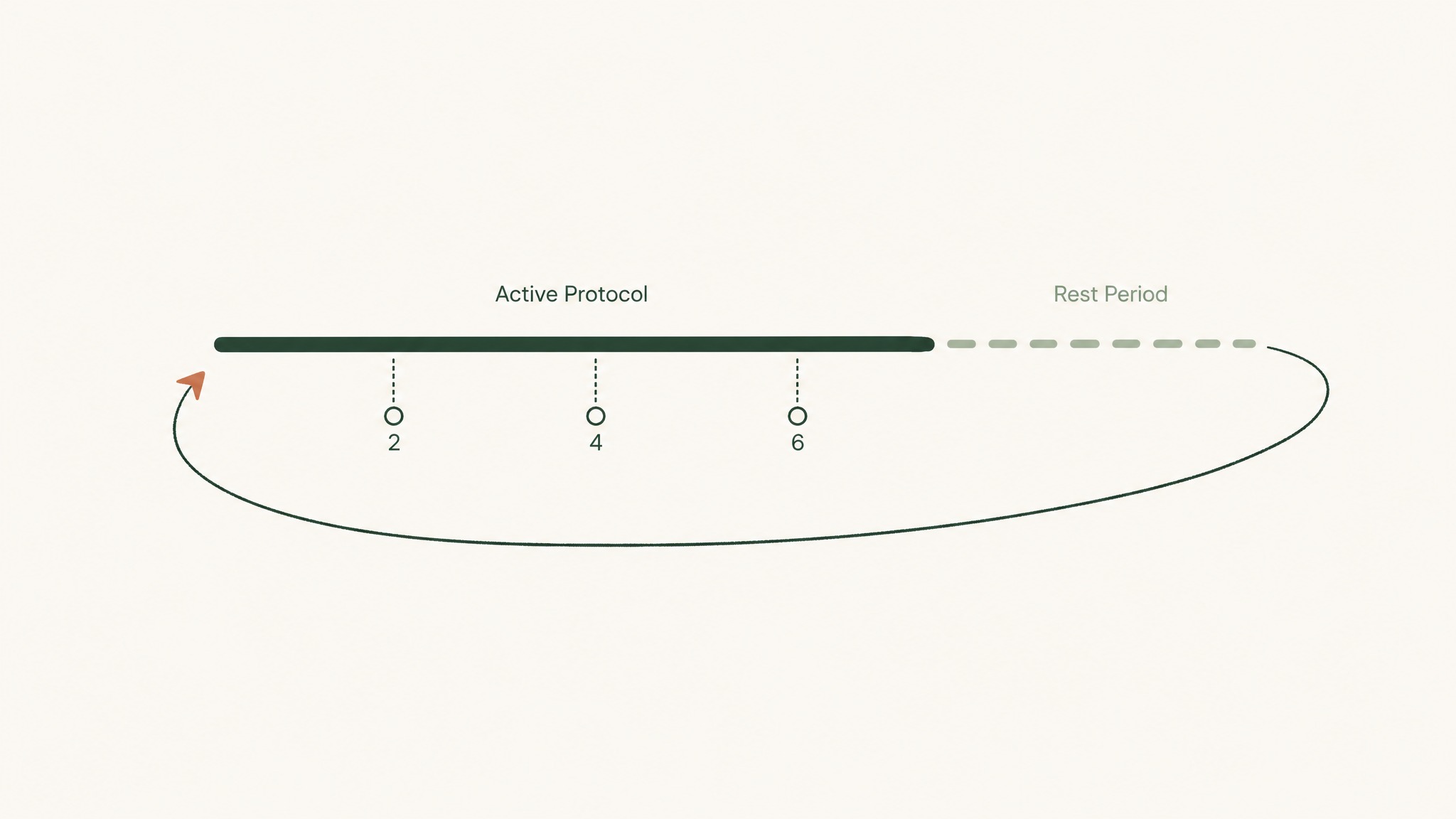
Published studies run on wildly different timelines depending on compound and outcome. BPC-157 animal studies typically use two-to-four-week windows for acute injury; Epithalon cell-culture studies run on a completely different clock. Neither timeline automatically tells you the right duration for a personal research protocol.
What that looks like in practice, by domain:
Connor documents his baseline metrics before starting a peptide protocol.
- Recovery research typically tracks movement or pain-free range of motion
- Skin research typically tracks consistent-lighting photography at fixed intervals
- Cognitive research typically tracks a validated assessment taken before and after
Define the metric before you start, not after. Research suggests the biggest source of noisy, unusable data isn't the compound at all. It's trying to reconstruct a baseline from memory once the protocol is already underway.
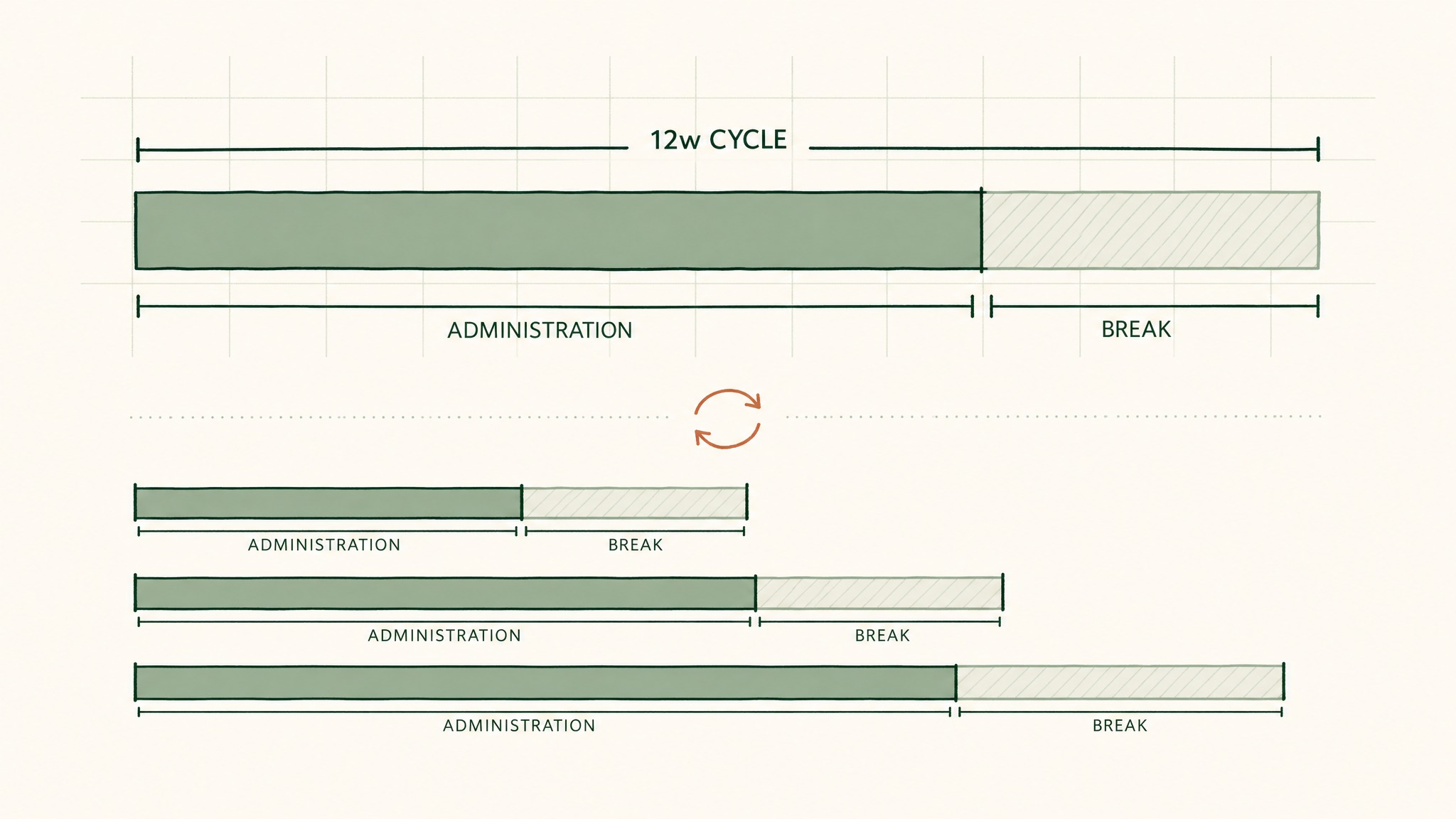
Cycling, meaning periods of administration followed by breaks, shows up consistently in community practice, typically four-to-twelve-week administration windows with one-to-four-week breaks between them. Human clinical data on the optimal interval doesn't really exist yet. The structure stays consistent even when the specific numbers vary by practitioner.
FAQ
Do I need to pick just one compound to start? No, but starting with one makes the research cleaner. Introducing one compound, establishing a baseline, then adding a second non-overlapping compound is how you tell which one is actually producing what you're observing.
Is BPC-157 backed by human trials? Almost entirely not. A 2025 systematic review found 35 of 36 included studies were preclinical (animal models); the lone human data point was a small, uncontrolled case series, not a controlled trial (Vasireddi et al., 2025).
Why does delivery format matter if the compound is the same? Because format decides how much of the compound reaches your blood at all. Standard oral capsules lose upward of 98% of their dose to digestion; sublingual and injectable routes sidestep most of that loss (Renukuntla et al., 2013).
Can two peptides be stacked safely for research purposes? Research suggests pairing compounds with non-overlapping mechanisms — like BPC-157 and thymosin beta-4, or GHK-Cu and Epithalon — makes it possible to reason about what each one is contributing, though this content is for research purposes only and isn't a recommendation for human use.
Choosing Where to Start
Goal first, compound second, delivery format third. That order is what actually produces interpretable results.
Explore VERO's full protocol range to see how RESTORE and RADIANCE map to the research domains covered here, or go straight to the RESTORE protocol if soft-tissue recovery is where you're starting.
This content is produced for educational and research purposes only. VERO products are not intended to diagnose, treat, cure, or prevent any disease. Compounds described are research chemicals and are not approved for human therapeutic use unless otherwise stated. Consult a qualified healthcare provider before making any health-related decisions.
References
Vasireddi N, Hahamyan H, Salata MJ, Karns M, Calcei JG, Voos JE, Apostolakos JM (2025). BPC-157 in orthopaedic sports medicine: a systematic review. HSS Journal.
Philp D, Kleinman HK (2010). Animal studies with thymosin beta-4, a multifunctional tissue repair and regeneration peptide. Annals of the New York Academy of Sciences.
Pickart L, Margolina A (2018). GHK-Cu peptide and gene expression: regenerative and protective actions in preclinical models. International Journal of Molecular Sciences.
Lee C, Zeng J, Drew BG, Sallam T, Martin-Montalvo A, Wan J, Kim SJ, Mehta H, Heveler AL, de Cabo R, Cohen P (2015). Mitochondrial-derived peptide MOTS-c and metabolic homeostasis in mouse models of obesity and insulin resistance. Cell Metabolism.
Dolotov OV, Karpenko EA, Inozemtseva LS, et al. (2006). Semax, BDNF, and trkB expression in the rat hippocampus. Brain Research.
Dhillon S, Keam SJ (2019). Bremelanotide: first approval overview. Drugs.
Khavinson VKh, Bondarev IE, Butyugov AA, Smirnova TD (2004). Epithalon and the division limit in human somatic cells: in vitro evidence. Bulletin of Experimental Biology and Medicine.
Renukuntla J, Vadlapudi AD, Patel A, Boddu SHS, Mitra AK (2013). Oral bioavailability of peptides and proteins: barriers and formulation approaches. International Journal of Pharmaceutics.
Verma S, Goand UK, Husain A, Katekar RA, Garg R, Gayen JR (2021). Challenges of peptide and protein drug delivery by oral route: bioavailability strategies. Drug Development Research.
Patil NH, Devarajan PV (2016). Sublingual insulin-loaded alginic acid nanoparticles: bioavailability in a diabetic rat model. Drug Delivery.
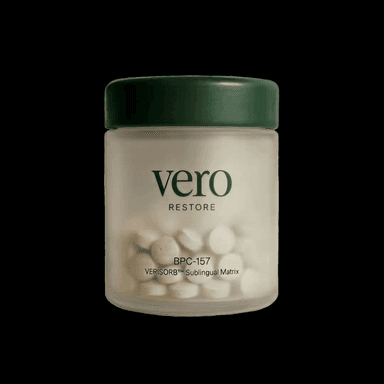
RESTORE™
BPC-157Engineered around 0.5mg BPC-157 (arginate salt). Accelerates deep tissue and joint recovery
Clinical Context
Important Notice: VERO protocols are nutritional and systemic optimisation formats. They are not intended to diagnose, treat, cure, or prevent any medical condition. These statements have not been evaluated by the Food and Drug Administration.