

Research on peptides and cognitive function covers a handful of compounds with genuinely interesting mechanisms, BDNF modulation, serotonin regulation, neuroprotective gene expression. Here's what the studies actually found, and where the evidence still has limits.
Your brain consumes roughly 20% of your body's energy despite making up about 2% of your total mass. It's the most metabolically demanding organ you have, and that makes it unusually sensitive to the molecular signals that regulate cellular energy, maintenance, and communication.
Research into peptides and cognitive function has grown meaningfully over the past two decades. A handful of compounds now have mechanistic data in animal models, some have small human clinical trials, and one, Selank, has randomised controlled trial data in humans. This article covers what those studies found, where the evidence is strong, and where it has honest limits. All of this is available for research purposes only.
What Does "Cognitive Peptide" Actually Mean?
Think of your brain as a city and neurons as the buildings inside it. Those buildings need power, maintenance crews, and reliable ways to pass messages between each other. "Cognitive peptides" describes a loosely grouped category of compounds that researchers have found to interact with some part of that city's infrastructure, the electrical grid, the repair workforce, or the inter-building messaging system.
Three specific pathways appear across most of the relevant research:
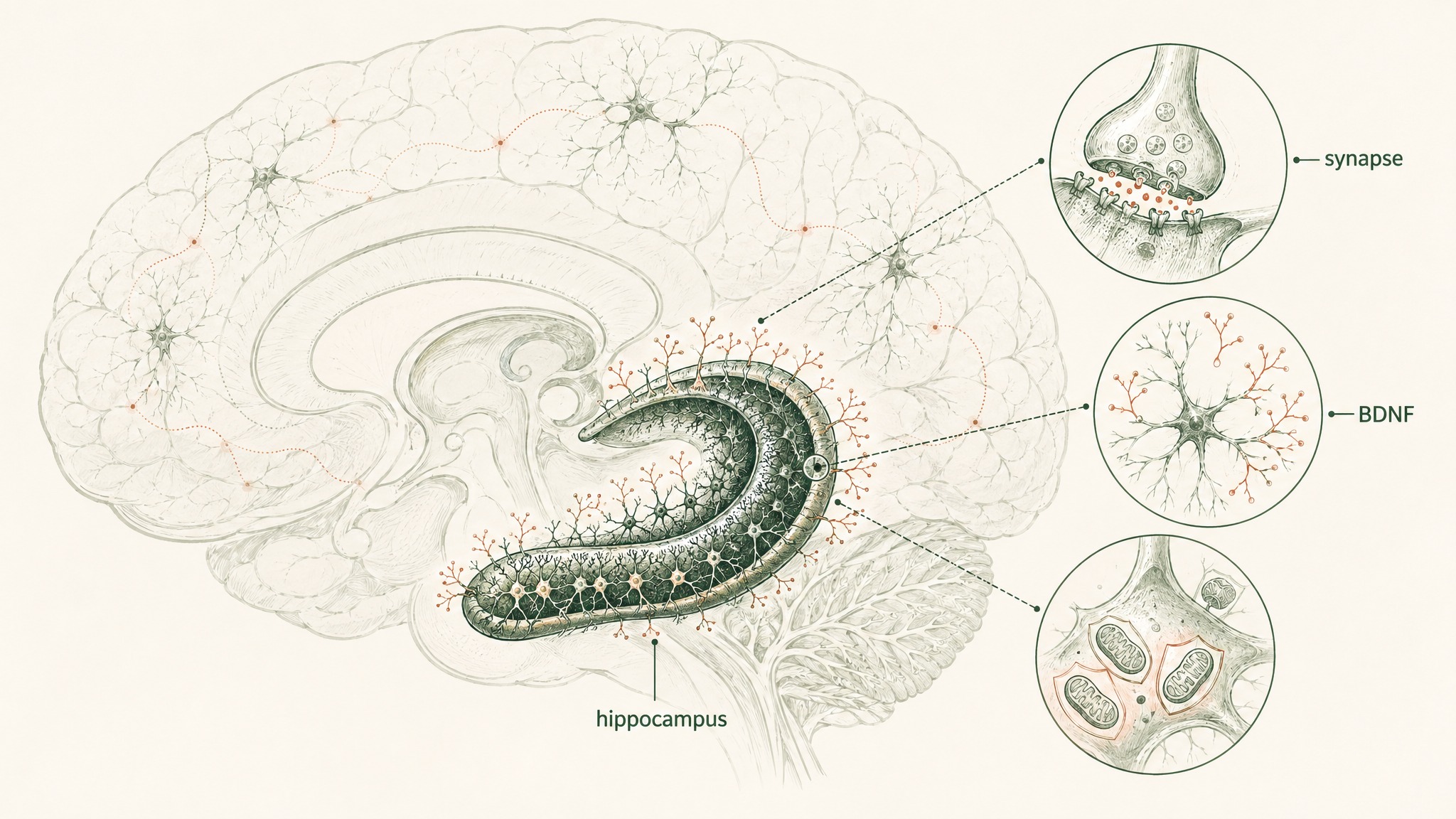
BDNF, Brain-Derived Neurotrophic Factor. Think of BDNF as the brain's fertiliser. It's a protein your neurons produce to support their own growth, survival, and the formation of new synaptic connections (synapses being the contact points between neurons where signals jump from one cell to the next). Higher BDNF in the hippocampus, the brain region most associated with learning and memory, correlates with better performance on learning and spatial memory tasks in animal models.
Serotonin regulation. Serotonin isn't just the "feel-good neurotransmitter" from supplement marketing. It's a broadly distributed signalling molecule that shapes attention, processing speed, and how emotional state affects decision-making. Different brain regions use it for very different purposes, which is why peptides that alter regional serotonin production can have complex, location-specific effects on cognitive function.
Neuroprotective gene expression. A third category of research looks at which genes get switched on or off in neuronal tissue after peptide exposure, particularly genes tied to managing oxidative stress (the cellular equivalent of rust, where reactive molecules from energy production slowly damage proteins and DNA), inflammation, and structural repair. The brain is especially vulnerable to both because of its high metabolic rate and relatively restricted access to the immune system's cleaning mechanisms.
These three pathways are the shared vocabulary the peptide cognition literature uses. They're the framework most of the specific research below maps to.
Semax: The BDNF Connection
Semax is a synthetic peptide modelled on a fragment of adrenocorticotropic hormone (ACTH), a signalling molecule your pituitary gland produces naturally. Specifically, it's based on ACTH(4-10), a seven-amino-acid sequence, with three additional amino acids (Pro-Gly-Pro) added to improve stability in the body. Researchers at the Institute of Molecular Genetics in Moscow developed it and began studying its effects on the brain in the 1990s.
What the research kept finding centred on BDNF. Dolotov and colleagues published a 2006 study showing that a single intranasal Semax application produced a 1.4-fold increase in BDNF protein levels in the rat hippocampus. Alongside that, trkB phosphorylation increased, trkB being the receptor that BDNF docks to, like a lock that BDNF is the key for. Rats that received Semax showed improved performance on conditioned avoidance tasks compared to controls (Dolotov et al., Brain Research, 2006, PMID 16996037).
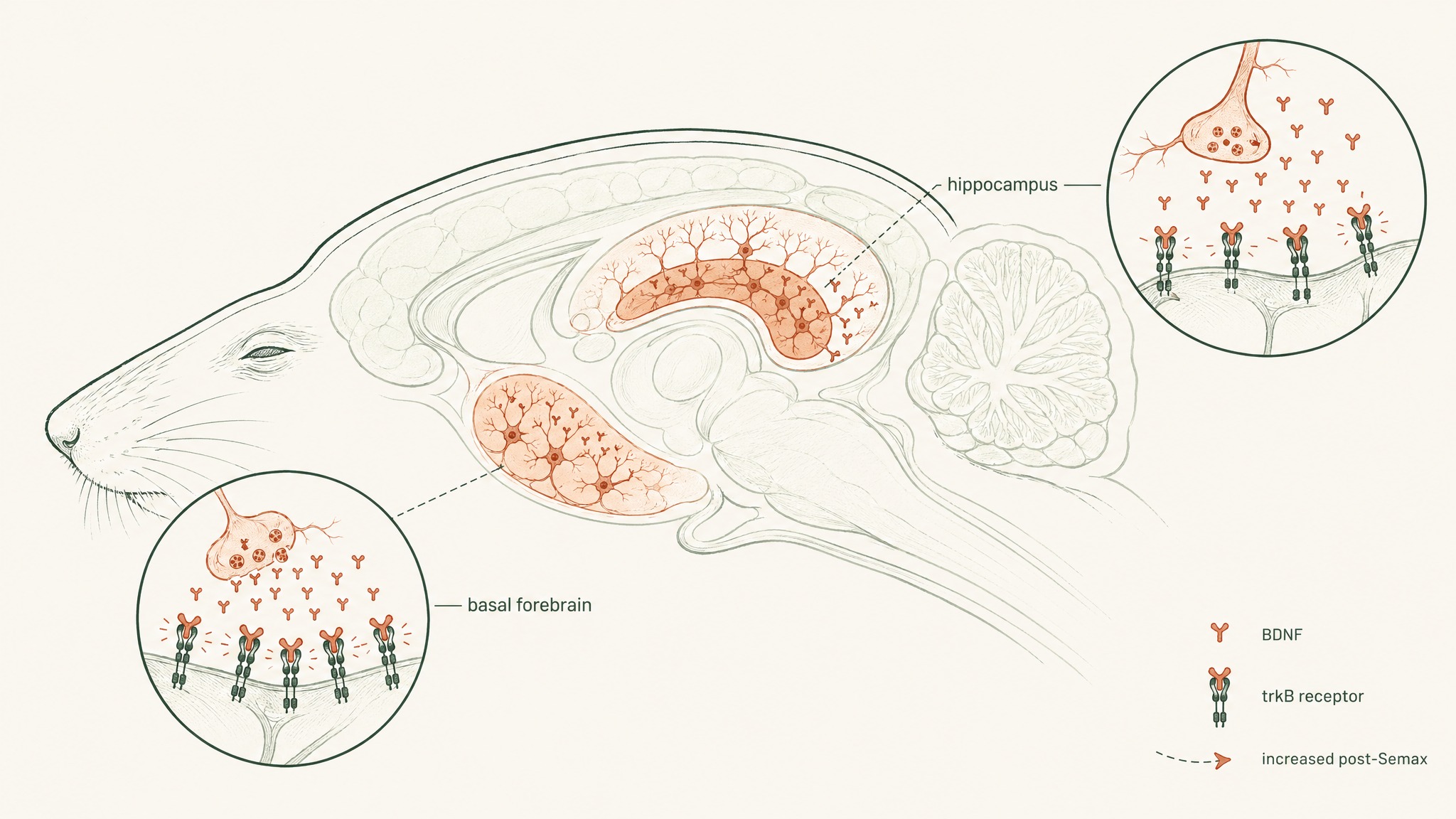
A parallel study from the same group confirmed the mechanism in a different brain region. Intranasal Semax elevated BDNF protein in the rat basal forebrain, an area central to sustained attention and encoding new memories, through binding that was described as time-dependent, specific, and reversible. The authors concluded that Semax's cognitive effects "might be associated, at least in part, with increased BDNF protein levels in this brain region" (Dolotov et al., J Neurochem, 2006, PMID 16635254).
The consistent thread across both papers is that Semax doesn't appear to stimulate neurons directly in the way a conventional stimulant does. It seems to work by increasing the brain's own production of maintenance factors. Users report particular interest in this mechanism because it's associated with gradual rather than acute effects, the difference between fertilising a garden and spraying it with dye.
Selank: Anxiety, Attention, and Clinical Findings
Selank is a seven-amino-acid synthetic peptide derived from tuftsin, a naturally occurring immune-signalling molecule. Modifications to the original tuftsin structure extend its stability significantly. It was developed in Russia alongside Semax and received regulatory approval there as an anxiolytic (a compound that reduces anxiety) in the early 2000s.
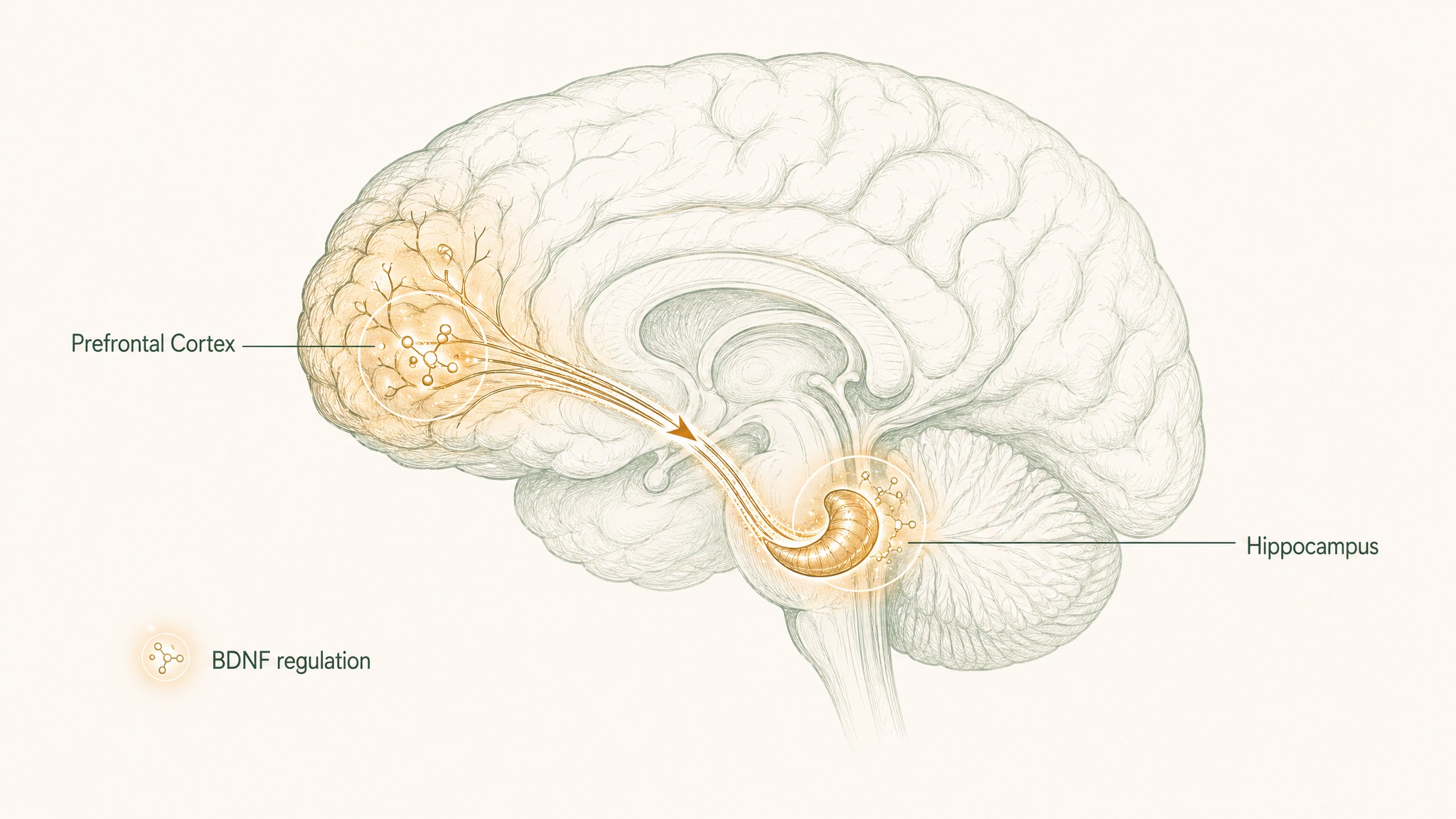
The animal research established that Selank protects memory under cognitive stress. A 2019 study used an alcohol withdrawal model, a well-characterised pattern of anxiety-driven cognitive disruption, and found Selank prevented the formation of memory and attention disturbances in rats by regulating BDNF content in both the hippocampus and prefrontal cortex. Both brain regions are directly involved in working memory and executive function (Kolik et al., Bull Exp Biol Med, 2019, PMID 31625062).
The human data is more substantial than most peptide research produces. A randomised controlled trial published in 2008 compared Selank to medazepam, a standard benzodiazepine anxiolytic, in 62 patients with generalised anxiety disorder and neurasthenia (a condition characterised by persistent mental fatigue and anxiety). Both compounds reduced anxiety comparably. Selank additionally produced "antiasthenic and psychostimulant effects", reduced fatigue and measurable alertness enhancement, that medazepam did not. The authors noted modulation of the enkephalin system (your brain's internal opioid-like signalling network) as a possible mechanism (Zozulia et al., Zh Nevrol Psikhiatr Im S S Korsakova, 2008, PMID 18454096).
A second clinical trial with 60 patients, comparing Selank to phenazepam, documented what the researchers described as "pronounced anxiolytic and mild nootropic effects." The nootropic component, improvements in attention and cognitive processing, persisted for roughly one week after the final dose, which is notable for a compound that clears the body relatively quickly (Medvedev et al., Zh Nevrol Psikhiatr Im S S Korsakova, 2014, PMID 25176261).
A 2020 neuroimaging study extended the picture to healthy participants. Using resting-state fMRI (functional MRI, which measures neural activity by detecting blood-flow changes) in 52 healthy volunteers, researchers administered Semax, Selank, or placebo and scanned at baseline, five minutes, and twenty minutes post-injection. They identified changes in functional connectivity (the coordination pattern between brain regions at rest) between the right amygdala and temporal cortex areas involved in emotional processing and memory integration. The authors noted this as the first imaging evidence of these compounds' effects on brain network organisation in healthy people (Panikratova et al., Dokl Biol Sci, 2020, PMID 32342318).
GHK-Cu: The Nervous System Angle
GHK-Cu (glycyl-L-histidyl-L-lysine copper complex) appears most often in skin research, where its role in collagen signalling has been documented since the 1970s. There's a parallel thread in the neurological literature that gets less attention.
A 2017 paper in Brain Sciences examined GHK's influence on the expression of genes relevant to nervous system function. The researchers found GHK modulates genes associated with oxidative stress management, inflammatory signalling, nerve outgrowth, and anti-anxiety responses. Their analysis described GHK as demonstrating "anti-oxidant, anti-inflammatory, anti-pain and anti-anxiety effects" and capable of "resetting pathological gene expression patterns back to health" in neurological contexts (Pickart, Vasquez-Soltero & Margolina, Brain Sciences, 2017, PMID 28212278).
GHK plasma levels decline with age, from roughly 200 nanograms per millilitre in your twenties to around 80 ng/mL by your sixties. Whether that decline contributes to the neurological changes associated with normal aging is a question this research raises without yet resolving. What the 2017 paper establishes is that the relationship between GHK and neurological gene expression is real and measurable at the molecular level.
BPC-157 and the Serotonin Question
BPC-157 (Body Protection Compound 157) is a synthetic 15-amino-acid peptide derived from a naturally occurring protein found in gastric juice. Most of the published BPC-157 research investigates tissue healing and gut lining integrity. A 2004 paper ventured into different territory.
Tohyama, Sikirić, and Diksic used radioactive tracer methods to measure how BPC-157 affected regional serotonin synthesis across multiple brain areas in rats. The results were location-specific: a single dose reduced serotonin production in the dorsal thalamus, hippocampus, and hypothalamus while increasing it in the substantia nigra. After seven days of administration, synthesis declined in the dorsal raphe nucleus, the brain's main serotonin production hub, but rose in the caudate and accumbens (Tohyama, Sikirić & Diksic, Life Sciences, 2004, PMID 15531385).
Research suggests BPC-157 interacts with the serotonin system in brain tissue, but the 2004 paper's authors themselves noted that "we cannot determine, from this data, the mechanism of this action." What the research shows is a measurable and region-specific effect on serotonin production, not a demonstrated cognitive outcome. The implication for focus, mood regulation, or memory is a next question the data doesn't yet answer.
Epithalon and Memory in the Aging Brain
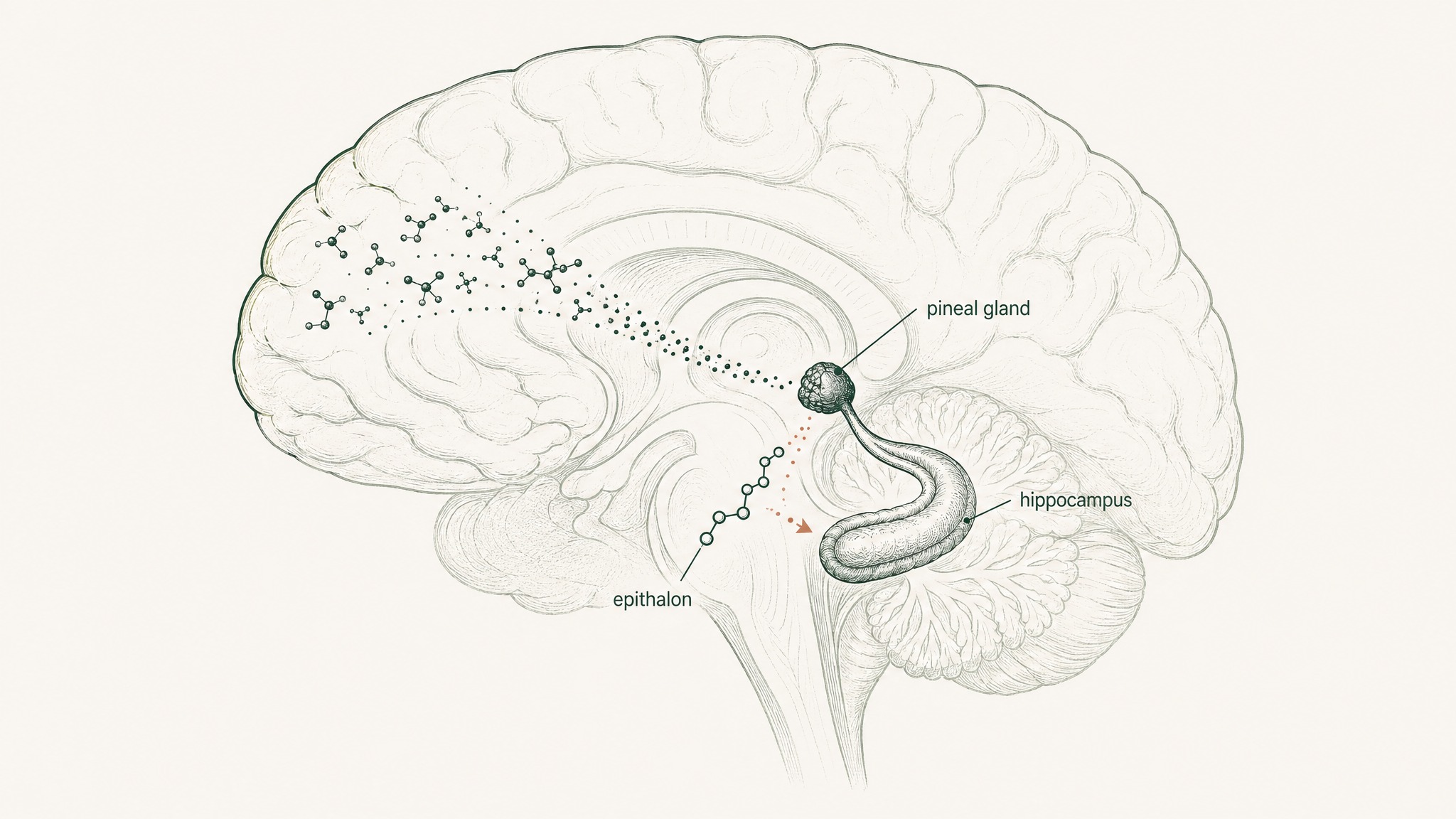
Epithalon (sometimes spelled Epitalon) is a synthetic tetrapeptide, four amino acids in the sequence Ala-Glu-Asp-Gly, modelled on a peptide produced by the pineal gland called epithalamin. The pineal gland is best known for producing melatonin and regulating your circadian rhythm. The interest in its peptide output stems from research suggesting the gland produces additional signalling molecules that influence biological aging beyond sleep-wake cycles.
A 2006 study tested both Epithalon and melatonin in aging rats using a shuttle labyrinth task, a maze that measures spatial memory and learning across repeated trials. Chronic administration of Epithalon at 0.1 micrograms per animal daily produced what the researcher described as "mnemotropic properties", memory-supporting effects, that were measurable in old animals. Melatonin showed similar effects through different mechanisms. The study found Epithalon decreased the extent of memory disruption that typically accompanies aging in the rat model (Vinogradova, Eksp Klin Farmakol, 2006, PMID 17209456).
Members experience interest in Epithalon primarily for its telomerase-related longevity research. The cognitive finding from this 2006 study adds an adjacent data point, but it comes from an animal model, using a specific maze protocol, and has not been reproduced in human cognitive trials at the level the Selank data reaches.
What the Research Doesn't Yet Show
It's worth being direct about the gaps, because this is a domain where enthusiasm often runs ahead of evidence.
The majority of animal research here uses rodent models that don't map cleanly onto human cognition. Rat maze performance and human working memory are not the same biological outcome. A compound that improves shuttle labyrinth scores in aging mice tells you something about the compound's biology, but it doesn't tell you it will improve your recall, processing speed, or focus in any measurable way.
The Selank human trials were published in Russian-language journals and conducted in clinical populations, patients with anxiety disorders, not healthy adults seeking cognitive enhancement. What they show about Selank's anxiolytic and nootropic effects in anxiety populations is meaningful. Whether those effects generalise to healthy people with normal baseline anxiety is an extrapolation, not a finding.
None of the compounds in this article have long-term human safety data published in peer-reviewed literature beyond the Selank trials. Mechanistic research and animal studies describe what these peptides do at a molecular level; they don't describe what repeated human use looks like over years. That's not a reason to dismiss the research, it's a reason to hold it at the appropriate level of certainty.
Frequently Asked Questions
Which peptide has the strongest human evidence for cognitive effects?
Selank has the most substantial human data in this category. Two randomised controlled trials with 60 to 62 patients each documented anxiolytic effects comparable to benzodiazepines, alongside mild nootropic effects that persisted for roughly one week after the final dose. A 2020 neuroimaging study in 52 healthy volunteers also showed measurable changes in brain functional connectivity. The other compounds in this article rest mainly on animal model findings.
How does Semax differ from a conventional stimulant?
Research suggests Semax does not directly stimulate neurons in the way caffeine or amphetamines do. Instead, the 2006 Dolotov studies found it increases the brain's own BDNF production, a protein associated with neuronal growth and synaptic maintenance. This positions it as a slower, mechanism-based effect rather than an acute alertness spike. The change is gradual rather than immediate.
Are these peptide effects replicated in healthy people or only in clinical populations?
Most Selank human research recruited patients with generalised anxiety disorder or neurasthenia, not healthy adults seeking enhancement. The 2020 fMRI study in 52 healthy volunteers is the main exception and showed changes in functional connectivity rather than measured cognitive performance. Whether the clinical findings generalise to people with normal baseline anxiety is an extrapolation that current studies have not directly addressed.
What does BDNF do, and why does it matter for cognition?
BDNF stands for Brain-Derived Neurotrophic Factor, a protein neurons produce to support their own growth, survival, and the formation of new synaptic connections. In animal models, higher BDNF in the hippocampus correlates with better performance on learning and spatial memory tasks. Both Semax and Selank research identifies BDNF modulation as a central mechanism behind their cognitive effects.
Is there long-term safety data on these peptides?
None of the compounds covered in this article have published long-term human safety data in peer-reviewed literature beyond the Selank clinical trials. Available research describes molecular mechanisms and short-term outcomes in animal models or small clinical studies. Long-term repeated use over years has not been characterised in published trials. Anyone working with these compounds should hold the evidence at that level of certainty.
How is BPC-157's cognitive relevance different from its tissue-healing research?
Most BPC-157 research investigates gut lining integrity and tissue healing. The 2004 Tohyama paper is the main study examining brain effects directly and found region-specific changes in serotonin synthesis across multiple brain areas in rats. The authors themselves noted that the mechanism behind these changes is not yet determined, and no cognitive outcome study has followed up on the finding. The serotonin data is suggestive rather than conclusive.
Why do so many of these studies come from Russian research groups?
Semax and Selank were both developed in Russia, at the Institute of Molecular Genetics in Moscow and associated research institutions, and received Russian regulatory approval for clinical use in the early 2000s. As a result, much of the clinical trial data is published in Russian-language journals such as the Zh Nevrol Psikhiatr Im S S Korsakova. Western regulatory bodies have not approved these compounds, which is one reason the research base is geographically concentrated.
Key Takeaways
- Semax showed a 1.4-fold BDNF increase in the rat hippocampus and elevated BDNF in the basal forebrain in two separate studies, both using intranasal administration. Learning performance improved in both. These are animal model findings.
- Selank has the strongest human evidence in this category: two clinical trials with 60–62 patients each documented anxiolytic effects comparable to benzodiazepines, plus mild nootropic effects persisting one week after the final dose. A third neuroimaging study in 52 healthy adults showed measurable changes in brain functional connectivity.
- GHK-Cu modulates gene expression relevant to nervous system function, including oxidative stress management, inflammation, and nerve outgrowth, based on a 2017 analysis. The research is gene-expression level, not behavioural outcome.
- BPC-157 altered regional serotonin synthesis in multiple brain areas in rat models. The mechanism is unknown and cognitive implications aren't established by the available data.
- Epithalon showed memory-supporting effects in aging rats in a 2006 maze study. No human cognitive trial data exists.
- The most honest summary: Selank has real clinical evidence in anxious populations. Semax has solid mechanistic data in animal models. The others have early-stage findings that point toward cognitive relevance without yet establishing it. Anyone working with this research should hold it at that level.
Exploring peptide protocols? See the CLARITY Protocol →

CLARITY™
Coming SoonEngineered around 10mg Dihexa. Drives advanced synaptic connectivity and neurogenesis
Clinical Context
Important Notice: VERO protocols are nutritional and systemic optimisation formats. They are not intended to diagnose, treat, cure, or prevent any medical condition. These statements have not been evaluated by the Food and Drug Administration.