
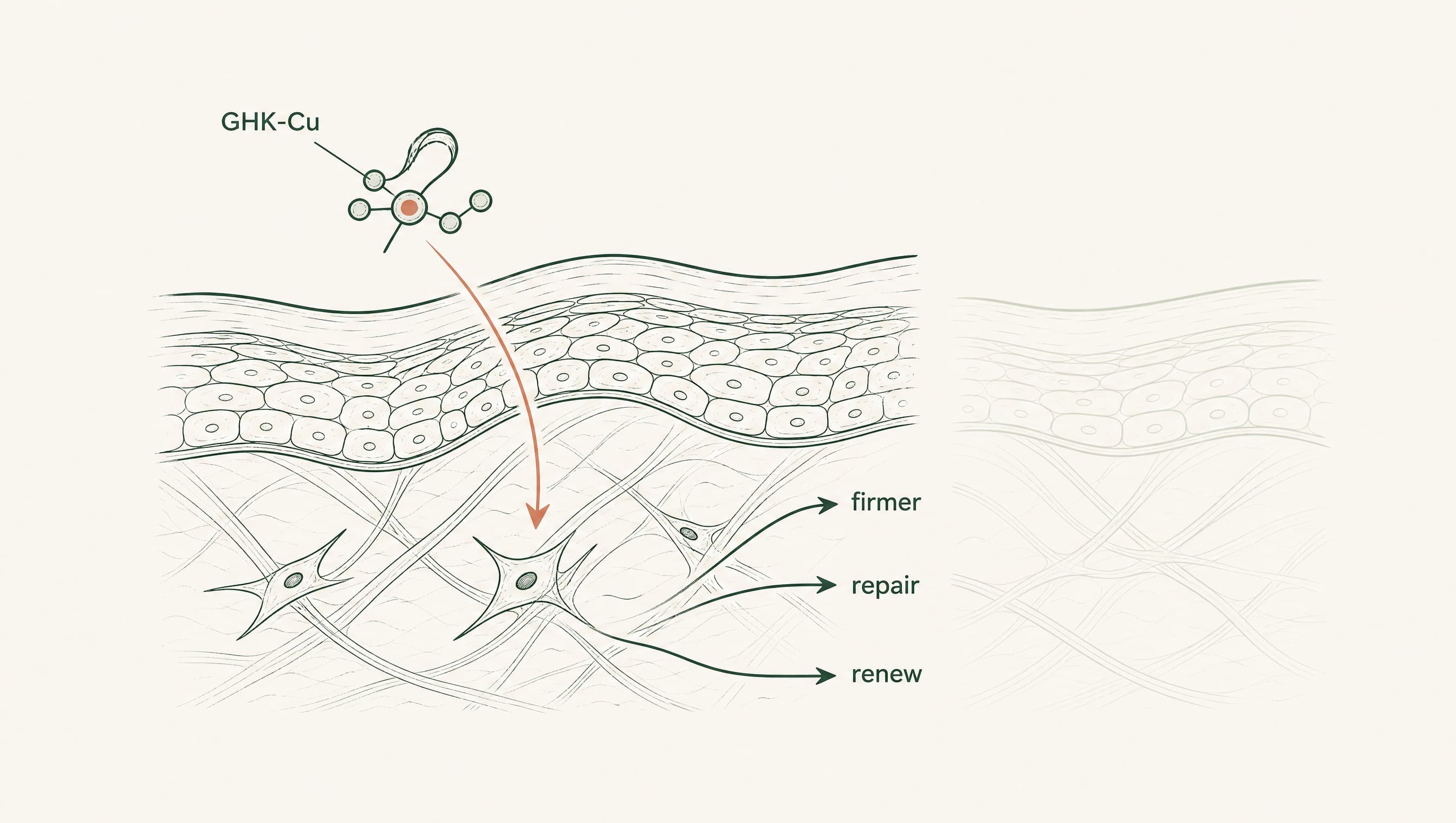
GHK-Cu is a copper-binding peptide your body makes less of every year after your twenties. Here's what verified research says about it, and how a structured protocol is built.
Introduction
By the time you're 60, your body is running on less than half the GHK-Cu it made in your twenties. That drop tracks closely with when skin starts looking different and small cuts take longer to close over, because GHK-Cu is one of the signalling molecules your body uses to keep that maintenance work running. It's also why GHK-Cu anchors the RADIANCE protocol, which is built around what happens once that natural supply starts thinning out.
This article is published for research purposes only, so treat it as a map of what the science says rather than a set of instructions. GHK-Cu is a tiny copper-binding peptide — a peptide is just a short chain of amino acids, biology's version of a molecular Lego brick — three of them clipped together with a copper ion attached, like a key with a copper tooth cut into the end. Your liver and skin make it naturally; they just make less of it with every passing decade.
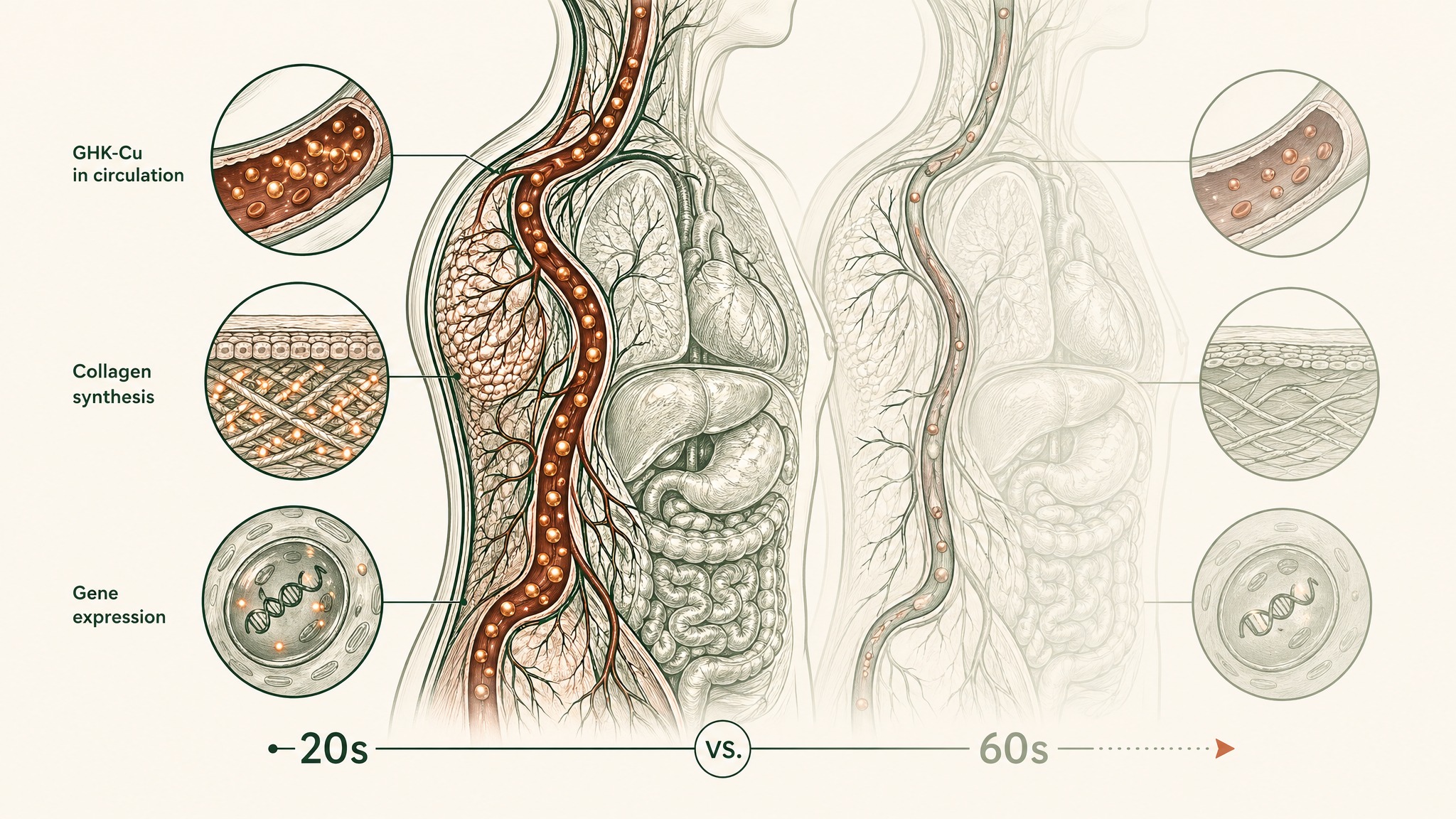
GHK-Cu levels drop to less than half between your twenties and sixties.
Key Takeaways
- GHK-Cu was first isolated from human blood serum in 1973, and follow-up work has tracked plasma levels falling by nearly 60% between your twenties and sixties — from about 200 nanograms per millilitre down to roughly 80 (Pickart & Thaler, 1973; Pickart & Margolina, 2018).
- A gene-expression analysis built on the Broad Institute's Connectivity Map found a 50%-or-greater change in activity linked to GHK in close to a third of all human genes tested — an unusually wide reach for one small molecule (Pickart et al., 2014).
- In a human skin study, women who applied a GHK-Cu cream to their thighs for a month showed collagen increases in 70% of cases, compared with 50% for a vitamin C cream and 40% for retinoic acid, confirmed by biopsy (Pickart et al., 2015).
- In mouse models, liposome-packaged GHK-Cu shortened wound-closure time to about 14 days and increased proliferation of the cells that build new blood vessels by roughly a third (Wang et al., 2017).
- Delivery format decides almost everything in this research: nearly every finding above came from an engineered carrier — a cream, a liposome, or a specialised microemulsion — not a plain swallowed capsule.
This content is published for research and educational purposes only. It is not intended to diagnose, treat, cure, or prevent any disease, and it does not constitute medical advice. Readers should consult a qualified healthcare professional before making any decisions about their own health. Statements on this page have not been evaluated by the FDA. VERO's peptide products are supplied for research purposes only.
What GHK-Cu Is, and Why Your Body Makes Less of It Every Year
Think of GHK-Cu as a maintenance signal your body slowly turns the volume down on. In your twenties it circulates at a level high enough to keep collagen production and general tissue upkeep ticking along at a decent baseline. By your thirties and forties, that level is already sliding — quietly, with nothing dramatic to notice day to day.
Researchers Loren Pickart and M.M. Thaler first isolated the peptide from human serum in 1973, publishing the discovery in Nature New Biology (Pickart & Thaler, 1973). Decades of follow-up work have tracked what happens as levels fall: plasma GHK runs at roughly 200 nanograms per millilitre in your twenties and drops to around 80 by the time you're 60, a decline of almost 60% across four decades (Pickart & Margolina, 2018).
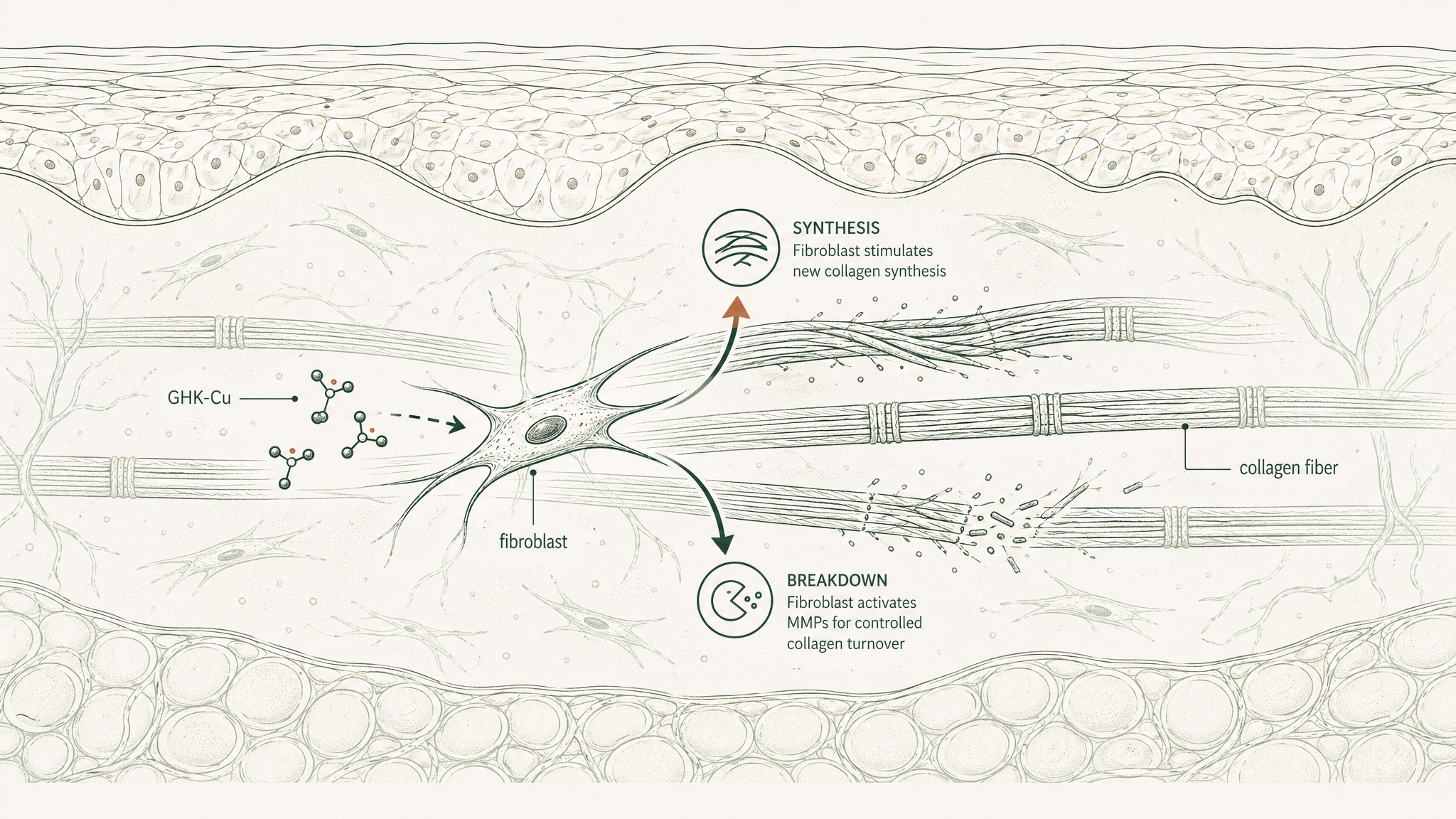
GHK-Cu levels drop nearly 60% between your twenties and sixties.
That drop isn't a minor rounding error on a lab chart. Here's the scale of it:
- A 2018 analysis found a 50%-or-greater expression change linked to GHK in roughly 31% of the human genes it was tested against, split between genes turned up and genes turned down (Pickart & Margolina, 2018).
- A separate 2014 bioinformatic analysis using the same underlying dataset put the figure at 32.1% across more than 13,000 genes (Pickart et al., 2014).
Almost a third of your genome, linked to one small molecule your body already recognises as its own.
That's the case researchers make for why a GHK-Cu protocol tends to look at more than one system at once. You're not picking a single lane — skin, repair, or antioxidant defence. Research suggests all three sit downstream of the same signalling molecule, so a protocol built around it usually tracks more than one outcome at a time.
Three Things Researchers Actually Study When They Study GHK-Cu
Most of what gets said about GHK-Cu online collapses three separate research threads into one vague claim. It's worth pulling them apart, because the strength of evidence — and the type of study behind it — is different for each thread:
- Skin and collagen — the thread with the most direct human-study backing
- Tissue repair — mostly animal and cell-culture research using engineered carriers
- Antioxidant and gene activity — largely laboratory and tissue-sample research
Three separate research pathways: human skin collagen, animal tissue repair, and laboratory gene activity.
GHK-Cu and Skin: The Human Study Behind the Claim
Skin is where GHK-Cu has the clearest human research to point to, because it's also the easiest tissue to biopsy and measure directly. That's a different evidence tier from the animal work later in this piece, and it's worth keeping the two separate in your head.
Researchers Pickart, Vasquez-Soltero, and Margolina had women apply a GHK-containing cream to their thighs for one month, then checked collagen production with skin biopsies. Collagen increases showed up in 70% of the group using the GHK-Cu cream. That beat a vitamin C cream, which came in at 50%, and retinoic acid — a vitamin A derivative common in anti-ageing skincare — at 40%, under the same study conditions (Pickart et al., 2015).
What's easy to miss in that number: the cream was working at concentrations as low as 1 to 10 nanomolar, a dose so small it's hard to picture — a few drops in an Olympic swimming pool. At that dose, the study authors reported the peptide wasn't just switching collagen production on. It also appeared to regulate the enzymes that control collagen turnover, which is what keeps new tissue organised instead of just piling up.
Members experience the timing of skin changes differently from person to person, and there's no clinical trial that maps a universal timeline for it.
GHK-Cu and Tissue Repair: What the Animal Research Found
Tissue-repair research on GHK-Cu almost always uses an engineered carrier rather than the raw peptide, because unprotected peptide breaks down before it reaches the tissue that needs it. That detail matters for reading these studies honestly: the carrier is doing real work here, alongside the peptide.
In a 2017 study, Wang and colleagues packaged GHK-Cu inside liposomes — tiny fat-based bubbles that act like a protective shell around the peptide — and tested it in a mouse scald-wound model. In those animal models, the formulation was observed to promote a 33.1% increase in the proliferation rate of the cells that build new blood vessels, alongside higher levels of associated growth factors and cell-cycle proteins. Wound closure time in the treated animals came in at roughly 14 days (Wang et al., 2017).
A separate 2023 study took a different engineering approach. Liu and colleagues built a thermodynamically stable ionic-liquid microemulsion — a specially engineered delivery fluid — to push GHK-Cu toward hair follicles in mouse models. Compared with unformulated controls, the system achieved roughly three times more peptide delivery to the target tissue, and in animal testing it was linked to activation of the Wnt/β-catenin signalling pathway, a pathway involved in hair-follicle cycling (Liu et al., 2023).
Two research teams, two different tissues — and in both cases, the carrier system was doing as much work as the peptide itself. Neither study was run in people, which is why this section stays confined to what was observed in mouse models rather than what it might mean for you.
GHK-Cu and Antioxidant Activity: The Laboratory Findings
The antioxidant side of GHK-Cu research gets the least attention online, which is a little strange given how directly it connects to longevity-focused protocols. This is laboratory-tissue research, not a human trial, so read the numbers below as bench findings rather than a promise about what happens in your body.
A 2012 review by Pickart, Vasquez-Soltero, and Margolina pulled together laboratory findings on GHK-Cu's antioxidant and anti-inflammatory activity. Using gastric-tissue homogenate samples, the reviewed research recorded a 75% reduction in lipid peroxidation — the process by which free radicals damage the fats that make up cell membranes. The same review noted lower levels of two inflammation-linked proteins, TGF-beta and TNF-alpha, in the tissue samples tested (Pickart et al., 2012).
That review also flagged GHK as a strong inhibitor of HDAC enzymes in laboratory data drawn from Connectivity Map and ChemBank analysis. Here's the plain-English version: HDACs are enzymes that physically compress DNA, switching genes off in the process. As cells age, HDACs tend to get more active, silencing genes that would otherwise still be useful.
Users report this laboratory mechanism is one of the reasons GHK-Cu keeps coming up in longevity-stack conversations alongside NAD+ precursors and other cellular-ageing research — though that connection is a laboratory finding, not a tested outcome in people.
Why Delivery Format Decides Whether Any of This Applies to You
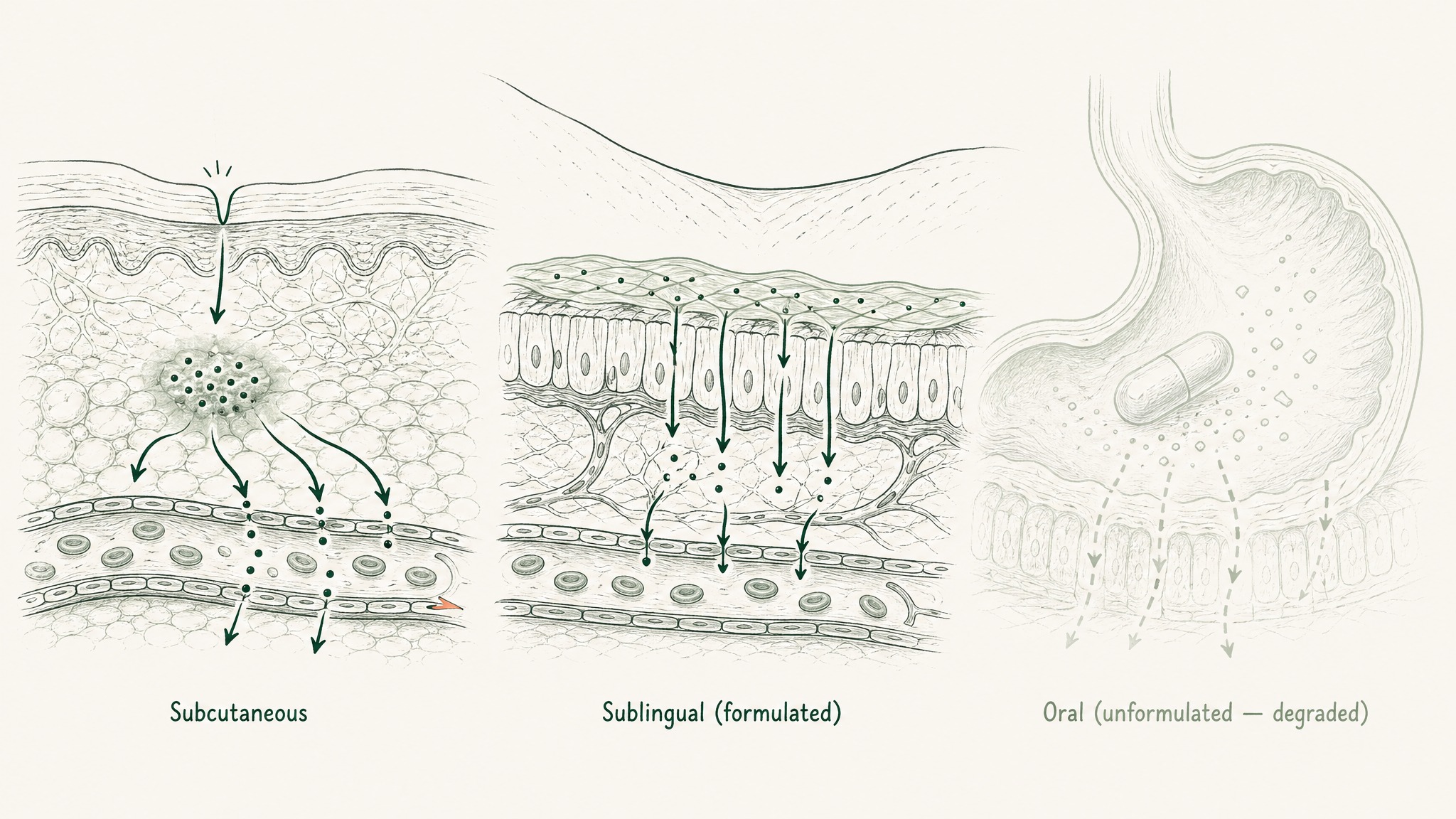
Here's the part that gets skipped in most write-ups: almost every finding above depended on how the peptide got into the tissue, not just what the peptide is. A key with the right shape does nothing if it never reaches the lock.
Swallow raw GHK-Cu in a standard capsule and stomach acid and digestive enzymes tend to break the peptide apart before it reaches anywhere useful. That's true of most short peptides, not just this one. It's the reason every study in this article used a carrier built to protect the molecule: a cream for skin, a liposome for wound tissue, a microemulsion for hair follicles.

Stomach acid breaks down unprotected peptides before they reach the bloodstream.
That's also the reasoning behind engineering a delivery route in the first place, rather than assuming a capsule works because the label says the ingredient is inside it:
- Identify where the tissue target actually sits (skin surface, wound bed, follicle)
- Choose a carrier built to reach that specific tissue
- Protect the peptide from being broken down before it gets there
The RADIANCE protocol is built around that same logic — treating delivery as part of the formula, not an afterthought bolted on at the end.
How a GHK-Cu Protocol Is Typically Structured
A GHK-Cu protocol isn't a single dose decision. It's closer to a design problem: pick the tissue you're targeting, then work backward to the delivery format the research actually used to get results in that tissue.
- Skin and collagen focus — leans on the topical-cream research, where the human evidence is strongest
- Antioxidant and cellular-ageing focus — leans on the laboratory and gene-expression research, which is earlier-stage
- Combination approach — most protocols track more than one of these threads at once, since the underlying signalling molecule is the same across all three
Research suggests the reason GHK-Cu shows up in longevity conversations at all is this breadth — one molecule with threads running through skin, tissue maintenance, and cellular ageing, rather than a narrow one-symptom fix.
Frequently Asked Questions
Is GHK-Cu the same thing as the copper peptide serums sold in skincare aisles? Not necessarily. "Copper peptide" on a skincare label can mean GHK-Cu at a range of concentrations, or it can mean a different copper-binding formulation entirely. The research cited in this article is specific to GHK-Cu at the doses and delivery formats each study used, not to any product carrying a similar name.
Does GHK-Cu do anything if I just swallow a capsule? The research summarised here doesn't answer that question directly, because none of the studies cited tested a plain oral capsule. Every study used an engineered carrier — cream, liposome, or microemulsion — which is why delivery format gets its own section above.
Is GHK-Cu safe? This article isn't a safety review, and nothing here should be read as medical advice. Statements about GHK-Cu have not been evaluated by the FDA, and anyone considering a research protocol should talk to a qualified clinician first.
How is GHK-Cu different from BPC-157 or TB-500? They're separate peptides with separate research bases. GHK-Cu's research centres on skin, collagen, and antioxidant pathways; BPC-157 and TB-500 research centres on tissue repair elsewhere in the body. Our peptides and skin care guide breaks down how several of these compounds compare.
Curious how a structured protocol is built around GHK-Cu's delivery requirements? Explore the RADIANCE Protocol →
References
- Pickart, L., & Thaler, M. M. (1973). A copper-binding serum tripeptide: liver cell culture observations. Nature New Biology.
- Pickart, L., & Margolina, A. (2018). GHK-Cu peptide actions and genome-wide expression data: a review. International Journal of Molecular Sciences, 19(7), 1987.
- Pickart, L., Vasquez-Soltero, J. M., & Margolina, A. (2014). GHK peptide and genome-wide expression patterns: a bioinformatic analysis. BioMed Research International, 2014, 151479.
- Pickart, L., Vasquez-Soltero, J. M., & Margolina, A. (2015). GHK peptide and cellular pathways in skin regeneration: a review. BioMed Research International, 2015, 648108.
- Wang, X., Liu, B., Xu, Q., Sun, H., Shi, M., Wang, D., Guo, M., Yu, J., Zhao, C., & Feng, B. (2017). GHK-Cu liposomes in a mouse scald-wound model: cell proliferation and angiogenesis observations. Wound Repair and Regeneration.
- Liu, T., Liu, Y., Zhao, X., Zhang, L., Wang, W., Bai, D., Liao, Y., Wang, Z., Wang, M., & Zhang, J. (2023). Ionic liquid microemulsions for topical peptide delivery: a formulation study. Bioactive Materials.
- Pickart, L., Vasquez-Soltero, J. M., & Margolina, A. (2012). GHK-Cu, oxidative stress, and degenerative conditions of aging: a laboratory review. Oxidative Medicine and Cellular Longevity, 2012, 324832.
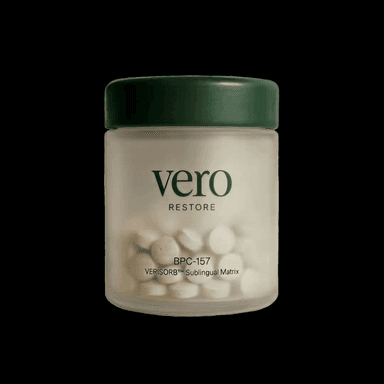
RADIANCE™
Coming SoonEngineered around 5mg GHK-Cu. Increases dermal thickness and systemic collagen synthesis
Clinical Context
Important Notice: VERO protocols are nutritional and systemic optimisation formats. They are not intended to diagnose, treat, cure, or prevent any medical condition. These statements have not been evaluated by the Food and Drug Administration.