
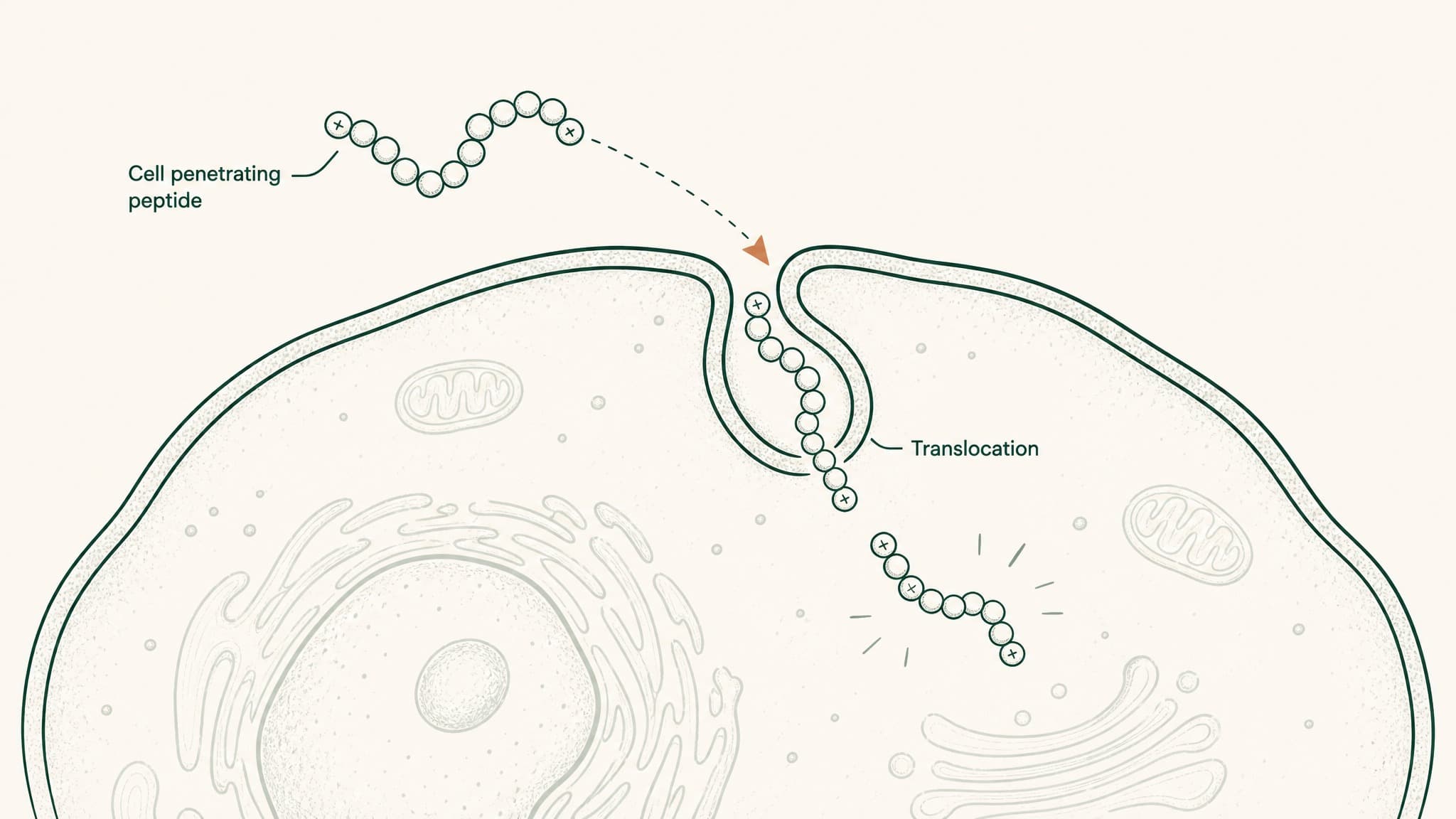
Cell-penetrating peptides ferry molecules across cell membranes. Here's how the three classes work, what 2026 research shows, and where the field is heading.
Most molecules can't get into your cells on their own. That's actually a feature, not a bug. Your cell membrane is a tightly controlled border, and almost everything has to be either small and oily enough to slip through the lipid layer, or escorted in by a dedicated transporter. Drugs that are big, water-loving, or charged tend to hit that wall and stop.
Cell-penetrating peptides (CPPs) are a class of short amino acid chains that break that rule. They cross the cell membrane, usually carrying a much bigger molecule along for the ride. Researchers have used them to deliver everything from siRNA to imaging probes to entire antibodies into living cells. The field has been active for more than three decades, the publication count keeps climbing, and a small number of CPP-based drug candidates are now in human clinical trials.
This guide unpacks what CPPs are, how the three structural classes differ, where the science sits in 2026, and how this whole conversation relates to the peptides people actually take. All of the framing below is for research purposes only.
What Are Cell-Penetrating Peptides?
Think of your cell membrane as a security checkpoint. Most cargo gets turned away. CPPs are the diplomatic couriers, sequences of 5 to 30 amino acids that the checkpoint quietly lets through.
A cell-penetrating peptide is a short peptide, usually under 30 amino acids long, that can cross plasma membranes and carry other molecules into cells. The first one was discovered in 1988 when two independent groups noticed that the TAT protein from HIV-1 could enter cells from outside, taking other molecules with it (Green and Loewenstein 1988; Frankel and Pabo 1988). The 11-amino-acid segment responsible for that uptake (now called the TAT peptide) became the founding member of the field.
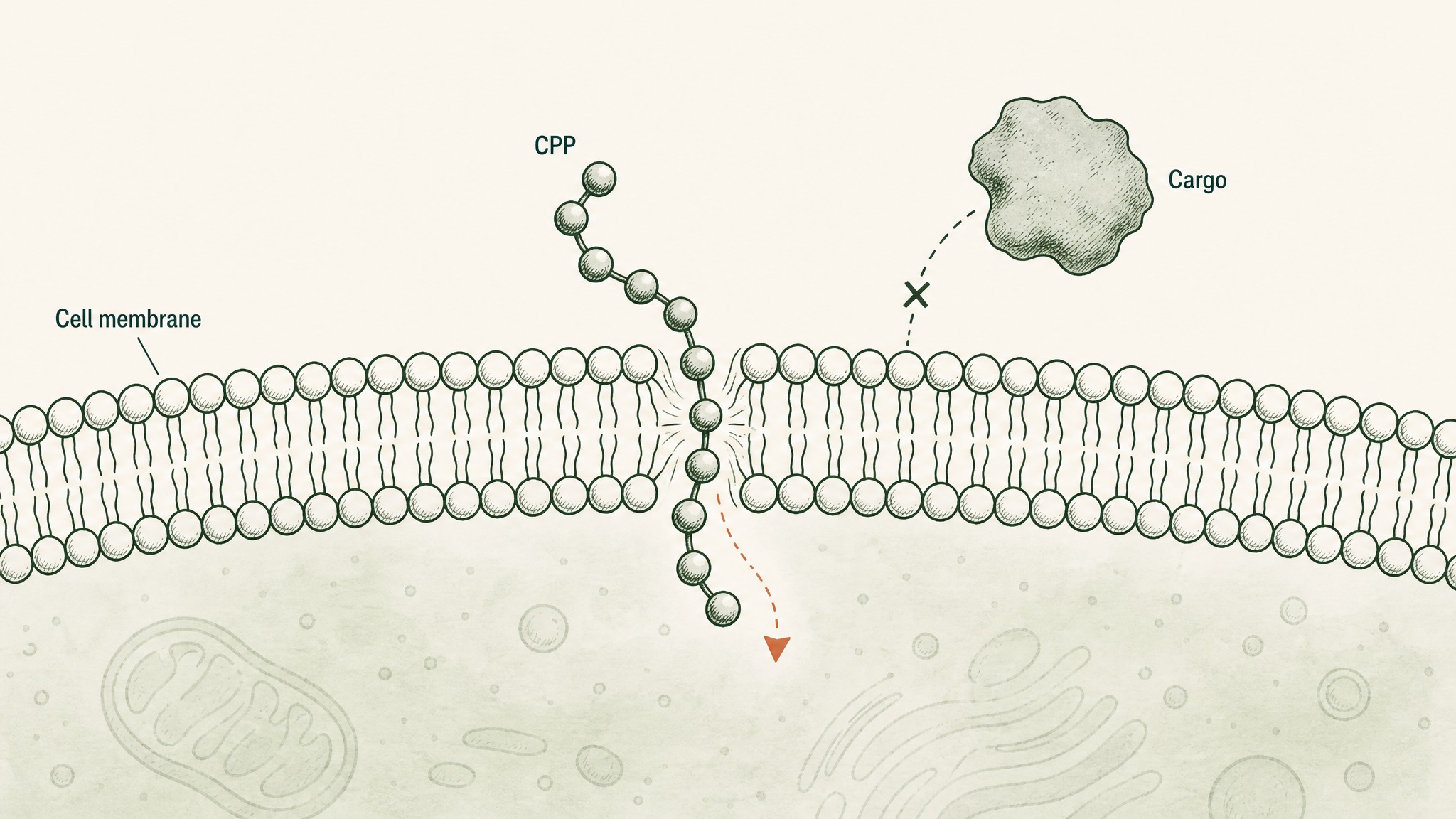
A cell-penetrating peptide escorts cargo through the membrane barrier that would normally block it.
Quick definition:
- Length: typically 5 to 30 amino acids
- Function: carry cargo across the cell membrane that the cargo couldn't cross alone
- Origin: first identified in HIV-1 TAT protein, 1988
- Also called: protein transduction domains (PTDs), Trojan peptides
- Cargo types studied: small drugs, peptides, proteins, antibodies, siRNA, mRNA, plasmid DNA, nanoparticles
The category sits at the intersection of chemistry and pharmacology. It's the carrier, not the payload. A CPP attached to a drug becomes the delivery vehicle; the drug is what does the therapeutic work once it's inside the cell.
How Do Cell-Penetrating Peptides Cross the Cell Membrane?
Here's the question the field has been arguing about for thirty years. The honest answer is that there isn't one route, there are several, and which one dominates depends on the peptide, the cargo, the cell type, and the temperature in the dish that day.
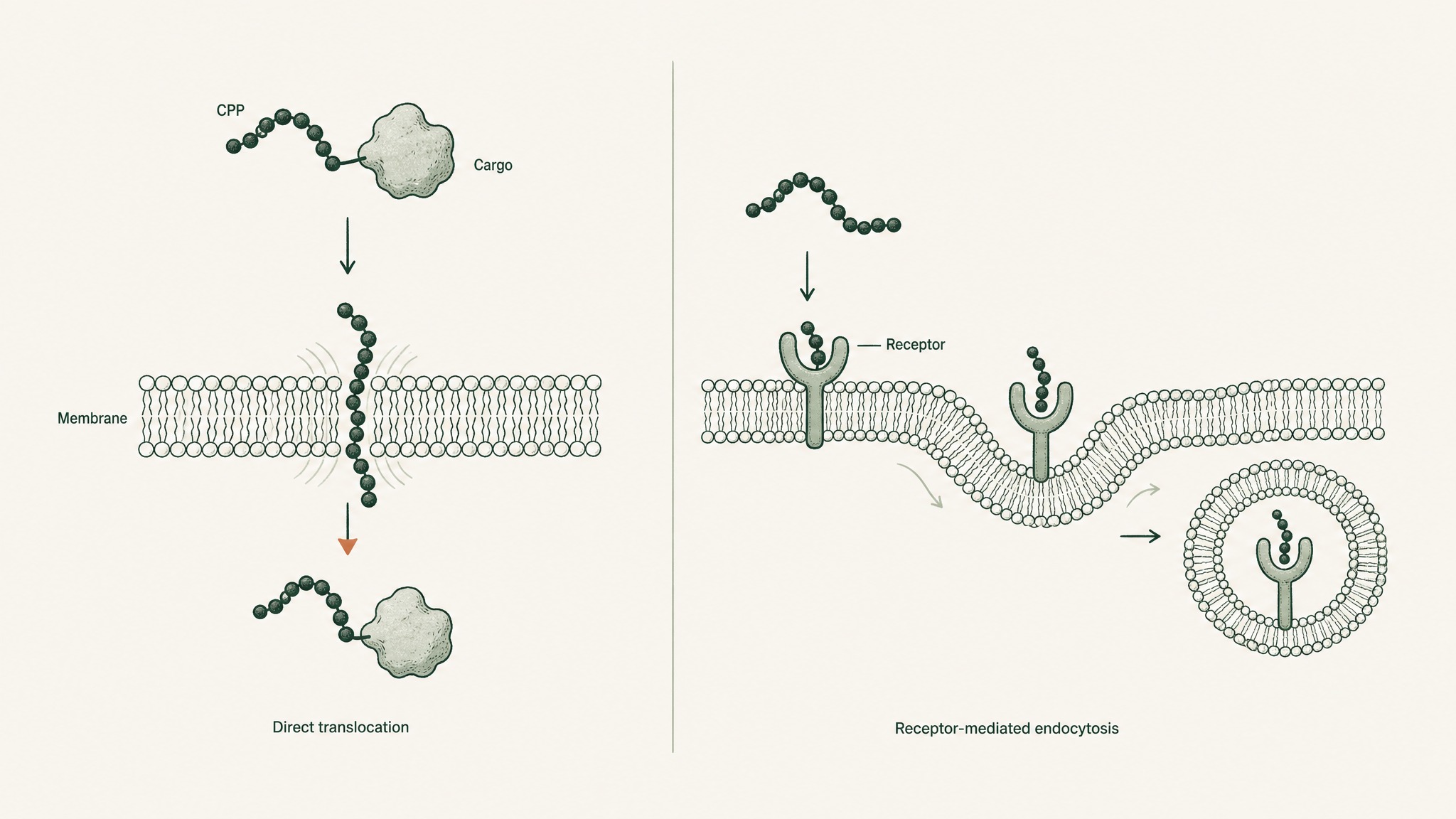
What we can say with confidence is that CPP uptake breaks into two big families: direct translocation (peptide goes straight through the membrane) and endocytosis (peptide tricks the cell into wrapping a piece of membrane around it and pulling it inside). Both happen. The split between them changes with concentration: high concentrations of cationic CPPs tend to favour direct translocation, low concentrations favour endocytic routes (Madani et al., J Biophys 2011).
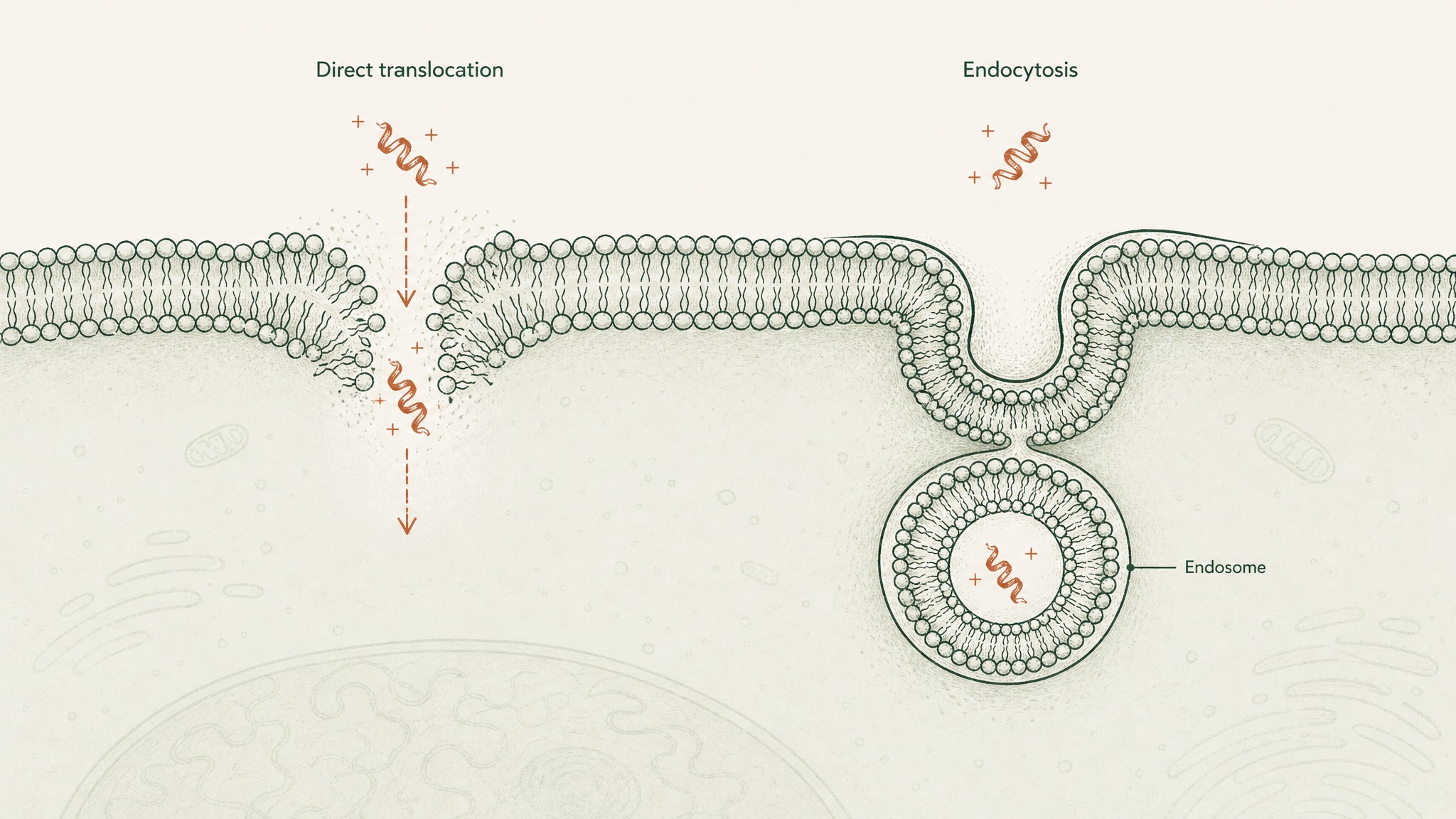
Two ways peptides enter cells: straight through the membrane or wrapped inside a membrane bubble.
Direct Translocation
In direct translocation, the peptide crosses the membrane without the cell helping. Several mechanisms have been proposed, including a temporary inverted micelle (a bubble that flips through the membrane), a transient pore, and a carpet model where peptides destabilise a patch of membrane until they fall through. All three have experimental support in different conditions, and none of them require ATP, the peptide does the work on its own.
This route favours small, highly cationic peptides at high concentration. It's fast, energy-independent, and delivers the peptide straight into the cytoplasm where it can act.
Endocytosis
In endocytosis, the cell membrane folds around the peptide and pinches off to form an internal bubble (an endosome). The peptide is now inside the cell, but it's still trapped inside a membrane-bound compartment.
Three endocytic routes have been documented for CPPs:
- Clathrin-mediated endocytosis: the classical route. Proteins called clathrin assemble a cage around a patch of membrane and pull it inside.
- Caveolin-mediated endocytosis: a cholesterol-rich pathway using flask-shaped membrane folds called caveolae.
- Macropinocytosis: the cell ruffles its membrane outward and engulfs a big drink of fluid, including any CPPs floating in it. This is the dominant route for many CPPs delivering nucleic acids or large cargo (Wadia et al., Nat Med 2004).
Endocytosis works for any size cargo. The catch is the next step.
Why Endosomal Escape Is the Real Bottleneck
Getting a CPP and its cargo into an endosome is the easy part. Getting it out of the endosome and into the cytoplasm, where it can actually do something, is hard. Most cargo that enters via endocytosis stays trapped, eventually fuses with a lysosome, and gets degraded.
This is the single biggest unsolved problem in CPP-based delivery. Multiple research groups have spent the last decade engineering "endosomolytic" CPPs that destabilise the endosome membrane and let their cargo escape into the cytoplasm before lysosomal degradation kicks in. The best current designs achieve maybe 10 to 30 percent escape efficiency, and most do worse than that (Allen et al., Bioconjug Chem 2018).
| Mechanism | Energy required | Cargo size limit | Conditions that favour it |
|---|---|---|---|
| Direct translocation | None | Small (peptide-sized cargo) | High peptide concentration, cationic CPPs, cold membranes |
| Clathrin endocytosis | ATP-dependent | Medium | Low concentration, receptor-like interactions |
| Caveolin endocytosis | ATP-dependent | Medium | Cholesterol-rich domains, cargo binding lipid rafts |
| Macropinocytosis | ATP-dependent | Large (nucleic acids, proteins, nanoparticles) | High peptide load, growth-factor signalling |
In the protocol design work the VERO research team reviews, this membrane-crossing question is exactly why peptide compounds with very different structures end up needing very different delivery formats. A short cationic sequence and a 4-kDa nucleic acid duplex don't have the same biophysics, and the route they take into cells (when they take one at all) doesn't either.
What Are the Three Classes of Cell-Penetrating Peptides?
CPPs get grouped by their physical chemistry, specifically their net charge, hydrophobicity, and structural behaviour in solution. Three classes cover most of the literature.
Cationic CPPs
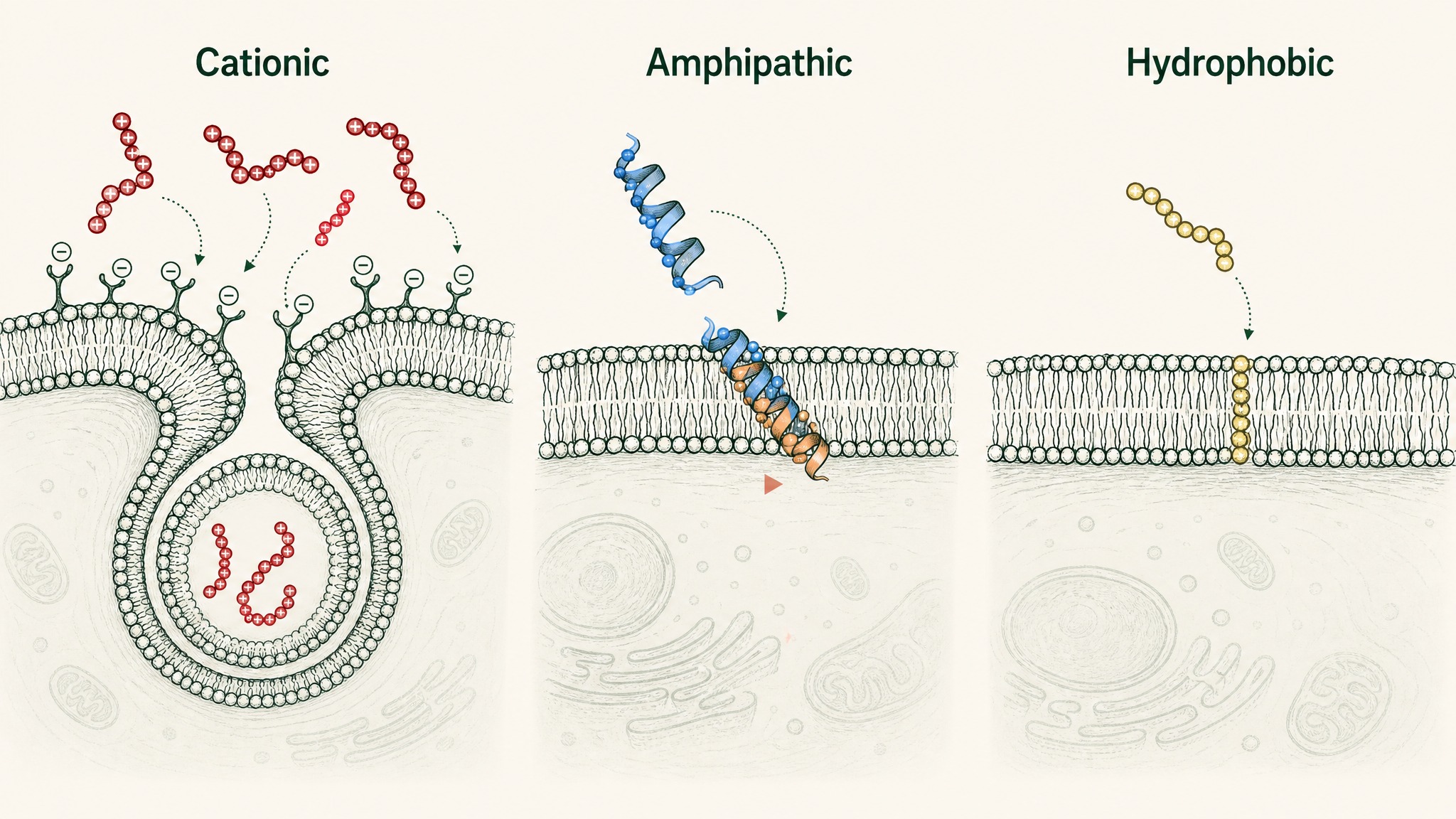
How three peptide classes cross the cell membrane using different chemical properties and entry routes.
Cationic CPPs are dominated by positively charged amino acids: arginine and lysine. The poster children are the TAT peptide (sequence GRKKRRQRRRPQ, net charge +8) and polyarginine (Arg-Arg-Arg-Arg-Arg-Arg-Arg-Arg-Arg, often abbreviated R9, net charge +9).
Their uptake mechanism relies on the positive charges binding to negatively charged molecules on the cell surface: heparan sulfate proteoglycans, phosphate groups, sialic acids. Once bound, the peptide concentrates near the membrane, and either triggers macropinocytosis or, at high local concentration, slips through directly.
Polyarginine is more efficient than TAT for many cargo types, which surprised researchers when it was first reported in 2000 (Futaki et al., J Biol Chem 2001). The takeaway was that the specific TAT sequence isn't magic, the dense positive charge is.
Amphipathic CPPs
Amphipathic CPPs have a split personality, one face of the molecule is hydrophobic (water-avoiding) and the other is hydrophilic (water-loving). When they fold up against a lipid membrane, the water-loving face stays in the aqueous environment and the water-avoiding face inserts into the lipid bilayer. That's how they get a foothold.
Penetratin (also called Antennapedia, RQIKIWFQNRRMKWKK) was discovered in 1994 from the Drosophila Antennapedia homeodomain. It folds into an alpha-helix when it meets a membrane and inserts amphipathically. Transportan and the model amphipathic peptide (MAP) are other commonly studied members.
The amphipathic class includes both natural sequences (penetratin) and designed chimeras (transportan is part of two unrelated parent peptides stitched together).
Hydrophobic CPPs
Hydrophobic CPPs lean almost entirely on lipid-loving residues like leucine, isoleucine, and valine. They're rarer than the other two classes and tend to be derived from signal peptide sequences, the bits of protein that normally help newly made proteins find membranes.
Hydrophobic CPPs work via direct membrane insertion. They tend to deliver small, lipophilic cargo and don't carry large hydrophilic payloads well.
| Class | Example | Net charge | Length | Primary uptake route | Typical cargo |
|---|---|---|---|---|---|
| Cationic | TAT, polyarginine (R9), Octa-arginine (R8) | +6 to +10 | 8 to 12 aa | Macropinocytosis, direct translocation | Proteins, nucleic acids, small drugs |
| Amphipathic | Penetratin, Transportan, MAP, Pep-1 | +3 to +6 | 16 to 27 aa | Direct translocation, clathrin endocytosis | Proteins, peptides, siRNA |
| Hydrophobic | Pep-7, C105Y, K-FGF | 0 to +2 | 9 to 15 aa | Direct lipid insertion | Lipophilic small molecules |
Most modern CPP design borrows from more than one class. Hybrid sequences that combine a cationic head with an amphipathic body are common in current literature, particularly for siRNA delivery work.
How Are Cell-Penetrating Peptides Different from Cell-Permeable Peptides?
This is where lay readers get tripped up, and it isn't their fault, the terminology genuinely is confusing.
A cell-penetrating peptide is a carrier. Its job is to ferry something else across the membrane. The CPP is the courier; the cargo is the payload. Without conjugation to a cargo, a CPP doesn't have a therapeutic purpose, it's a transport tool.
Cell-penetrating peptides carry cargo across membranes; cell-permeable peptides enter cells by various routes including receptors.
A cell-permeable peptide is any peptide that happens to enter cells, by whatever route. That route might be passive diffusion, a dedicated transporter, receptor binding followed by internalisation, or even CPP-like translocation. The label "cell-permeable" describes the outcome (it got inside) without specifying how.
That distinction matters when you look at the peptides people research at home:
- BPC-157 is a 15-amino-acid sequence derived from human gastric juice protein. It's relatively stable and reaches a wide range of tissues in animal studies, but its mechanism appears receptor-mediated rather than membrane-translocating in the CPP sense.
- GHK-Cu is a tripeptide with bound copper. Its activity at the cell surface includes receptor interactions and copper donation; cellular uptake is documented but not classically CPP-style.
- MOTS-c is a 16-amino-acid mitochondrial-derived peptide. It signals through cellular receptors and reaches mitochondria via mechanisms still being mapped.
None of those compounds is a CPP in the strict carrier sense. They're cell-permeable because they reach their targets, but they aren't ferrying cargo for a separate payload. Vendor literature sometimes blurs the language. The structural difference is real.
How Are CPPs Used in Drug and Gene Delivery?
CPPs are interesting because they unlock a delivery problem the rest of pharmacology hasn't cracked: getting large, water-loving molecules into the cytoplasm of living cells.
Small-Molecule Drug Conjugates
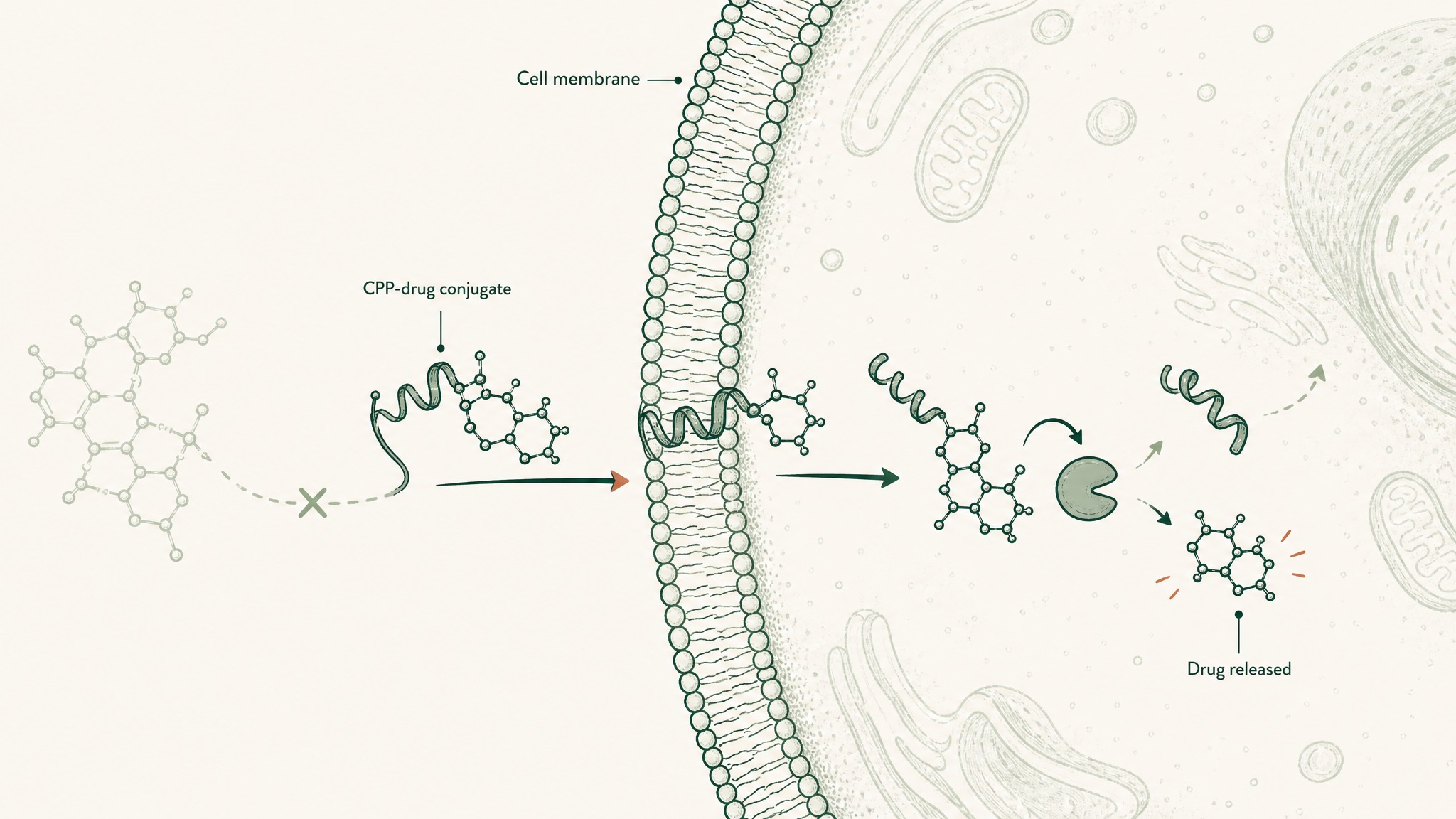
A CPP escorts a blocked drug across the cell membrane, then releases it inside.
Some drugs are very effective but get blocked at the cell membrane. Conjugating them to a CPP makes them cross. The downside is that the conjugation has to be cleavable inside the cell (otherwise the CPP changes the drug's binding behaviour), and the conjugate has to survive blood circulation long enough to reach its target.
One worked example: a TAT-doxorubicin conjugate has been studied for tumour delivery, with the idea that TAT brings the drug into cancer cells the bare drug struggles to enter. Multiple variants have been tested preclinically.
Nucleic Acid Delivery (siRNA, mRNA, plasmid DNA)
Nucleic acids are big, negatively charged, and degrade fast in serum. They also can't cross membranes on their own. CPPs solve the membrane-crossing problem and, when designed correctly, can also protect the nucleic acid in transit.
CPP-based siRNA delivery has been a hot topic since the mid-2000s, with multiple "stapled" or chemically modified CPP-siRNA conjugates moving toward clinical use (Hoyer and Neundorf, Acc Chem Res 2012). The persistent challenge is endosomal escape, the same one mentioned above.
Protein and Antibody Delivery
Intracellular proteins are normally off-limits to antibody therapeutics, because antibodies can't cross membranes. CPP-antibody conjugates open up the intracellular proteome as a drug target, including transcription factors and signalling proteins that have resisted small-molecule approaches.
The "TransMab" and similar concepts use a CPP fused to an antibody fragment, with the CPP pulling the antibody into cells. Research suggests these constructs reach the cytoplasm in measurable amounts, though escape efficiency remains a limiting factor.
Imaging and Research Probes
CPPs are also widely used in research imaging, conjugating to fluorescent dyes or contrast agents to light up specific cell populations. Activatable CPPs (sometimes called ACPPs) carry an additional twist: the CPP is masked by a blocking sequence that gets cleaved only by enzymes in the target tissue (often a tumour-associated protease), so the peptide only "turns on" near the disease site (Olson et al., Proc Natl Acad Sci USA 2010).
What Does 2025-2026 Cell-Penetrating Peptide Research Show?
Five things define where the field has gone in the last two years.
Activatable and tumour-targeted designs are progressing through early human trials. The shift from "always-on" cationic CPPs to peptides that become active only in disease microenvironments is the cleanest way to address the off-target uptake problem. Multiple ACPP-based imaging and therapeutic candidates are in phase 1 or phase 2 oncology trials, according to clinicaltrials.gov entries active in 2025-2026.
AI-designed CPP sequences are appearing in print. Machine learning models trained on thousands of known CPP sequences are now producing novel peptides with predicted uptake behaviour, some of which validate experimentally. A 2025 Nature Scientific Reports paper described tumour-targeting CPPs identified by sequence-based screening with retained in-vivo activity (Nature Sci Reports 2025).
Oligonucleotide delivery is the most active therapeutic application. Antisense oligonucleotides and siRNA drugs that already exist (for example, Spinraza, Onpattro) had to invent their own delivery chemistry. New CPP-conjugated oligonucleotides aim to expand the reachable tissue set, particularly muscle and the central nervous system, where conventional delivery fails. Research suggests several muscle-targeted CPP-PMO conjugates for Duchenne muscular dystrophy are in clinical development.
Mitochondria-targeted CPPs are emerging. A subclass called MTSP (mitochondrial-targeting sequence peptides) and SS-31 (elamipretide) reach mitochondria specifically. SS-31 is in late-stage trials for mitochondrial disease and has already shown the ability to concentrate selectively in mitochondrial membranes via a charge-and-aromatic interaction that doesn't depend on classical CPP machinery.
Endosomal escape is finally getting engineered systematically. Multiple groups have published 2024-2026 work on "endosomolytic enhancer" peptides that piggyback on existing CPP-cargo conjugates and improve cytoplasmic delivery by an order of magnitude. The escape problem is far from solved, but it's no longer being ignored.
Last updated: May 2026.
What Are the Limitations of CPPs?
Five constraints define why CPPs haven't replaced more standard delivery formats.
- Cytotoxicity at high doses. Cationic CPPs disrupt membranes when concentrated enough, including the membranes of cells they weren't designed to target. The dose window can be narrow.
- Non-selective uptake. A bare CPP enters most cell types. Targeting a specific tissue requires additional logic, like the activatable peptide masking described above.
- Proteolytic degradation. Peptides are food for proteases. CPPs in serum get chewed up unless they're chemically stabilised (D-amino acid substitution, cyclisation, N-methylation).
- Endosomal sequestration. As covered above, most cargo entering via endocytosis stays stuck in the endosome and ends up in a lysosome.
- Immunogenicity. Repeated dosing of a peptide sequence can provoke antibody formation, blunting future doses and creating safety risks. Engineered CPPs aim to minimise this, with mixed success.
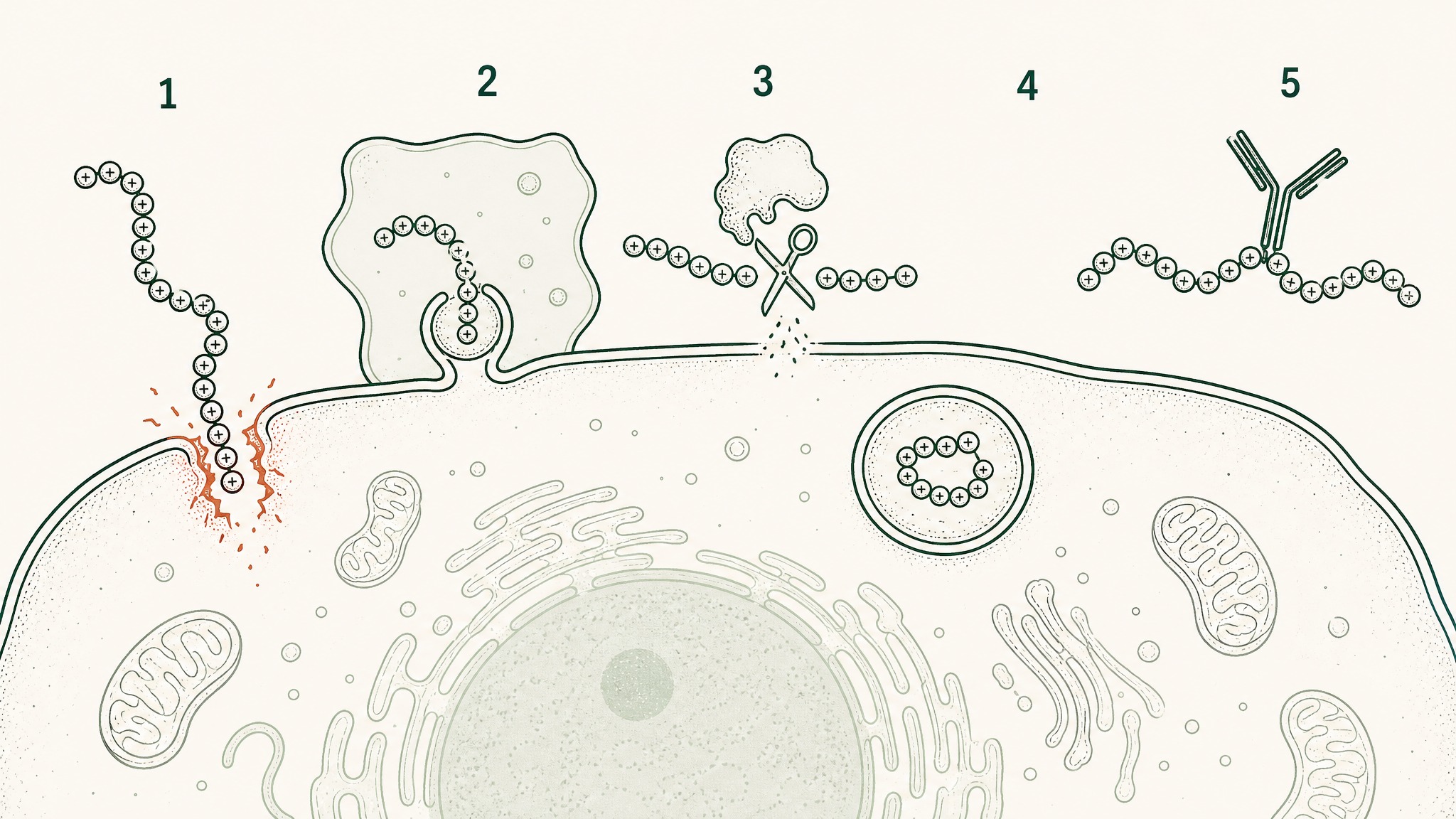
Five ways cell-penetrating peptides fail to reach their target or survive delivery.
None of these is disqualifying, all of them are active engineering problems, and the field's progress is measurable. But every published phase-1 trial result comes with a footnote on at least one of the five above.
Why Does Delivery Route Matter for Peptides That Need to Reach Cells?
Here's where CPP science connects back to a more practical question: if you're researching a peptide that's supposed to act inside cells, how it enters your body matters at least as much as how it enters individual cells.
The classical CPP literature assumes the peptide is already in the bloodstream. That's a fair assumption for an intravenous research drug. For peptide research formats that consumers actually engage with (capsules, sublingual films, transdermal patches), the bloodstream isn't where the story starts.
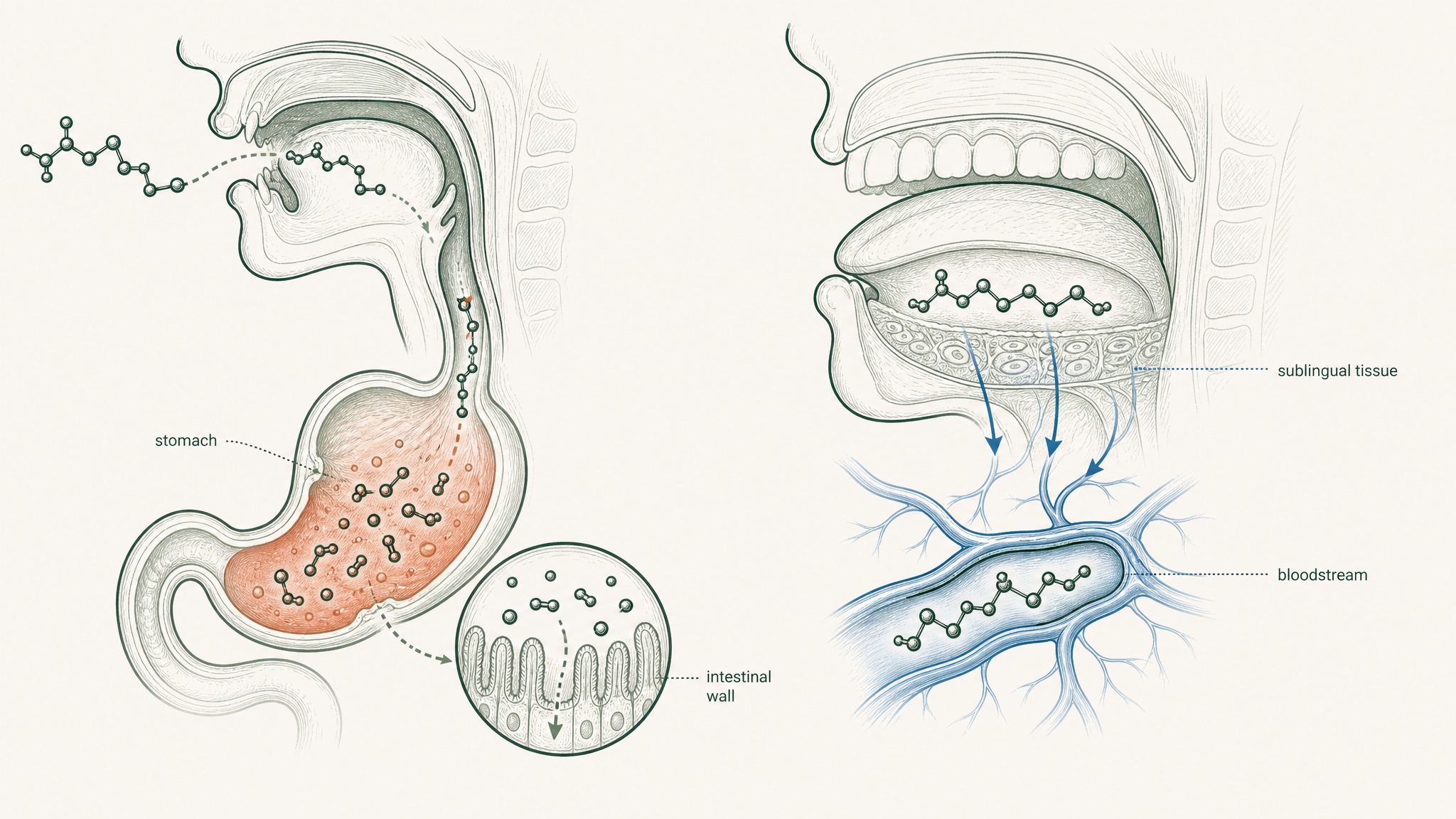
Oral peptides are destroyed by stomach acid, but sublingual delivery bypasses the gut entirely.
The biggest filter is the stomach. Oral peptides hit the same denaturation chamber that breaks down dietary protein, and most peptide structures don't survive. By the time the residual fragments reach the intestinal wall, the active sequence is usually gone. That's why oral peptides struggle to reach systemic circulation in the first place.
Sublingual peptide delivery sidesteps that filter. The peptide absorbs through the tissue under the tongue directly into the bloodstream, skipping the gut and the first-pass liver metabolism that destroys what little survives the stomach. From there, the membrane-crossing question (which CPP class, which uptake route, which receptor) starts to matter.
The point isn't that VERISORB makes a peptide a CPP. It doesn't. The point is that membrane-crossing biology is downstream of bloodstream biology. If the molecule never reaches a cell, the elegant uptake mechanism diagram is irrelevant.
Frequently Asked Questions
What is a cell-penetrating peptide in simple terms?
A cell-penetrating peptide is a short amino acid chain, usually 5 to 30 residues long, that can cross the outer membrane of a cell and carry other molecules with it. Researchers use CPPs as delivery vehicles to get drugs, nucleic acids, and proteins into cells that would otherwise block them. The first one was discovered in 1988 from the HIV-1 TAT protein.
How big is a CPP?
CPPs are typically 5 to 30 amino acids long. The TAT peptide is 11 residues, polyarginine variants run 7 to 12 residues, and penetratin is 16. Some longer "shuttle" CPPs reach 27 residues. Anything longer than 30 tends to lose efficient cell entry.
What is the TAT peptide?
The TAT peptide is an 11-amino-acid sequence (GRKKRRQRRRPQ) derived from the trans-activator of transcription protein in HIV-1. It was the first cell-penetrating peptide discovered in 1988 and remains the most widely studied. Its high arginine and lysine content gives it a net positive charge of +8, which drives its membrane interactions.
Are BPC-157 or GHK-Cu cell-penetrating peptides?
No, neither is a CPP in the strict sense. CPPs are carriers that ferry attached cargo across membranes. BPC-157 acts through receptor-mediated mechanisms in tissues, and GHK-Cu interacts with cell-surface receptors and donates copper. Both are cell-permeable in that they reach their targets, but they aren't transport vehicles for other molecules.
Can cell-penetrating peptides be taken orally?
In principle, no. Most CPPs are degraded by digestive proteases before they reach the bloodstream, and the few that survive face the same intestinal absorption problem as any peptide. Some research groups are working on chemically stabilised CPPs designed for oral delivery, but no oral CPP drug has been approved.
What is the difference between CPPs and antimicrobial peptides?
CPPs and antimicrobial peptides share structural features, including cationic charge and amphipathic behaviour, but their function differs. CPPs cross membranes without destroying them and deliver cargo into living cells. Antimicrobial peptides disrupt and lyse bacterial membranes, killing the target cell. Some sequences sit on the border between the two.
Are CPPs safe?
CPPs vary widely in their safety profile. Many cationic CPPs cause membrane disruption and toxicity at high doses, and the lack of cell-type selectivity means off-target uptake is common. Activatable and tumour-targeted CPPs are being developed specifically to address these limits. All early-phase trial data should be read as preliminary, and any CPP use described in published literature is for research purposes only.
Key Takeaways
- Cell-penetrating peptides (CPPs) are short amino acid chains (5 to 30 residues) that cross cell membranes and carry attached cargo into cells.
- Three structural classes cover most CPPs: cationic (TAT, polyarginine), amphipathic (penetratin, transportan), and hydrophobic.
- Uptake routes split between direct translocation and endocytosis; endosomal escape remains the field's biggest unsolved problem.
- CPPs vs cell-permeable peptides are different concepts. CPPs are carriers; cell-permeable peptides are any peptide that reaches its intracellular target by any route.
- 2025-2026 research is dominated by activatable tumour-targeting designs, AI-generated sequences, oligonucleotide delivery, and mitochondria-targeted peptides.
- Limitations include cytotoxicity, off-target uptake, proteolytic degradation, endosomal sequestration, and immunogenicity.
- Delivery route matters before cell uptake matters. A peptide that never reaches the bloodstream cannot reach a cell, which is why oral peptide formats fail where sublingual formats can succeed.
Last updated: May 2026. All references below.
References
- Frankel AD, Pabo CO. Cellular uptake of the tat protein from human immunodeficiency virus. Cell, 1988. https://pubmed.ncbi.nlm.nih.gov/2849509/. Retrieved 2026-05-28.
- Green M, Loewenstein PM. Autonomous functional domains of chemically synthesized human immunodeficiency virus tat trans-activator protein. Cell, 1988. https://pubmed.ncbi.nlm.nih.gov/2849510/. Retrieved 2026-05-28.
- Madani F, Lindberg S, Langel Ü, Futaki S, Gräslund A. Mechanisms of cellular uptake of cell-penetrating peptides. Journal of Biophysics, 2011. https://pubmed.ncbi.nlm.nih.gov/21687343/. Retrieved 2026-05-28.
- Wadia JS, Stan RV, Dowdy SF. Transducible TAT-HA fusogenic peptide enhances escape of TAT-fusion proteins after lipid raft macropinocytosis. Nature Medicine, 2004. https://pubmed.ncbi.nlm.nih.gov/14730352/. Retrieved 2026-05-28.
- Allen J, Brock DJ, Kondow-McConaghy HM, Pellois JP. Efficient delivery of macromolecules into human cells by improving the endosomal escape activity of cell-penetrating peptides. Bioconjugate Chemistry, 2018. https://pubmed.ncbi.nlm.nih.gov/30372049/. Retrieved 2026-05-28.
- Futaki S, Suzuki T, Ohashi W, Yagami T, Tanaka S, Ueda K, Sugiura Y. Arginine-rich peptides: An abundant source of membrane-permeable peptides having potential as carriers for intracellular protein delivery. Journal of Biological Chemistry, 2001. https://pubmed.ncbi.nlm.nih.gov/11035012/. Retrieved 2026-05-28.
- Hoyer J, Neundorf I. Peptide vectors for the nonviral delivery of nucleic acids. Accounts of Chemical Research, 2012. https://pubmed.ncbi.nlm.nih.gov/22894455/. Retrieved 2026-05-28.
- Olson ES, Aguilera TA, Jiang T, Ellies LG, Nguyen QT, Wong EH, Gross LA, Tsien RY. In vivo characterization of activatable cell penetrating peptides for targeting protease activity in cancer. Proceedings of the National Academy of Sciences USA, 2010. https://pubmed.ncbi.nlm.nih.gov/20133689/. Retrieved 2026-05-28.
- Nature Publishing Group. Cell-penetrating peptides in tumor treatment. Scientific Reports, 2025. https://www.nature.com/articles/s41598-025-86130-8. Retrieved 2026-05-28.
- Xie J, Bi Y, Zhang H, Dong S, Teng L, Lee RJ, Yang Z. Cell-penetrating peptides in diagnosis and treatment of human diseases: From preclinical research to clinical application. Frontiers in Pharmacology, 2020. https://www.frontiersin.org/articles/10.3389/fphar.2020.00697/full. Retrieved 2026-05-28.
Curious how delivery route changes which peptides can actually reach cells? Explore VERO research protocols →
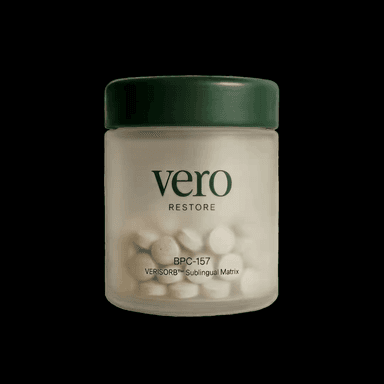
RESTORE™
BPC-157Engineered around 500mcg BPC-157. Accelerates deep tissue and joint recovery
Clinical Context
Important Notice: VERO protocols are nutritional and systemic optimisation formats. They are not intended to diagnose, treat, cure, or prevent any medical condition. These statements have not been evaluated by the Food and Drug Administration.