

NAC and NAD supplements share shelf space and longevity claims, but they target completely different pathways. What the research suggests about both.
Walk into any longevity-leaning supplement shop and you'll probably see NAC and NAD sitting side by side on the same shelf, each one promising sharper energy, slower ageing, and a body that runs cleaner. It's easy to assume they do roughly the same thing, since both arrive wrapped in the same vocabulary of "cellular health" and "antioxidant defence." The truth is they're built for completely different jobs. This guide is for research purposes only, and it walks through what NAC and NAD actually do inside your body, where the evidence has earned its confidence, and how to think about choosing between them.
The short version, before we get into the wiring:
- NAC is a glutathione building block. Research suggests it supports your body's main antioxidant pathway, the one that mops up oxidative stress.
- NAD precursors (NMN, NR, niacinamide) feed an energy and repair coenzyme. The research has tracked them through mitochondrial function and a family of "longevity enzymes" called sirtuins.
- They don't compete. They sit on different shelves of the same biology, and most longevity protocols use them as complementary tools rather than interchangeable ones.
What's the actual difference between NAC and NAD?
The simplest mental model: NAC works on the cleanup side of your cells, NAD works on the power side.
Think of your cells as small factories. They're always producing energy, always producing waste, and that waste includes reactive oxygen species, the unstable molecules that age you from the inside. NAC keeps the cleanup crew stocked. NAD keeps the lights on.
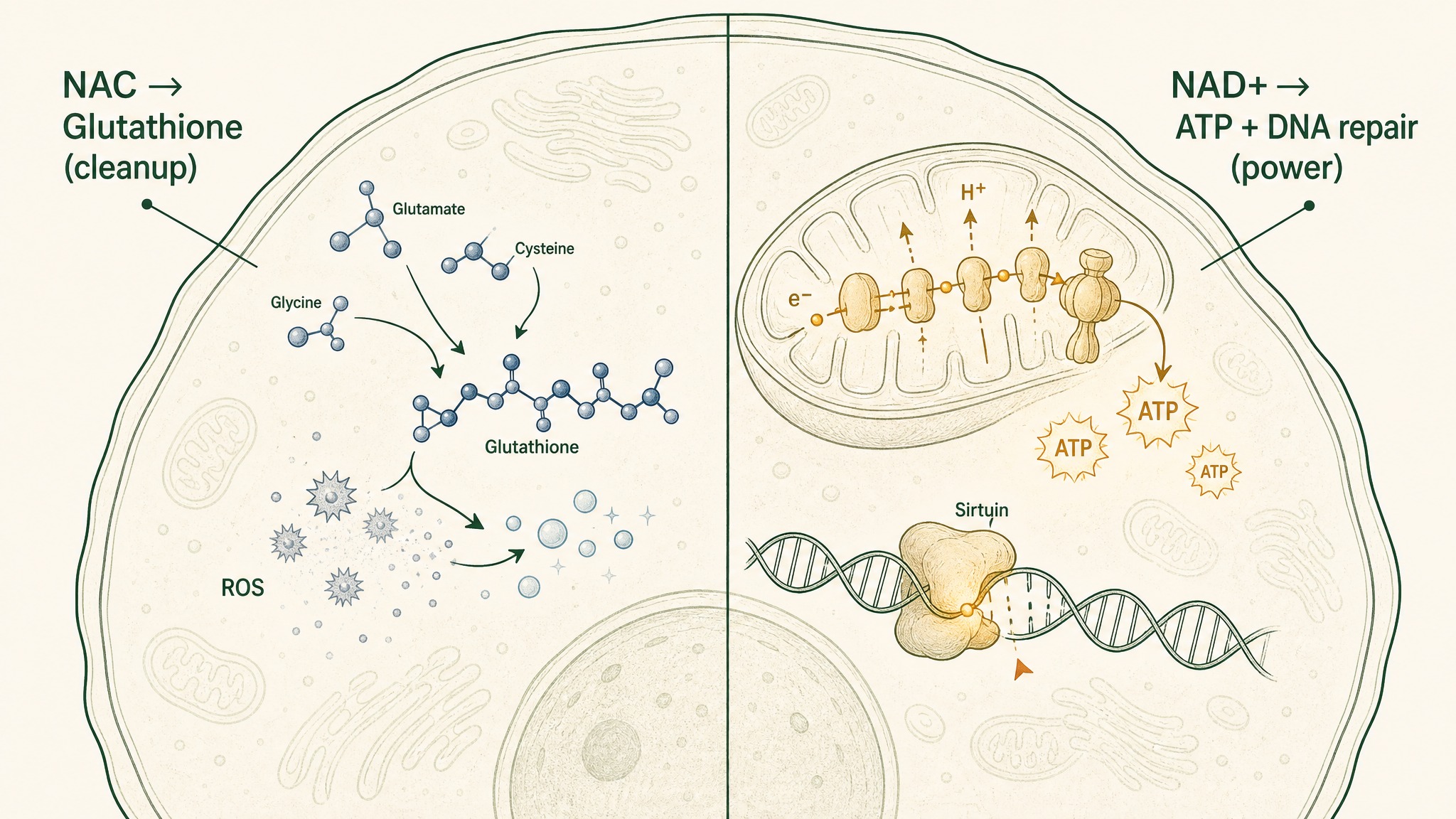
NAC neutralizes cellular waste while NAD powers energy production and DNA repair.
That's why both end up on a longevity shelf. The comparison stops being useful the moment you ask what each one is actually made of and where it fits in the chain.
- NAC (N-acetylcysteine) is a small modified amino acid. Your body strips the acetyl group off and uses the cysteine to build glutathione, the antioxidant you make at home.
- NAD (nicotinamide adenine dinucleotide) is a coenzyme. It's the molecule your mitochondria pass electrons through to make ATP, and the molecule your sirtuins and PARPs use to do DNA repair work.
They share three letters and a shelf and almost nothing else. The rest of this guide unpacks what that actually means for your protocol.
What does NAC actually do once you swallow it?
Picture cysteine as the bottleneck for your home-made antioxidant supply. Of the three amino acids your liver needs to assemble glutathione (cysteine, glutamate, glycine), the one that runs out first is cysteine. NAC delivers it.
Once you swallow it, NAC is partly de-acetylated in your gut and liver, freeing cysteine that feeds straight into the glutathione synthesis pathway. Research suggests that lifting cysteine availability raises glutathione production, especially when oxidative load is high.
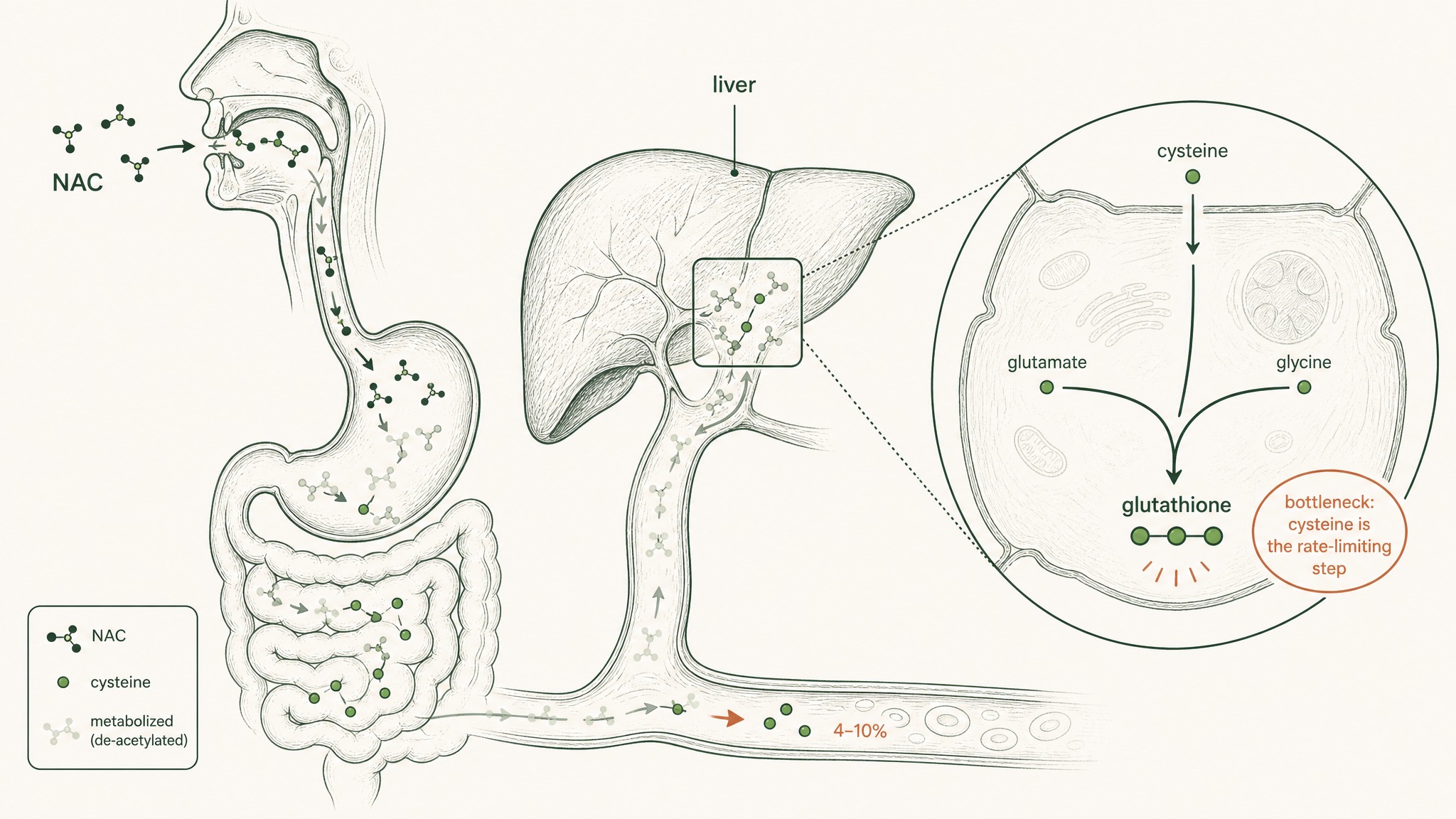
NAC is mostly broken down in the gut and liver before reaching the bloodstream.
A few things the research has examined:
- Mucus thinning. NAC has been used clinically as a mucolytic for decades. In respiratory research, it has been observed to break disulfide bonds in mucus, making it less sticky.
- Acetaminophen overdose. In emergency medicine, IV NAC is used to replenish glutathione when paracetamol overwhelms the liver. This is a hospital protocol, not a supplement use case.
- Oxidative stress markers. In human trials, NAC has been observed to raise plasma glutathione and reduce some markers of oxidative damage.
The honest catch is that oral NAC bioavailability is low. Borgström and colleagues (1986) reported around 4 to 10% of an oral dose reaching circulation intact, with high inter-individual variation. Your gut and liver chew through most of it before it can do anything systemic.
What does NAD actually do inside your cells?
If NAC sits with the cleanup crew, NAD runs the electrical grid.
NAD plays two big roles. The first is metabolic: every mitochondrion in your body uses NAD as the electron shuttle that turns the food you ate into ATP, the energy currency your cells run on. The second is regulatory. A family of enzymes called sirtuins, plus the DNA-repair enzymes called PARPs, both consume NAD as a substrate, so your sirtuin and PARP activity is gated by how much NAD you have on hand.
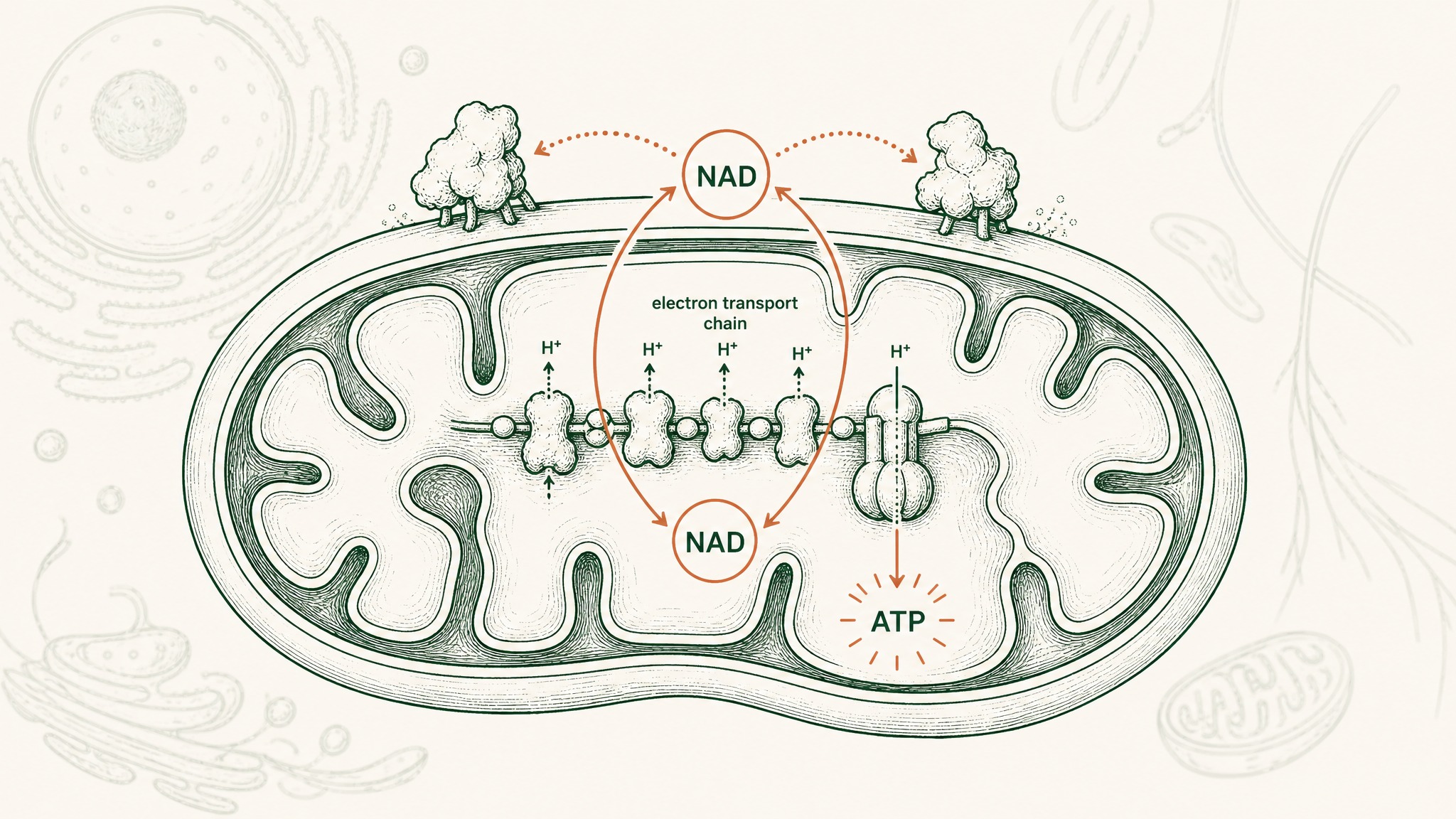
NAD shuttles electrons through mitochondria to convert food into usable cellular energy.
Here's the trouble. NAD levels fall with age. Massudi and colleagues (2012) measured NAD in human skin samples and reported a decline of roughly 50% from young adulthood to age 60. That drop tracks with a lot of the cellular decline people describe as "ageing."
Most NAD supplements don't contain NAD itself. They contain a precursor:
- NMN (nicotinamide mononucleotide): one biochemical step away from NAD.
- NR (nicotinamide riboside): two steps away. Trammell and colleagues (2016) reported in Nature Communications that oral NR has been observed to raise blood NAD+ in human volunteers.
- Niacinamide / nicotinamide: the cheap end of the shelf. Raises NAD in research, but lacks the targeted profile of the newer precursors.
- Direct oral NAD+: high theoretical promise, but oral bioavailability is poor, which is why delivery method becomes the question more than dose.
For a deeper dive into what each precursor actually does, see our guide on what an NAD supplement is and what works.
NAC vs NAD: which problem are you trying to solve?
This is where most "which is better" debates collapse, because the two molecules answer different questions.
Here's the simplest way to map them:
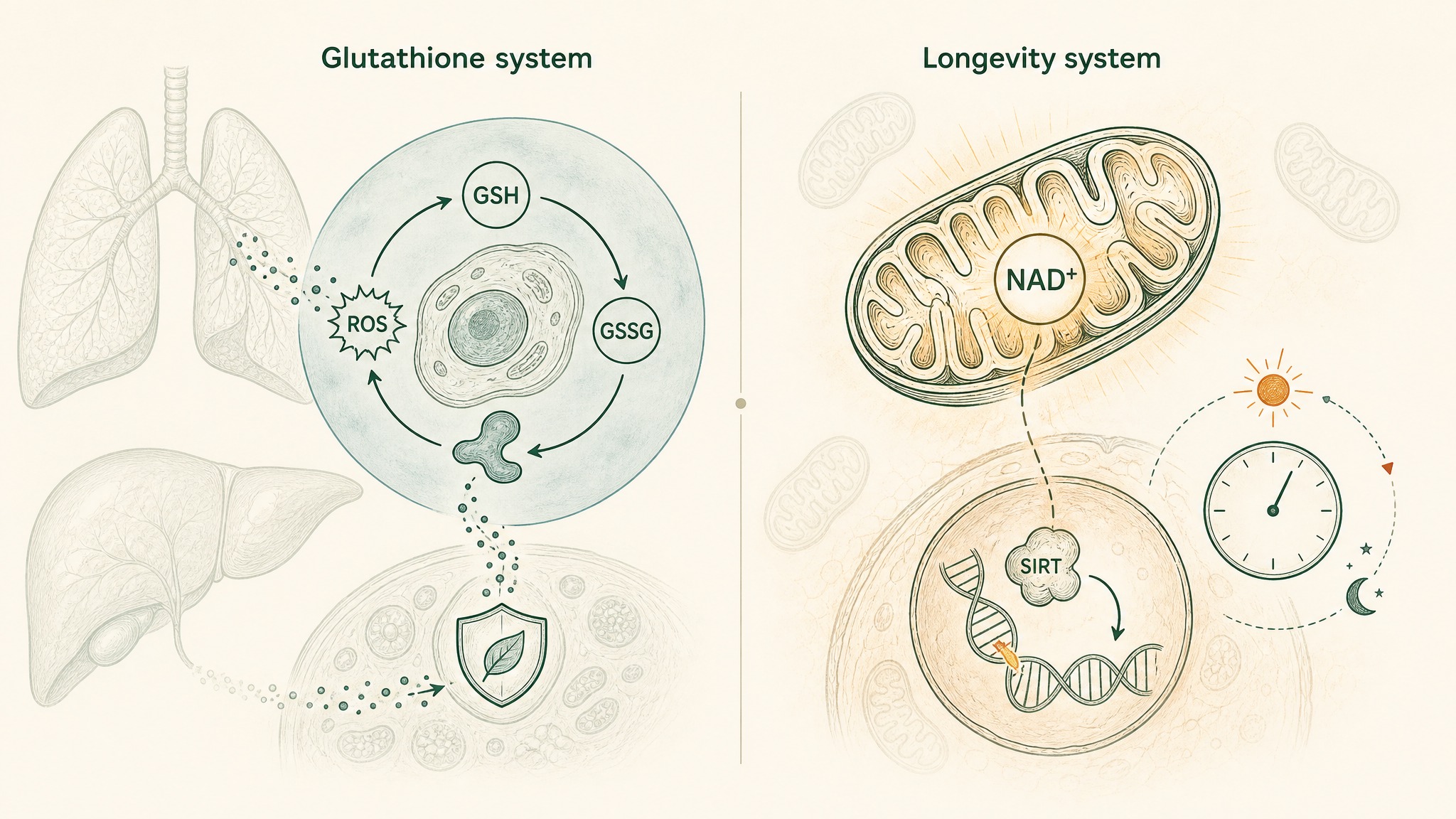
NAC supports antioxidant defence; NAD+ powers mitochondrial energy and cellular repair.
| You're trying to support | Better fit |
|---|---|
| Antioxidant defence, mucus and lung clearance, paracetamol stress | NAC |
| Energy, mitochondrial function, sirtuin activity | NAD precursor |
| Skin and connective tissue ageing (longevity framing) | NAD precursor |
| Glutathione recovery after heavy training, alcohol, or oxidative load | NAC |
| Cognitive ageing and DNA repair pathways | NAD precursor |
| Sleep timing and circadian rhythm (sirtuin-dependent) | NAD precursor |
In our protocol design, we frame NAC as a glutathione-system tool and NAD as a longevity-system tool. They sit in different rooms of the same house, and most members experience clearer thinking about their stack when they frame it that way, rather than asking which one wins.
If your goal is fundamentally longevity-framed, meaning slower visible ageing, better mitochondrial reserve, sirtuin activity, the NAD pathway is the one the bulk of the recent research has chased. If your goal is daily antioxidant maintenance after high oxidative load, NAC is the cheaper, simpler tool with a longer clinical history.
Do oral NAC and NAD supplements even reach your bloodstream?
This is where most of the marketing goes quiet, and where the comparison gets interesting.
Both NAC and oral NAD precursors face the same opponents on the way in: stomach acid, gut enzymes, and the liver's first-pass metabolism. Most of what you swallow is broken down before it can do anything useful. The numbers, from peer-reviewed work, look roughly like this:
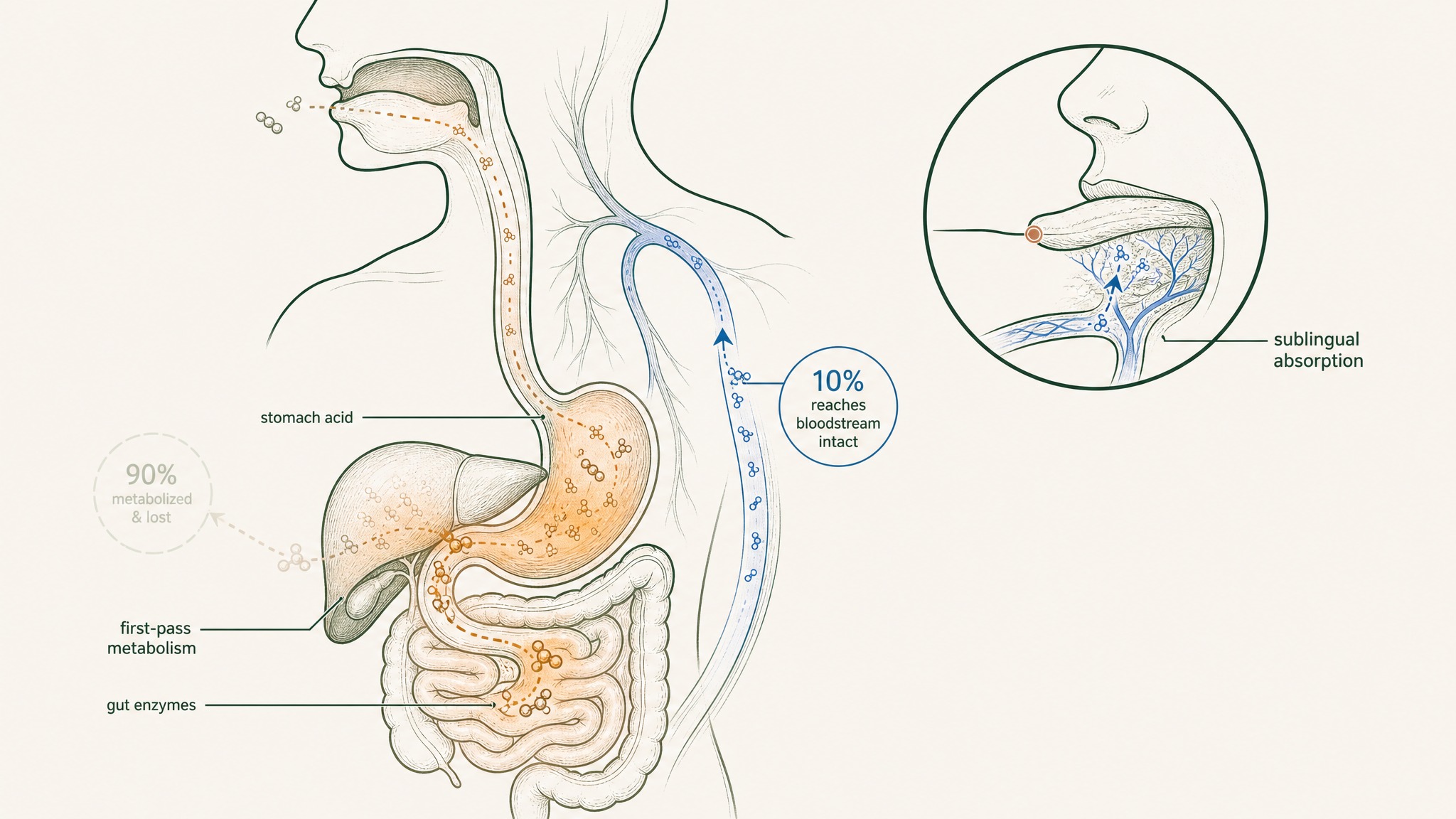
Why most oral supplements break down in your stomach before reaching your blood.
- Oral NAC: about 4 to 10% bioavailability (Borgström et al., 1986). Variable, dose-dependent.
- Oral NR: blood NAD+ has been observed to rise after dosing (Trammell et al., 2016). Bioavailability of NR itself is moderate, with rapid conversion.
- Oral NMN: human pharmacokinetic data is newer. Yoshino and colleagues (2021) reported metabolic markers shifting in postmenopausal women, but the parent molecule's intact systemic exposure remains debated.
- Oral direct NAD+: poor. Most degrades in the gut.
This is the bioavailability problem the entire sublingual category is built around. VERISORB is VERO's sublingual delivery platform, designed to route NAD+ through the membranes under your tongue and skip the digestive demolition. The same principle (deliver under the tongue, bypass first-pass metabolism) is what makes LEGACY, VERO's NAD+ sublingual protocol, competitive with much higher oral doses on paper.
In our protocol design, we found that the absorption numbers on a paper label rarely match what a member's bloodstream actually sees. When we model dosing for a longevity protocol, we work backwards from delivery method first, not labelled dose.
NAC has no popular sublingual equivalent in the consumer market yet, partly because NAC is cheap enough that low oral bioavailability gets brute-forced with higher doses (typically 600 to 1200 mg, twice daily, in research protocols).
Can you take NAC and NAD at the same time?
Short answer: yes, they don't share a metabolic pathway, and most longevity-orientated protocols stack them.
The longer answer is that NAC and NAD precursors do different work, on different schedules, with different timing. NAC is usually taken with food (or at least without an empty stomach causing GI upset), often twice daily. NAD precursors are research-suggested to land best taken earlier in the day, aligned to your morning circadian rise of sirtuin activity.
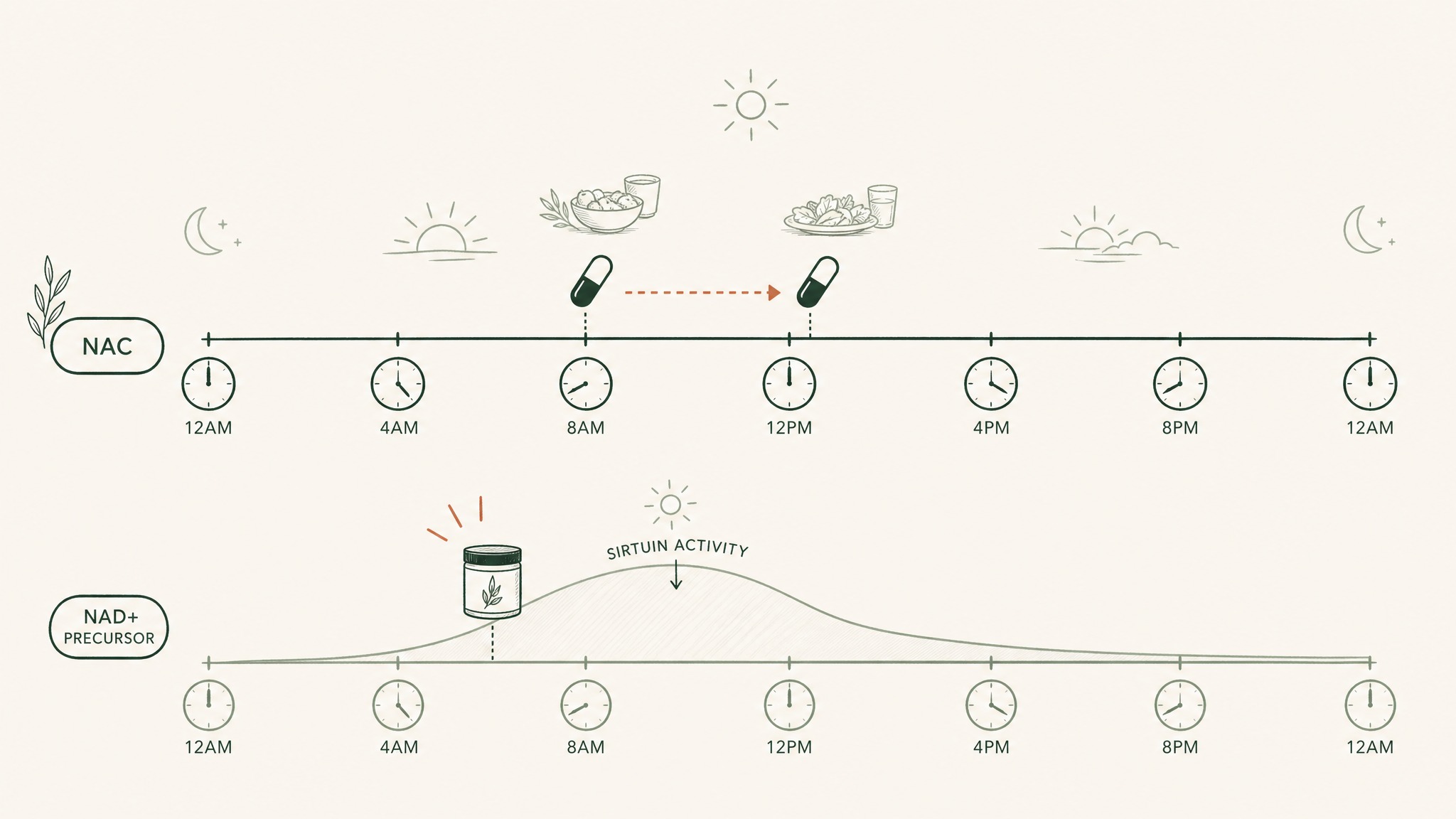
NAC taken twice with meals; NAD+ taken once in early morning, staggered by hours.
Three practical points if you do stack them:
- Stagger them by a few hours. There's no known direct interaction, but cleaner data means cleaner self-experiments.
- NAC can have a sulphurous odour. Sealed capsules or sublingual NAD avoid the issue.
- Watch your total cysteine load if you're already high-protein. Excess cysteine in some people produces homocysteine. Pairing with B12, B6 and folate is the standard hedge.
This isn't medical advice. Talk to your physician if you're on nitrates, blood thinners, or chemotherapy, where NAC interactions have been documented.
What does the longevity research actually show?
Honest answer: both molecules have signal, but the strength of evidence is different.
NAD precursors have had a much bigger spotlight in the last decade. In animal research, raising NAD has been observed to extend healthspan markers in mice, with measurable shifts in mitochondrial function and sirtuin-mediated DNA repair pathways (Yoshino et al., 2011; Mills et al., 2016). In human trials, NR has been observed to raise blood NAD+ (Trammell et al., 2016), and small NMN trials in postmenopausal women showed shifts in insulin sensitivity and muscle metabolism (Yoshino et al., 2021).
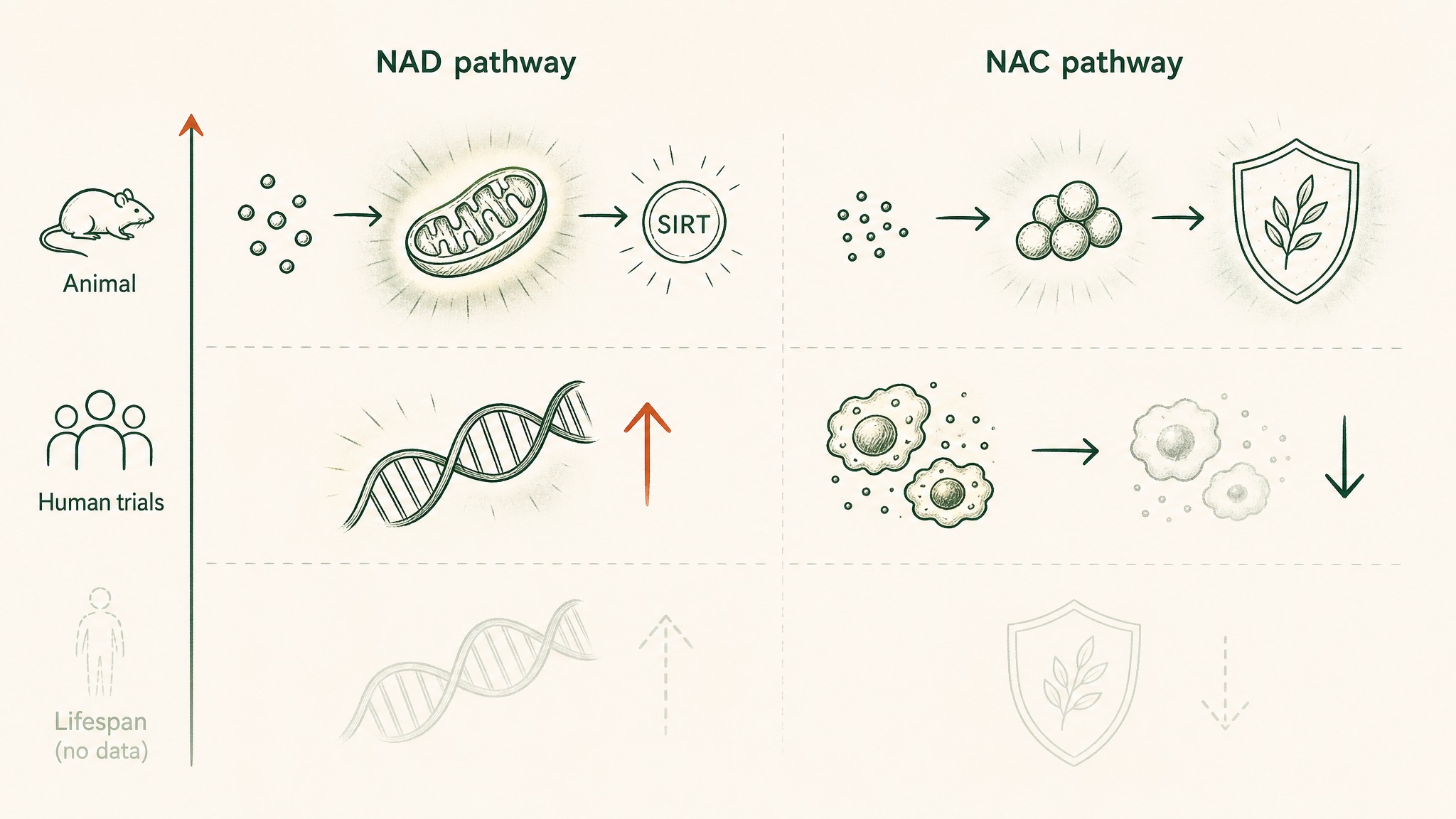
NAD+ and NAC follow different biological routes: NAD+ activates mitochondrial repair, while NAC boosts antioxidant defenses.
NAC has a longer clinical history but a different focus. Most of its evidence sits in oxidative stress, respiratory conditions, and acetaminophen toxicity. In ageing research, NAC has been observed to raise glutathione in older adults whose levels are depleted, with downstream effects on inflammation markers (Sekhar et al., 2011).
Where each one sits in the evidence:
- NAD precursors: large animal-model body of work, multiple human PK trials, no human lifespan trial.
- NAC: decades of clinical use in respiratory and toxicology, smaller body of human longevity research.
- Both: zero human lifespan trials. Read every "proven longevity" claim accordingly.
Neither molecule has run a lifespan trial in humans. That's an honest limit on both. Anyone selling you a "proven longevity pill" is overselling, on either side of this comparison.
How should you choose between NAC and NAD?
Start with the problem, not the bottle.
If your honest goal is daily antioxidant support, especially around oxidative stressors like heavy training, late nights, or environmental load, NAC is the proven, cheap, well-tolerated tool. Users report it being useful as a "morning after a big day" supplement, with the trade-off being modest oral bioavailability.
If your honest goal is longevity-framed support, meaning energy, mitochondrial reserve, sirtuin activity, slowing the kind of decline that shows up in your 40s and beyond, the NAD pathway is the more researched bet. The catch is that delivery method matters more than dose. A 1,000 mg oral NMN capsule that delivers a tiny fraction systemically is worse than a smaller, well-delivered sublingual dose. This is the whole reason we built LEGACY around sublingual NAD+ rather than a bigger capsule.
If your goal is "both", use them as different tools. Stack them, time them differently, and pay attention to delivery method on the NAD side. That's how most longevity-led protocols are now structured.
Frequently asked questions
Is NAC the same as NAD?
No. NAC (N-acetylcysteine) is a modified amino acid that your body uses to make glutathione, your main antioxidant. NAD (nicotinamide adenine dinucleotide) is a coenzyme that runs your mitochondrial energy production and feeds the sirtuin longevity enzymes. They share three letters and a shelf, and almost nothing else.
Can NAC raise NAD levels?
Not directly. NAC supports glutathione synthesis, which is a different pathway. Some research has explored indirect crosstalk via redox balance, but if your goal is raising NAD, an NAD precursor like NR or NMN is the targeted route. See our NAD supplement guide for the precursor breakdown.
Should I take NAC or NAD first thing in the morning?
NAD precursors are research-suggested to land best alongside your morning sirtuin rhythm, so first thing fasted (or before breakfast) is the most common protocol. NAC is more flexible. Many users report taking it with a meal to avoid mild GI effects.
Is sublingual NAC available?
Not really, in the consumer market. Most consumer NAC is capsule or tablet. The economics haven't pushed it sublingual because NAC is cheap enough that brands simply dose higher to compensate. Sublingual delivery is mostly being developed where the active is expensive or hard to absorb, which is why NAD+ ended up the focus of VERISORB-style delivery.
Is NAC banned by the FDA?
No, NAC is legally available as a supplement in the US. The FDA briefly raised an enforcement question in 2020, then reversed course in 2022. It is sold widely in capsule form today.
Can I take NAC and NMN together?
There's no known direct interaction. Many longevity protocols stack them. Common practice is NAD precursor in the morning, NAC with a later meal. Talk to your clinician if you're on nitrates, blood thinners, or oncology drugs.
Key Takeaways
- NAC and NAD supplements share a shelf but work on different pathways. NAC supports glutathione synthesis (antioxidant defence). NAD precursors feed mitochondrial energy production and sirtuin activity (longevity framing).
- Oral bioavailability is the catch for both. NAC sits around 4 to 10%. Oral NAD precursors vary, with NR showing measurable blood NAD+ rises and NMN data still maturing.
- For longevity-framed goals (energy, sirtuin activity, mitochondrial reserve), the NAD pathway is where most recent research has focused.
- For daily antioxidant maintenance, especially around oxidative load, NAC is the cheaper, simpler tool with a longer clinical history.
- They are not interchangeable. They can be stacked. Delivery method matters more than dose on the NAD side, which is why sublingual platforms exist.
- This article is for research purposes only. Talk to your physician before adjusting any supplement protocol.
References
- Borgström L, Kågedal B, Paulsen O. (1986). Pharmacokinetics of N-acetylcysteine in man. European Journal of Clinical Pharmacology. https://pubmed.ncbi.nlm.nih.gov/3792445/. Retrieved 2026-06-27.
- Massudi H, Grant R, Braidy N, Guest J, Farnsworth B, Guillemin GJ. (2012). Age-associated changes in oxidative stress and NAD+ metabolism in human tissue. PLoS ONE. https://doi.org/10.1371/journal.pone.0042357. Retrieved 2026-06-27.
- Trammell SAJ, Schmidt MS, Weidemann BJ, et al. (2016). Nicotinamide riboside in humans and mice: pharmacokinetic and bioavailability findings. Nature Communications. https://doi.org/10.1038/ncomms12948. Retrieved 2026-06-27.
- Yoshino M, Yoshino J, Kayser BD, et al. (2021). Nicotinamide mononucleotide and muscle insulin sensitivity in prediabetic women: clinical trial findings. Science. https://doi.org/10.1126/science.abe9985. Retrieved 2026-06-27.
- Yoshino J, Mills KF, Yoon MJ, Imai S. (2011). Nicotinamide mononucleotide as a NAD+ intermediate in diet- and age-induced diabetes: mouse-model findings. Cell Metabolism. https://doi.org/10.1016/j.cmet.2011.08.014. Retrieved 2026-06-27.
- Mills KF, Yoshida S, Stein LR, et al. (2016). Long-term nicotinamide mononucleotide administration in mice: age-associated physiological-decline study. Cell Metabolism. https://doi.org/10.1016/j.cmet.2016.09.013. Retrieved 2026-06-27.
- Sekhar RV, Patel SG, Guthikonda AP, et al. (2011). Glutathione synthesis in aging adults: dietary cysteine and glycine supplementation findings. American Journal of Clinical Nutrition. https://doi.org/10.3945/ajcn.110.003483. Retrieved 2026-06-27.
Ready to explore the NAD side of the comparison? Start with VERO LEGACY, our sublingual NAD+ protocol →
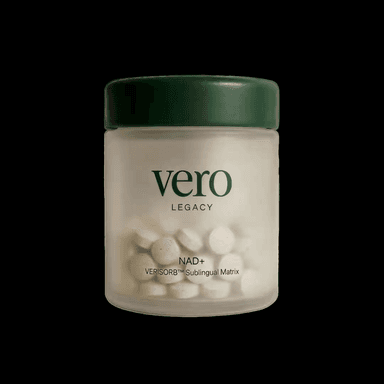
LEGACY™
NAD+Engineered around 300mg NAD+. Replenishes systemic NAD+ levels and drives mitochondrial function
Clinical Context
Important Notice: VERO protocols are nutritional and systemic optimisation formats. They are not intended to diagnose, treat, cure, or prevent any medical condition. These statements have not been evaluated by the Food and Drug Administration.