
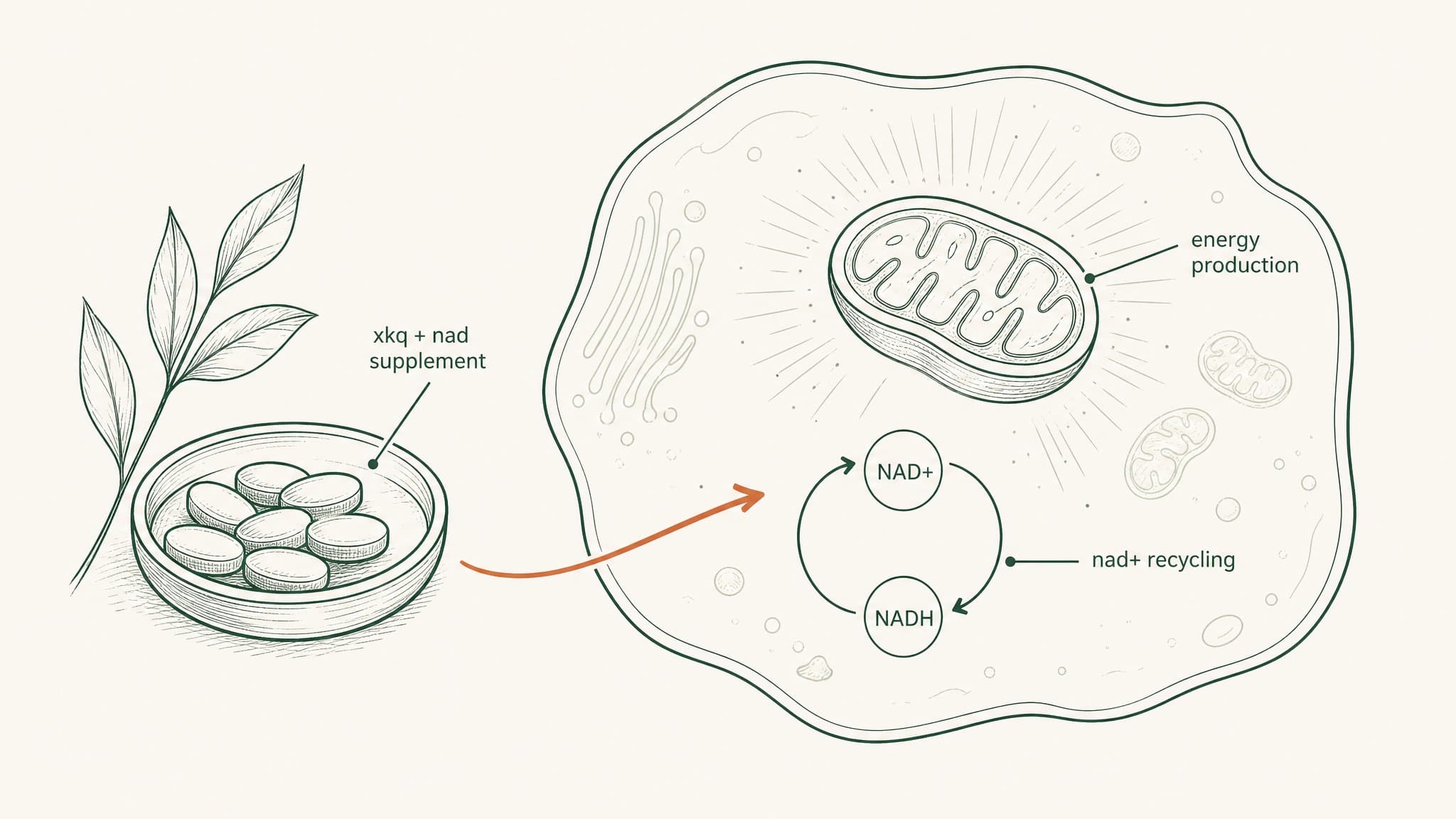
XKQ pairs 520mg nicotinamide riboside with quercetin and resveratrol. Here's what the human NAD+ research actually shows, and how to judge any NAD supplement.
If you've landed on the XKQ NAD supplement, you're probably asking one simple thing: does it actually do anything? The honest answer is that its main ingredient, nicotinamide riboside, has real human research behind it. Swallowing it can raise the NAD+ in your blood. That part is settled science, framed here for research purposes only.
What's less settled is whether XKQ's exact recipe, at its exact doses, delivers what the label hints at. This guide walks through what's really in the bottle, what the human trials show, and how to judge any NAD+ product before you pay for it, including where VERO's own LEGACY protocol fits in.
NAD+ is the fuel-handling molecule inside every one of your cells. It falls as you get older, and research suggests topping it back up is one of the more promising levers in longevity science. XKQ is one of dozens of products chasing that idea. Let's see how it holds up.
Key Takeaways
- XKQ's active ingredient is nicotinamide riboside (NR), 520mg per two-capsule serving, plus 240mg quercetin and 150mg resveratrol.
- In human trials, oral NR raised whole-blood NAD+ by 22% to 142% depending on dose over 8 weeks. XKQ's 520mg sits inside that tested range.
- The quercetin (240mg) and resveratrol (150mg) doses are far below the amounts used in the studies that gave those ingredients their reputation.
- No trial has tested XKQ's specific NR salt or its finished product, so take brand-specific promises with a pinch of salt.
- Swallowed NAD+ boosters lose a lot of the dose to the liver, which is why the delivery route matters as much as the milligrams.
What Is the XKQ NAD Supplement?
XKQ is a nicotinamide-riboside NAD+ booster sold as a 60-capsule bottle, taken two capsules a day. Each serving lists 520mg nicotinamide riboside (as the hydrogen malate salt), 240mg quercetin, and 150mg resveratrol, and one official listing prices it around $49.98 on sale. NR itself carries an FDA "no objection" GRAS status granted back in 2016 for the chloride form (FDA GRAS Notice 000635), which is why you see it in so many products.
The three ingredients, in plain terms:
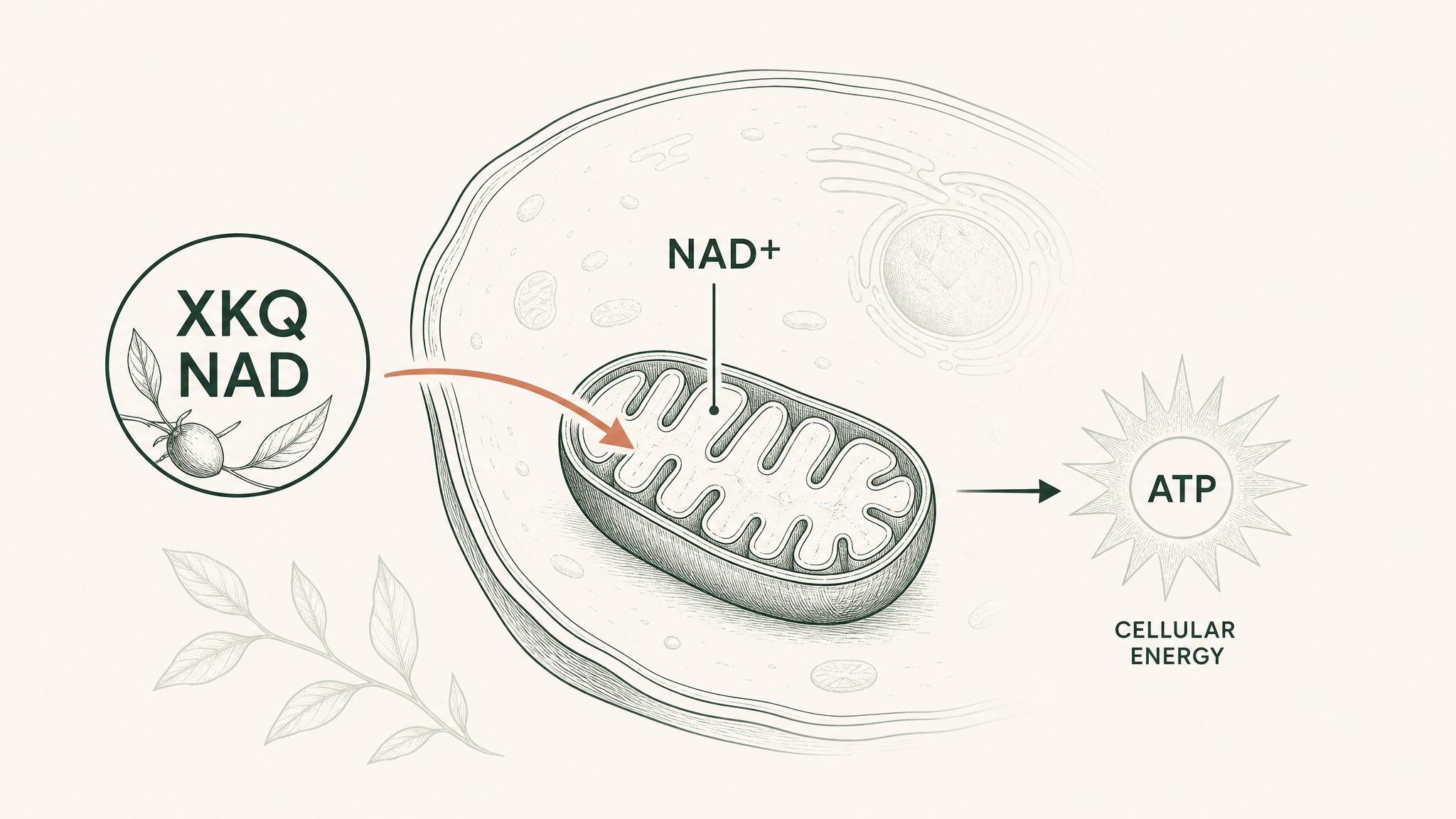
LEGACY NAD+ combines nicotinamide riboside, quercetin, and resveratrol in one daily dose.
- Nicotinamide riboside (NR): a form of vitamin B3 your body converts into NAD+. This is the workhorse.
- Quercetin: a plant compound found in onions and apples, studied mostly as a senolytic, meaning something that clears out worn-out cells, at high doses.
- Resveratrol: the red-wine molecule, studied as a sirtuin activator (sirtuins are enzymes tied to cellular housekeeping).
Here's how XKQ's doses stack up against the amounts actually used in human research:
| Ingredient | XKQ per day | Dose in cited human research | What that means |
|---|---|---|---|
| Nicotinamide riboside | 520 mg | 100 to 1000 mg/day tested | Inside the tested range: 300 mg raised NAD+ 51%, 1000 mg raised it 142% (Conze 2019) |
| Quercetin | 240 mg | 1000 to 1250 mg, with dasatinib (Hickson 2019) | Well below the studied senolytic dose, and no dasatinib |
| Resveratrol | 150 mg | Varies widely, poorly absorbed | A modest dose of a compound the body struggles to absorb |
One detail matters for honesty. XKQ uses nicotinamide riboside hydrogen malate, a different salt from the nicotinamide riboside chloride (branded Niagen) used in nearly every published human trial. The science below is on NR in general. No study has tested XKQ's exact form.
Do NAD Supplements Actually Raise Your NAD+?
Yes, and it's the strongest, least-disputed claim in this whole category. In an 8-week trial, whole-blood NAD+ climbed 22% at 100mg a day, 51% at 300mg, and 142% at 1000mg, a clean dose-response (Conze et al., 2019). A separate 9-day study in 8 healthy adults saw blood NAD+ roughly double at the higher doses (Airhart et al., 2017). And a single-dose study found blood NAD+ measurable within about 4 hours and rising up to 2.7-fold (Trammell et al., 2016).
XKQ's 520mg dose lands between the 300mg and 1000mg arms of that curve. That's the fair way to read it: the dose is inside the range shown to work, but nobody has measured XKQ's finished product, so the exact number you'd get is unknown.
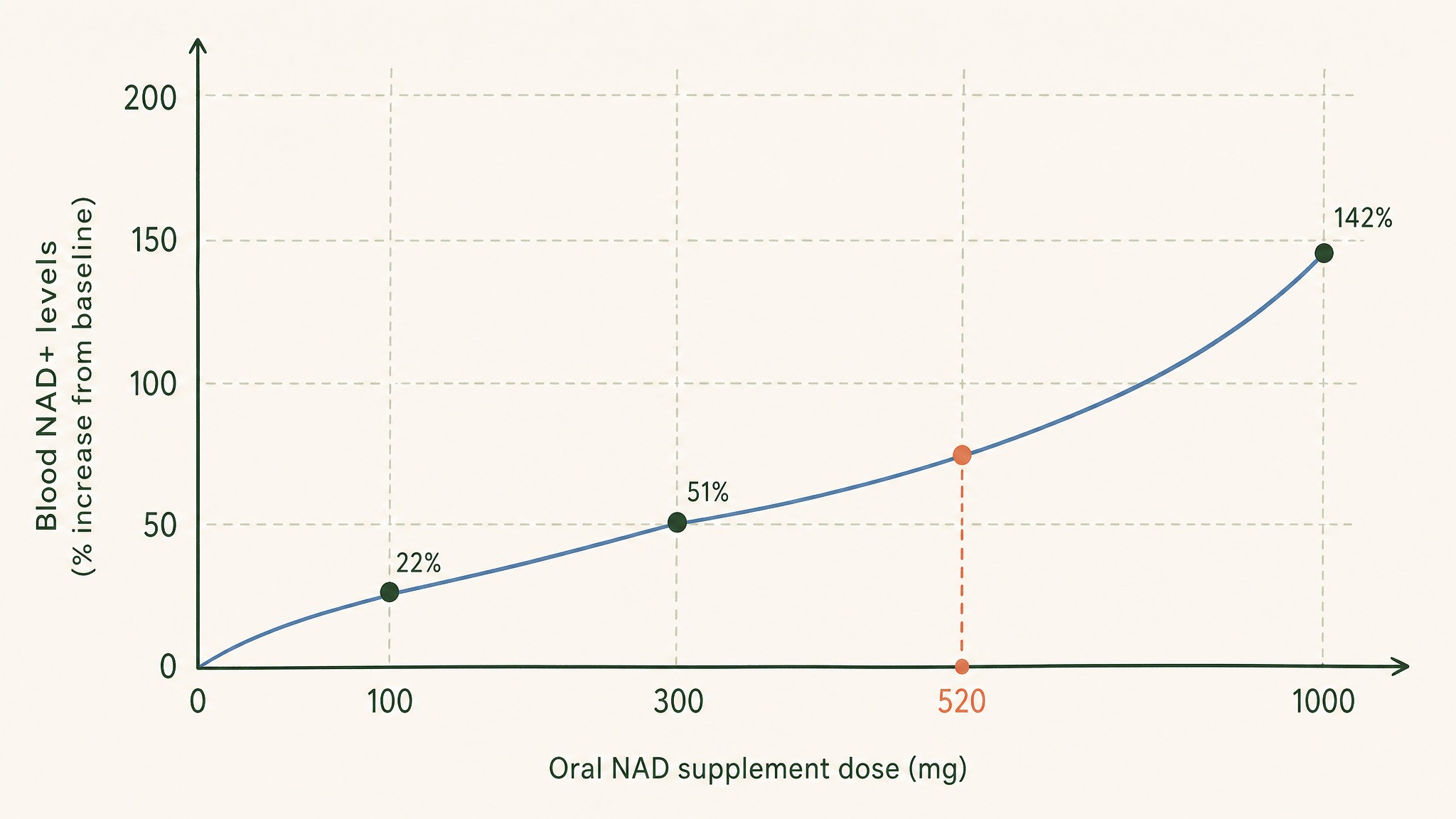
Blood NAD+ rises predictably with dose, and LEGACY's 520mg sits in the proven middle range.
The dose is real. The brand-specific promise is not yet tested.
For a deeper dig into whether these products live up to the marketing, VERO's review of whether NAD supplements really work goes further than most.
Why Does NAD+ Matter More As You Get Older?
NAD+ is the molecule your cells use to turn food into usable energy, and it drops steadily as you age. In human tissue sampled across ages from newborn to 77 years, NAD+ showed one of the strongest downward age correlations the researchers measured (Massudi et al., 2012). Picture NAD+ as the loose change your cells spend on every transaction. When the change runs low, the whole economy slows down.
Where that loose change gets spent:
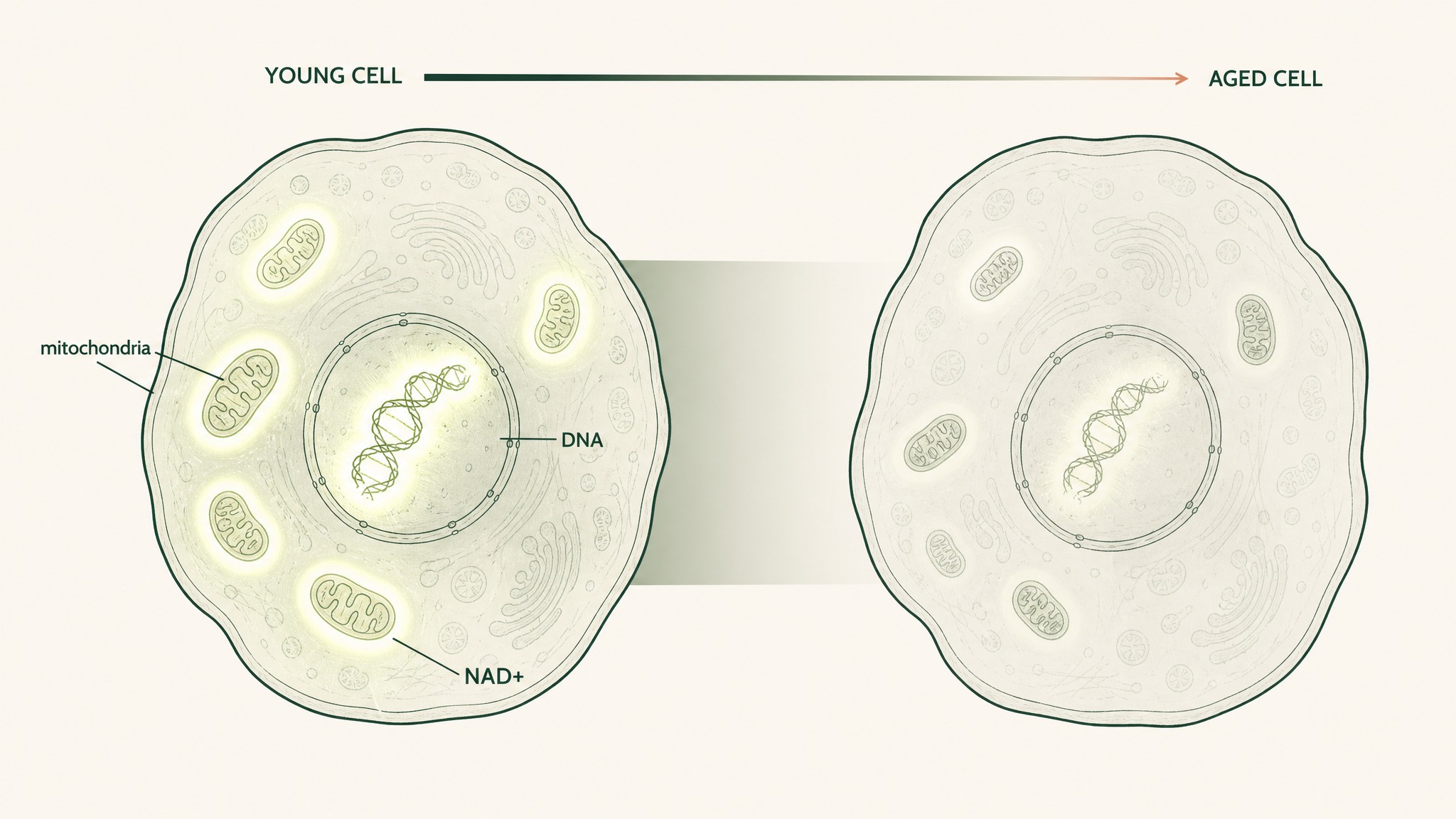
NAD+ levels glow bright in young cells but fade significantly by your fifties and sixties.
- Powering the mitochondria, the tiny engines inside each cell
- Feeding the DNA-repair crews that fix daily wear and tear
- Fuelling sirtuins, the maintenance enzymes resveratrol is meant to nudge
By your 50s and 60s, you're running that whole economy on a fraction of the NAD+ you had as a kid. That's the gap NAD+ boosters are trying to close. Whether closing it changes how you feel day to day is a separate question the trials are still working through, and the human outcome data is thinner than the ads suggest. If you want the practical uses, VERO breaks down what NAD supplements are actually used for.
What About the Quercetin and Resveratrol in XKQ?
Honest verdict: XKQ's quercetin and resveratrol doses are too low to match the studies they borrow their reputation from. Quercetin's headline research is as a senolytic, but the human trials that made it famous used 1000 to 1250mg of quercetin paired with a prescription drug, dasatinib (Hickson et al., 2019). XKQ's 240mg, with no dasatinib, is a small fraction of that. Resveratrol raised circulating SIRT1 in a 30-day study of adults aged 55 to 65 (NIH PMC, 2023), but it's famously hard to absorb, and 150mg is a modest amount.
None of that makes them pointless. It means they're supporting players here, not the reason the product does anything.
At these doses, the NR is doing the heavy lifting. Everything else is seasoning.
So when a label leans hard on quercetin and resveratrol to sound impressive, do one thing first: read the doses.
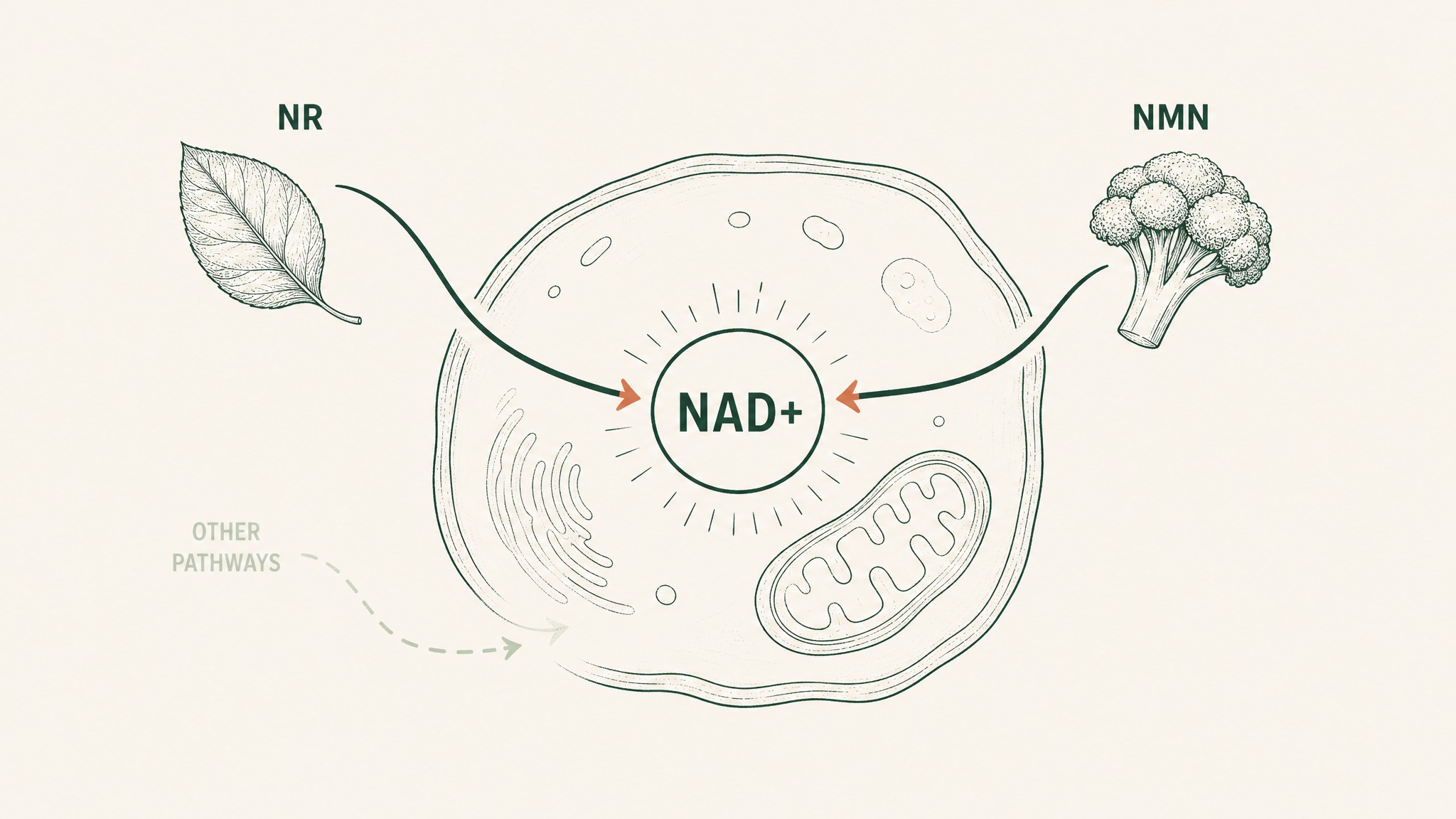
Is NR or NMN the Better NAD+ Booster?
Both raise NAD+, and neither has been crowned a clear winner in head-to-head human research. NMN (nicotinamide mononucleotide) is NR's better-known cousin, and it has solid trials of its own. Taking 250mg a day for 12 weeks more than doubled blood NAD+ in men over 65, alongside gains in walking speed and grip strength (Igarashi et al., 2022). In prediabetic postmenopausal women, 250mg of NMN a day for 10 weeks improved muscle insulin sensitivity by about 25% (Yoshino et al., 2021). A separate 12-week trial confirmed NMN lifts NAD+ metabolites and is well tolerated (Katayoshi et al., 2023).
Regulation is the real fork in the road here, and it moved recently:
Is NR or NMN the Better NAD+ Booster?
- October 2022: the FDA ruled NMN could not be sold as a supplement.
- September 2025: the FDA reversed that position (Venable LLP, 2025).
- December 2025: the FDA sent formal letters confirming NMN's return to dietary-supplement status (NutraIngredients, 2025).
That three-year back-and-forth is exactly why many brands, XKQ included, stick with NR: its footing has been steadier the whole time. For the injectable side of this debate, see VERO's guide on NAD supplement vs injection.
Does Swallowing a Capsule Waste Most of the Dose?
Mostly yes, and it's the part label copy rarely mentions. When you swallow nicotinamide riboside, most of it is broken down into plain nicotinamide in your gut and liver before it ever reaches your blood as intact NR, which is why NR is nearly undetectable in plasma within about an hour of a dose (Trammell et al., 2016). Your NAD+ still rises, because your body rebuilds it downstream, but a swallowed capsule runs a gauntlet first: stomach acid, gut enzymes, then the liver's filter.
Think of your liver as a customs checkpoint. Everything you swallow gets inspected and taxed before it's allowed onto the bloodstream highway. Sublingual delivery, letting a tablet dissolve under your tongue, is built to route part of the dose around that checkpoint.
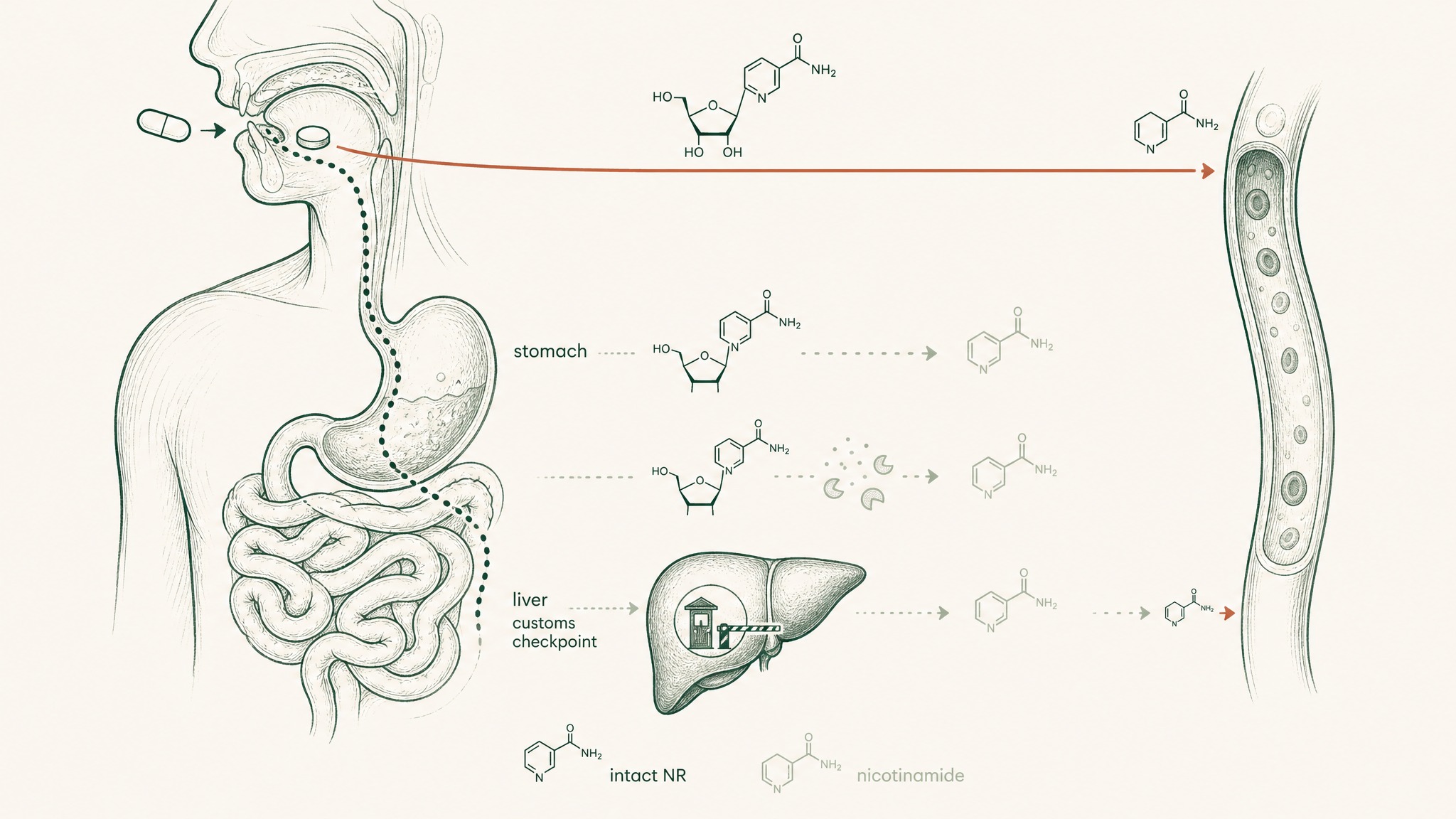
How stomach acid and liver enzymes break down most swallowed NR before it reaches your blood.
In our protocol design, the question we weigh most heavily is not how much NAD+ precursor to cram into a dose, but how much of it survives the trip. That's why VERO's LEGACY protocol delivers its NAD+ through the VERISORB sublingual matrix rather than a swallowed capsule, on the position that this clears multi-fold more of the dose than a standard pill.
To be straight about the evidence: no published human trial has yet pitted sublingual NAD+ precursors head-to-head against capsules, so read any brand's absorption math, ours included, as a design rationale rather than a settled number. What VERO members experience is that the under-the-tongue route feels faster and easier than swallowing pills, and for something you take every day, that convenience is not a small thing.
How to Choose an NAD Supplement That's Worth Buying
Judge an NAD+ product on dose, form, transparency, and delivery, not on the marketing adjectives. Here's the checklist worth running on XKQ or anything else:
- Dose: is the NR or NMN dose inside the trialed range, roughly 250 to 1000mg? XKQ's 520mg passes.
- Form and testing: is the exact ingredient form third-party tested? XKQ's hydrogen malate salt is under-studied next to the chloride form used in trials.
- Honest extras: are the supporting ingredients at real doses, or sprinkled in for the label? XKQ's quercetin and resveratrol are low.
- Delivery: a swallowed capsule, or a route built to survive the trip through your liver?
- Transparency: does the brand cite real research, or lean on vague "studies show" claims?
In practice, users report the biggest real-world difference comes from taking it consistently and at a sensible time of day, which VERO covers in its guide to the best time to take an NAD supplement. A product you actually stick with beats a perfect formula you abandon in a drawer.
Frequently Asked Questions
Is the XKQ NAD supplement safe?
NR has a clean tolerability record in human trials. In studies up to 8 weeks at doses as high as 1000mg a day, NR caused no flushing and no significant side-effect difference versus placebo (Conze et al., 2019). That said, no trial has tested XKQ's finished product, and anyone pregnant, nursing, or on medication should check with their own clinician first. This is research context, not medical advice.
How long until an NAD supplement does anything?
Blood NAD+ rises fast, within hours to days of starting, and settles at a higher steady level within a couple of weeks in the trials (Airhart et al., 2017). Any change in how you actually feel, if it comes at all, tends to lag well behind the blood numbers.
Is NR or NMN better for raising NAD+?
Both work in human trials, and there's no clear head-to-head winner. NR has had steadier US regulatory footing, while NMN only returned to supplement status in late 2025 after a three-year gap. Pick on dose, quality, and delivery rather than the NR-versus-NMN label alone.
Does XKQ contain enough quercetin to clear senescent cells?
No. The senolytic research used 1000 to 1250mg of quercetin alongside a prescription drug, and XKQ's 240mg on its own is well below that (Hickson et al., 2019).
References
- Conze, D., Brenner, C., & Kruger, C. (2019). Nicotinamide riboside dose-response on whole-blood NAD+ in healthy overweight adults. Scientific Reports. https://www.ncbi.nlm.nih.gov/pmc/articles/PMC6611812/. Retrieved 2026-09-12.
- Airhart, S. E., et al. (2017). Oral nicotinamide riboside and the blood NAD+ metabolome in healthy adults. PLoS ONE. https://journals.plos.org/plosone/article?id=10.1371/journal.pone.0186459. Retrieved 2026-09-12.
- Trammell, S. A. J., et al. (2016). Nicotinamide riboside pharmacokinetics in humans. Nature Communications. https://www.nature.com/articles/ncomms12948. Retrieved 2026-09-12.
- Elhassan, Y. S., et al. (2019). Nicotinamide riboside and the NAD+ metabolome in aged human skeletal muscle. Cell Reports. https://www.ncbi.nlm.nih.gov/pmc/articles/PMC6702140/. Retrieved 2026-09-12.
- Yoshino, M., et al. (2021). Nicotinamide mononucleotide and muscle insulin sensitivity in prediabetic women. Science. https://pubmed.ncbi.nlm.nih.gov/33888596/. Retrieved 2026-09-12.
- Igarashi, M., et al. (2022). Chronic nicotinamide mononucleotide supplementation in healthy older men. npj Aging. https://pubmed.ncbi.nlm.nih.gov/35927255/. Retrieved 2026-09-12.
- Katayoshi, T., et al. (2023). Nicotinamide mononucleotide and serum NAD+ metabolites in middle-aged adults. Scientific Reports. https://www.ncbi.nlm.nih.gov/pmc/articles/PMC9935856/. Retrieved 2026-09-12.
- Massudi, H., et al. (2012). Age-associated changes in oxidative stress and NAD+ metabolism in human tissue. PLoS ONE. https://journals.plos.org/plosone/article?id=10.1371/journal.pone.0042357. Retrieved 2026-09-12.
- Hickson, L. J., et al. (2019). Senolytics (dasatinib plus quercetin) in humans: a first-in-human trial. EBioMedicine. https://www.ncbi.nlm.nih.gov/pmc/articles/PMC6796530/. Retrieved 2026-09-12.
- NIH PMC. (2023). Resveratrol and circulating SIRT1 in adults aged 55 to 65. https://www.ncbi.nlm.nih.gov/pmc/articles/PMC10346321/. Retrieved 2026-09-12.
- FDA. GRAS Notice 000635, nicotinamide riboside chloride. https://www.fda.gov/files/food/published/GRAS-Notice-000635--Nicotinamide-riboside-chloride.pdf. Retrieved 2026-09-12.
- Venable LLP. (2025). FDA declares nicotinamide mononucleotide is not excluded from the dietary supplement definition. https://www.venable.com/insights/publications/2025/10/fda-declares-nicotinamide-mononucleotide-is. Retrieved 2026-09-12.
- NutraIngredients. (2025). FDA reinstates the NDI status of NMN with new letters to ingredient makers. https://www.nutraingredients.com/Article/2025/12/09/fda-reinstates-ndi-status-of-nmn-with-new-letters-to-ingredient-players/. Retrieved 2026-09-12.
Curious what a sublingually delivered NAD+ protocol looks like? Explore VERO LEGACY →
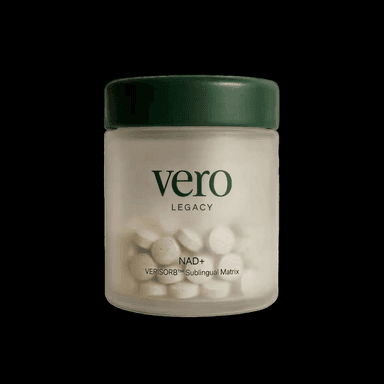
LEGACY™
NAD+Engineered around 300mg NAD+. Replenishes systemic NAD+ levels and drives mitochondrial function
Clinical Context
Important Notice: VERO protocols are nutritional and systemic optimisation formats. They are not intended to diagnose, treat, cure, or prevent any medical condition. These statements have not been evaluated by the Food and Drug Administration.