
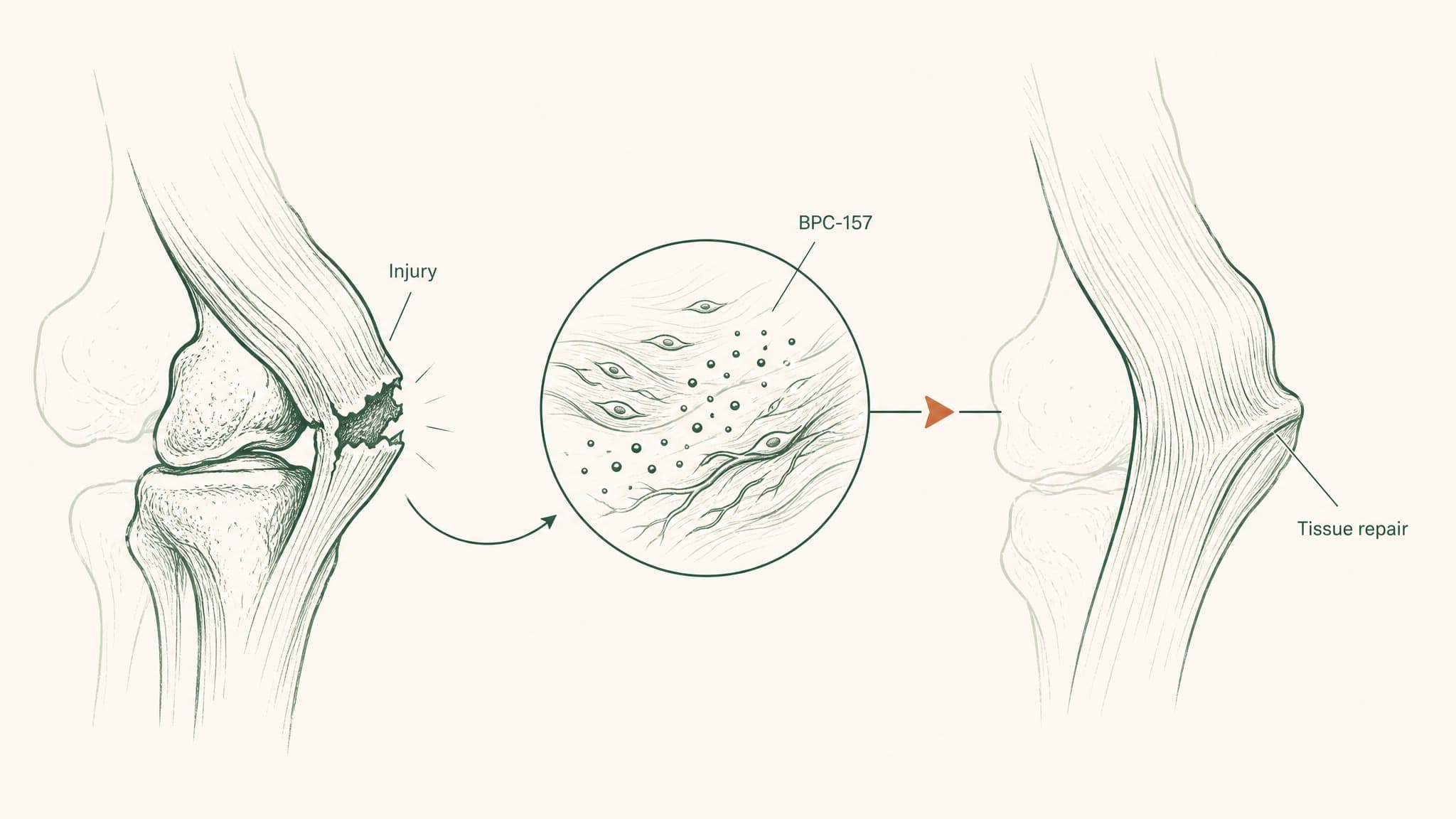
A research-led Healthletic BPC-157 review: purity testing, COAs, real customer reports, and whether a swallowed oral capsule actually absorbs. What to verify first.
Here's the honest one-line version of this Healthletic BPC-157 review: it's a real brand selling a real oral "Body Protection Compound" recovery capsule, but the two things that actually decide whether it's worth your money are the ones its own marketing skips. Can you verify the brand's testing, and does a swallowed peptide capsule actually reach your bloodstream? Full disclosure before we go further, because you deserve it up front: VERO makes a competing sublingual BPC-157 product, so treat this as a transparent teardown you can check yourself, and if you want the alternative up front, VERO's RESTORE protocol routes the compound under the tongue instead of through your stomach. This content is published for research purposes only, and everything here is verifiable through the sources listed below.
Let's start where nearly everyone agrees, because that's the fair way in. Oral peptides are genuinely hard to absorb, and that part isn't controversial. What the rest of this review adds on top is what that established fact does to every Healthletic verdict you'll read elsewhere.
Key Takeaways
- Healthletic sells an oral BPC-157 capsule (arginine-salt form), priced around $105.95 a bottle one-time or ~$95.95 on subscription, positioned on purity and third-party testing.
- The single spec that matters most, a lot-specific certificate of analysis (COA), was not directly viewable on the page we reviewed, and neither was a clear milligram dose per serving.
- BPC-157's evidence is overwhelmingly from animal models. As of 2025, no completed, published human efficacy trial exists (Józwiak et al. 2025).
- Unmodified oral peptides reach the blood only in small amounts, and even the best-engineered pharmaceutical peptide absorbs poorly (Overgaard et al. 2021). Delivery route, not brand, is the deciding factor.
- The verdict: a legitimate brand with real transparency gaps, sold in a format the published science says struggles to absorb. Verify the COA and the dose before you buy anything.
References
- Renukuntla, J. et al. (2013). Approaches for enhancing oral bioavailability of peptides and proteins. International Journal of Pharmaceutics. https://pmc.ncbi.nlm.nih.gov/articles/PMC3680128/. Retrieved 2026-07-25.
- Overgaard, R. V. et al. (2021). Clinical pharmacokinetics of oral semaglutide: analyses from clinical pharmacology trials. Clinical Pharmacokinetics. https://pubmed.ncbi.nlm.nih.gov/33969456/. Retrieved 2026-07-25.
- Verma, A. et al. (2021). Oral-route challenges for peptide and protein drug delivery: current bioavailability strategies. Drug Development Research. https://pubmed.ncbi.nlm.nih.gov/33988872/. Retrieved 2026-07-25.
- Freeman, H. J. (2015). Clinical relevance of intestinal peptide uptake. World Journal of Gastrointestinal Pharmacology and Therapeutics. https://pmc.ncbi.nlm.nih.gov/articles/PMC4419090/. Retrieved 2026-07-25.
- Zhang, H., Zhang, J. & Streisand, J. B. (2002). Oral mucosal drug delivery: clinical pharmacokinetics and therapeutic applications. Clinical Pharmacokinetics. https://pubmed.ncbi.nlm.nih.gov/12126458/. Retrieved 2026-07-25.
- Józwiak, M. et al. (2025). Multifunctionality of the BPC 157 peptide: a literature and patent review. Pharmaceuticals (Basel). https://pmc.ncbi.nlm.nih.gov/articles/PMC11859134/. Retrieved 2026-07-25.
- Krivic, A. et al. (2010). Pentadecapeptide BPC 157 and tendon repair: rat Achilles-model evidence. Journal of Applied Physiology. https://pubmed.ncbi.nlm.nih.gov/21030672/. Retrieved 2026-07-25.
- Cerovecki, T. et al. (2010). Pentadecapeptide BPC 157 and ligament repair in the rat: biomechanical and histological findings. Journal of Orthopaedic Research. https://pubmed.ncbi.nlm.nih.gov/20225319/. Retrieved 2026-07-25.
- Staresinic, M. et al. (2006). Gastric pentadecapeptide BPC 157 in transected rat quadriceps muscle: a regeneration study. Journal of Orthopaedic Research. https://pubmed.ncbi.nlm.nih.gov/16609979/. Retrieved 2026-07-25.
Healthletic BPC-157 at a glance: what's the quick verdict?
Short version, so you can decide whether to read on: Healthletic is a legitimate, operating brand, not a counterfeit outfit, but it leaves real gaps on the exact specs a careful buyer needs. Here's the snapshot:
- Product form: oral capsules, BPC-157 in arginine-salt form (not injectable, not sublingual).
- Price point: around $105.95 per bottle one-time, ~$95.95 on subscription, with buy-more bundle discounts.
- What's strong: a real formulation choice and public purity and third-party-testing language.
- What to verify: a lot-specific COA, a disclosed dose per serving, and where it actually ships from.
- The verdict in one line: worth a look only if you can confirm the testing and dose yourself, because the oral route caps how much peptide can get in.
Everything below is that snapshot, unpacked and sourced, so you can check each claim rather than take it on trust.
What is Healthletic BPC-157, and what's actually in it?
Before any science, the plain facts of the product. Healthletic is a direct-to-consumer supplement brand selling an oral BPC-157 formulated as an arginine salt, the same acid-stabilising chemistry a handful of other oral peptide brands use. It's sold in bottles with subscription and bulk-bundle pricing, and the marketing leans on purity, third-party testing, and strong absorption language.
Quick definitions first, because the label wording trips people up:
- BPC-157 stands for "Body Protection Compound," a synthetic 15-amino-acid peptide (a short chain of protein building blocks) based on a sequence found in gastric juice.
- Oral BPC-157 means a capsule you swallow, which then has to survive your entire digestive tract.
- Arginine salt is a chemistry tweak meant to help the compound hold up against stomach acid.
Here's what's verifiable straight from the product page, and what isn't. The format (oral capsules) and the pricing are clear. What we couldn't find on the page we reviewed was a clear milligram or microgram dose per capsule, or a directly viewable, lot-specific certificate of analysis.
When a brand markets "potency" but won't show you the actual dose per serving, you can't calculate what you're paying for. Hold that thought, because it becomes the whole value question later.
Does oral BPC-157 actually absorb? The bioavailability question
This is the section every other Healthletic review skips, and it's the one that reframes all of them. Picture your gut as a five-gate security checkpoint built to shred protein. A peptide is protein, so it doesn't get waved through just because you paid $105 for it.
Bioavailability, in plain terms, is how much of what you swallow actually makes it into your bloodstream where it can do anything. For unmodified oral peptides, that number is brutal:
- Unmodified oral peptides reach the blood only in small amounts (Renukuntla et al. 2013; Verma et al. 2021).
- The best oral peptide bioavailability ever published in a human study is still low, even for a purpose-built pharmaceutical drug (Overgaard et al. 2021).
- The one gut transporter that ferries intact peptides across, PepT1, only accepts chains of two or three amino acids (Freeman 2015). BPC-157 is 15 amino acids long, so it was never built to fit that door.
In the research cycles we've run at VERO, the pattern that keeps repeating is that the delivery route, not the raw compound, is the variable that decides how much active peptide is actually available to the body. You can buy pure, correctly labelled BPC-157 and still deliver almost none of it through a swallowed capsule. That single fact quietly rewrites most oral-peptide value comparisons.
Arginine-salt chemistry, the approach Healthletic and brands like LVLUP use, can help a fraction survive the acid. But it doesn't change the size problem or the enzyme wall behind it. For the deeper mechanism, our breakdown of how well peptide pills actually absorb walks through each gate, and our companion piece on Healthletic BPC-157 reviews covers the customer-sentiment split in more detail.
What does the research actually show about BPC-157?
Think of BPC-157 as a molecule with an impressive lab résumé and an almost empty human file. That's the fair one-line summary, and it matters to sit with both halves rather than picking the one that suits a sales page.
The preclinical record is genuinely interesting, and here it's important to keep every claim in its animal-model lane:
- In a rat Achilles tendon model, BPC-157 has been observed to support tendon-cell outgrowth and cell survival under stress (Krivic et al. 2010).
- In a rat ligament-injury model, researchers reported improved biomechanical and histological markers of tissue repair (Cerovecki et al. 2010).
- In a rat quadriceps-transection model, BPC-157 was associated with better load-to-failure and motor recovery over several weeks (Staresinic et al. 2006).
Now the other half, which matters just as much. As of 2025, there is no completed, published human efficacy trial for BPC-157, and a Phase I study submitted years ago had its results withdrawn (Józwiak et al. 2025).
Every one of those rat findings is a reason for research interest, not a promise for a person. For a fuller, research-framed tour of that literature, see our breakdown of what the research says about BPC-157. The point for a Healthletic buyer is simple: the compound is a legitimate research subject, and it is not an approved drug with confirmed human outcomes.
Is Healthletic a trustworthy brand? Testing, COAs, and sourcing
Instead of trusting a star rating, run any BPC-157 seller through a short verification checklist. Think of it like a pre-purchase inspection on a used car: you're not asking whether it looks nice, you're asking whether the parts that matter are actually there.
Here's what a real certificate of analysis (COA) should show you, and how to read one:
- HPLC purity result: a percentage from high-performance liquid chromatography, the standard test for how pure the compound is. Look for the actual figure, not just the word "tested."
- Heavy-metals screen: confirmation the product was checked for lead, arsenic, cadmium, and mercury.
- Microbial testing: a check for bacterial and mould contamination.
- A matching lot number: the report should name the exact batch you're buying, plus the testing lab.
Now score Healthletic against the checks that decide trust:
- Lot-specific COA: partial. The page uses "3rd party tested" and "lab-tested for purity and potency" language, but a directly viewable, batch-matched COA naming the lab was not shown on the page we reviewed.
- Transparent origin: partial. Healthletic markets a US identity, though several independent review write-ups report orders shipping from a fulfillment center in Lithuania, which some reviewers connect to customs delays.
- Disclosed dose per serving: weak. No clear per-capsule milligram or microgram figure on the page we reviewed.
- Defined delivery route: the core gap. An oral capsule that doesn't address gut degradation is the default, not an engineered solution.
A brand that passes all four earns your trust on process. Healthletic passes the first two only partially and leaves real gaps on dose and delivery. This framework is deliberately brand-neutral, and we'd expect VERO to be held to the exact same four checks.
What do customers report, and how do you read the reviews?
Reviews are messy evidence, but read as a pattern rather than a verdict, they're not useless. Search the brand and you'll find two worlds that barely touch: glowing recovery stories on one side, and shipping-and-refund complaints on the other.
Here's the fair synthesis of what independent platforms show:
- Reported strengths: many users report subjective wins on joint comfort, recovery, energy, and sleep after weeks of consistent use.
- Reported concerns: recurring complaints about slow, multi-month shipping, refunds reportedly declined once a label was generated, and customs friction tied to overseas fulfillment.
- The missing question: almost nobody asks how much of a swallowed capsule actually reaches the blood.
Now the part no affiliate post will teach you: how to spot an incentivized "review." The current search results for this exact product are dominated by pages that are quietly selling, not reviewing. Watch for these red flags:
- A discount code or coupon baked into the "review" (the reviewer earns a commission on your purchase).
- Affiliate tracking in the links, often a
?ref=or?aff=tag pointing to the seller. - An undisclosed or anonymous author with no credentials and no disclosure of financial interest.
- A "press coverage" article that's actually a paid wire-service press release, not independent journalism.
If a review won't tell you who wrote it or how they get paid, treat its verdict as an ad. That's exactly why this page names its own conflict of interest up top.
Healthletic BPC-157 dosage: how do people use it?
A quick, research-framed note on usage, and a firm boundary: this describes what's commonly reported, it does not prescribe anything. Dosing for any research peptide is a conversation for a qualified clinician, not a blog.
What's commonly described in the community, framed as observation only:
- Confusion about actual dose, precisely because oral products (Healthletic included) often don't disclose milligrams per serving.
You can't follow a dose you were never shown, which loops straight back to the disclosure gap. For a fuller, research-framed discussion, remember that with an oral capsule the disclosed dose and the absorbed dose are two very different numbers.
Side effects, FDA status, and the gray-market risk
The framing here starts with a caveat: because there's no completed human efficacy trial, there's also no clean human safety dataset for BPC-157. What gets reported is largely anecdotal, and regulatory status is the bigger practical issue for a buyer.
The key facts, each worth verifying before you spend:
- Reported tolerability: in community reports, users describe BPC-157 as generally well tolerated, but this is self-reported and not a substitute for controlled human safety data.
- FDA status: BPC-157 is not an FDA-approved drug and has no approved human indication (Józwiak et al. 2025). It has also been placed in the FDA's Category 2 of the 503A bulk drug substances list, with its compounding status under regulatory review since, which we unpack in our BPC-157 FDA status breakdown.
- Gray-market risk: unverified sourcing is where the real hazard sits. Without a lot-matched COA, you can't confirm what's actually in the capsule, which is why the testing question isn't optional.
The compound's regulatory footing, not a dramatic side-effect profile, is the thing most buyers underweight. We track the regulatory picture separately in our note on BPC-157's FDA status, because it has shifted more than once recently.
What are the best Healthletic BPC-157 alternatives?
The useful way to compare is by delivery route, not brand-by-brand, because that's the variable that decides how much gets in. Each route has a real trade-off, and no single option wins on every axis.
| Route | Example | Testing to verify | Absorption reality |
|---|---|---|---|
| Injectable | Compounded / research-supply BPC-157 | Lot-specific COA, sterility | Bypasses the gut entirely, but adds needles and a shakier regulatory footing |
| Oral capsule | Healthletic, LVLUP | COA, disclosed dose | Faces the sub-2% oral ceiling regardless of brand |
| Sublingual | VERO RESTORE (our own protocol) | COA, matrix disclosure | Routes under the tongue to skip the gut, but needs real engineering to work |
A few notes on that table. Injectables avoid the absorption ceiling but carry needles, handling, and regulatory complexity. Other oral capsules face the same gut ceiling Healthletic does, so switching oral brands doesn't switch the physics.
Sublingual delivery routes a compound across the thin tissue under your tongue, straight into venous blood that reaches the heart before the liver filters it (Zhang, Zhang & Streisand 2002). The route alone isn't magic, though. An unformulated drop mostly gets swallowed, which is why it takes real engineering, like VERO's VERISORB sublingual delivery, to hold a peptide against the mucosa long enough to cross. RESTORE is our own product, so weigh that disclosure and hold it to the same COA-and-testing checklist as everything else in the table.
Final verdict: is Healthletic BPC-157 worth it?
Weighed against the four checks, this Healthletic BPC-157 review lands on a balanced verdict: a legitimate brand with a real formulation choice and a genuine transparency-and-fulfillment gap, sold in a delivery format the published science says struggles to absorb. It isn't a scam in the ingredient sense. The harder truth is about the road the compound has to travel.
Who it may suit, and who shouldn't bother:
- Might suit you if you can obtain a lot-matched COA and a disclosed dose on request, and you accept the oral-route absorption ceiling going in.
- Look at other formats if delivery efficiency matters to you, because injectable and engineered sublingual routes both bypass the gut that caps every swallowed capsule.
The top two things to verify before you buy: a batch-specific COA with the lab named, and the actual milligram dose per serving. Don't stop at whether Healthletic is trustworthy. Ask the question its reviews never do, which is how much of this actually gets in.
Frequently Asked Questions
Is Healthletic legit?
Healthletic is a real, operating direct-to-consumer supplement company selling an oral BPC-157 product, not a counterfeit outfit. Independent reviews are mixed: many users report subjective benefits, while others describe shipping delays and refund friction. "Legit" in the ingredient sense is different from "effective," and effectiveness turns on absorption its reviews don't test.
Is Healthletic BPC-157 FDA approved?
No. BPC-157 is not an FDA-approved drug and has no approved human indication. It has been placed in the FDA's Category 2 of the 503A bulk drug substances list, with its compounding status under regulatory review since. Its evidence base is overwhelmingly preclinical, with no completed, published human efficacy trial to date.
Where does Healthletic ship from?
Healthletic markets a US business identity, but several independent review write-ups report that orders ship from a fulfillment center in Lithuania. Some reviewers link that overseas origin to customs delays and slow delivery. Overseas fulfillment isn't inherently a red flag, but disclosure and reliable delivery are what matter.
Is oral BPC-157 as effective as injections?
Research suggests oral peptides face severe absorption limits, with unmodified compounds reaching the blood only in small amounts and even the best-engineered pharmaceutical peptide absorbing poorly (Overgaard et al. 2021). Injection bypasses the gut entirely. An oral capsule and an injection are not interchangeable on delivery, whatever the compound's quality.
Does Healthletic provide a certificate of analysis?
Healthletic's page uses "3rd party tested" and "lab-tested" language, but a directly viewable, lot-specific COA naming the lab and batch was not shown on the page we reviewed. The practical move is to request a batch-matched COA before buying, and to treat the testing claim as something to confirm rather than assume.
What's a good BPC-157 alternative?
The two routes that genuinely bypass gut degradation are subcutaneous injection and properly engineered sublingual delivery. Injectables avoid the absorption ceiling but add needles and regulatory complexity. Sublingual formulations, such as VERO's VERISORB-based RESTORE protocol, aim to route the peptide under the tongue without a needle. Members experience varies, so hold every option to the same COA-and-dose checklist.
Want to see what a gut-bypass delivery approach looks like in practice? Explore the RESTORE Protocol →
This content is published for research and educational purposes only. It is not intended to diagnose, treat, cure, or prevent any disease, and it does not constitute medical advice. Statements on this page have not been evaluated by the FDA. Anyone considering a peptide research protocol should consult a qualified clinician first. VERO's peptide products are supplied for research purposes only.
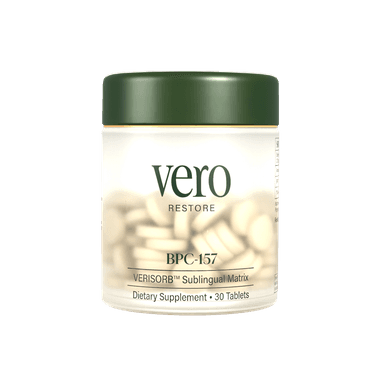
RESTORE™
BPC-157Engineered around 0.5mg BPC-157 (arginate salt). Accelerates deep tissue and joint recovery
Clinical Context
Important Notice: VERO protocols are nutritional and systemic optimisation formats. They are not intended to diagnose, treat, cure, or prevent any medical condition. These statements have not been evaluated by the Food and Drug Administration.